Tag Archives: spirits

Masters of Rum: Havana Club Seleccion de Maestros

Masters of Rum: Havana Club Seleccion de Maestros

ABIGAIL PIROEFF Click here to view original web page at www.drinkmemag.com

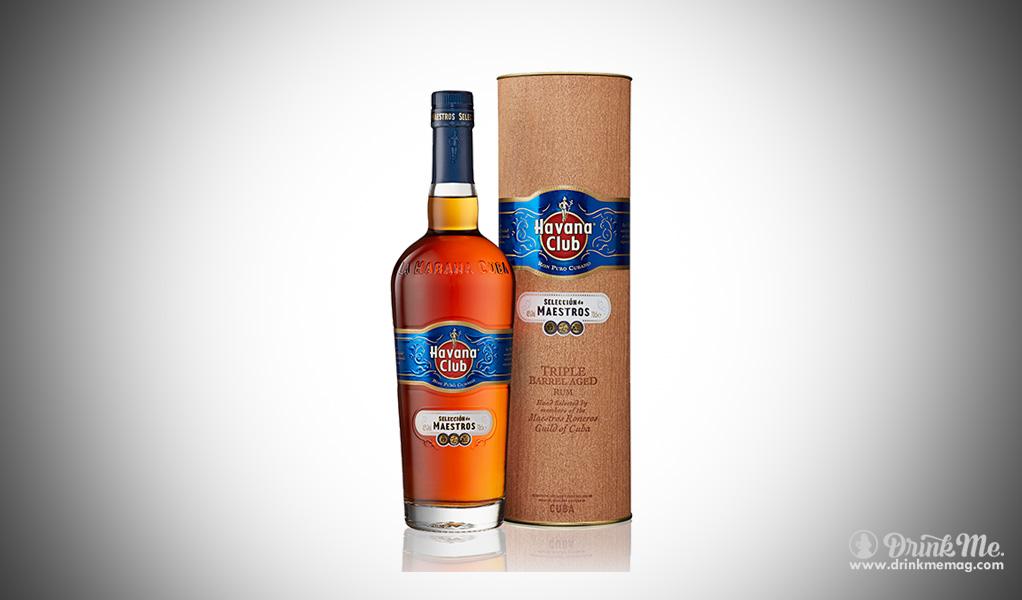
Maestro Roneros meaning, “master rum makers” are the brains behind Havana Club Rum. Don Jose Navarro, Jaun Carlos Gonzales, and Asbel Morales have all devoted their working lives to produce authentic Cuban rum. They are responsible for the whole entire process of making the rum, from sugar cane selection to the final bottling. They oversee the blending and aging of the rum with patience, passion, and commitment to making the highest quality Cuban rum in the world.

The masters of the Cuban rum come together to select the finest and most incomparable aged rums. After they blend the rum, they place it in barrels that are carefully selected for their aromatic properties so that the liquid can develop and mature. Finally they come together again to select the rum that has matured perfectly. They create the final blend known as Havana Club Seleccion de Maestros. This rum has an unbelievable smoothness that cannot be beat. From the complex flavors of cocoa, coffee, sweet tobacco, and brown spices to the smoky oak and spice finish. Winning gold medals at The Rum Masters, International Spirits Challenge, and Beverage Testing in 2014. This is truly a selection of masters!


buckwheat whiskey

Is Buckwheat Whiskey Really Whiskey?

Click here to view original web page at thewhiskeywash.com

– February 12th, 2017

With the craft whiskey explosion of the last fifteen years has come a rash of distillers breaking with tradition and experimenting with new techniques and ingredients. Gone are the days when all whiskey was made with varying amounts of the same four grains; a number of modern distillers, especially well-established craft producers like Corsair and Koval, are working with unusual grains to produce whole new categories of whiskey.

One of those unusual grains (or “grains,” as we’ll see in a moment) is buckwheat. This pseudocereal, mostly known in America as a delicious pancake ingredient, is being made into whiskey by a handful of distilleries, notably Corsair. We also reviewed Catskill Distilling Company’s Otay Buckwheat Spirit, a unique leather-and-tobacco experience, a couple years back.

Pedants, however, will note that distilling buckwheat reveals an interesting question. Namely, can the resulting spirit be called whiskey?

Let’s back up. The government defines whiskey, in part, as “spirits distilled from a fermented mash of grain.” But what exactly is a grain? The dictionary gives several definitions, among them both “the seed or fruit of a cereal grass,” and “the seeds or fruits of various food plants, including the cereal grasses, and in commercial and statutory usage, other plants (as the soybean).” That first definition would exclude anything that, like buckwheat, isn’t botanically a grass. The second one, however, seems more than broad enough to encompass buckwheat and its fellow pseudocereals, which include quinoa and chia.

The problem is, the TTB, which regulates the labeling and marketing of spirits, doesn’t explicitly define what they consider a grain. Time for some inductive reasoning!

As far as I can tell, there are only a handful of buckwheat whiskeys out there. There’s Corsair’s version, which is labeled “whiskey,” and Otay, which isn’t. Pinchgut Hollow’s Copperhead seems to be in the same boat as Otay. Finally, there’s Eddu from Distillerie des Menhirs, which doesn’t teach us anything about labeling laws, because it’s made in France.

For perspective, what about some of the other unorthodox ingredients used in whiskey? Weirdly, the TTB seems to have no problem with calling spirits distilled from sorghum syrup whiskey. Sorghum, botanically, is a grass, but most sorghum whiskeys are made from the plant’s sap, not its seeds.

In short, it seems to be the case that when the TTB says “grain,” what they actually mean is “cereal,” in the botanical sense. Corsair’s products are the lone exception, and my guess is that they’ve been allowed to sell Buck Yeah and their quinoa whiskey as whiskeys because the mash bill for each is mostly barley—according to the distillery, Buck Yeah’s mash bill is 1/3 buckwheat, with two different malts making up the remaining 2/3.


How the Government Is Saving Craft Alcohol

How the Government Is Saving Craft Alcohol

Whether your drink of choice is vodka, Pinot Noir, or cider, you’ve probably noticed a change at bars and retailers lately: The selection is exploding. From craft beers to artisanal scotches and wines of every imaginable provenance, the American alcohol market is just plain booming, and it’s not slowing down.

Political divides aside, drinkers and producers of all stripes have the government to thank for this one. This year, they’ve made it easier than ever to both make and sell the libations that get us through good days and bad.

First, the Tax and Trade Bureau (TTB), the federal office that governs the alcohol industry, eliminated bond requirements for small breweries, wineries, and distilleries. In essence, a bond is a pre-paid amount of tax that the government holds as collateral to make sure booze producers pay their other taxes and generally play by the government’s rules. But applying for bonds is time consuming, technical (they require submitting elaborate architectural plans of any production space), and requires a large capital outlay up front, a serious strain for businesses that have no cash flow. By eliminating the bond requirement, this amendment removed a major hurdle for new producers, making it significantly cheaper and easier for newbies to start out as a small brand.

This modification to the Internal Revenue Code finally took effect on January 1. According to this new tax law, breweries, wineries, and distilleries that expect to pay less than $50,000 in excise taxes are exempt from the bond requirement, and can operate under simple permit instead. Taxes are calculated based on volume and alcohol content, so the cost savings for producers varies, but the impact overall is huge. According to data from 2015, nearly 90 percent of America’s breweries are small enough to avoid the bond requirement. Now, they can apply to receive a refund of their original bond payment and operate under the small-producer permit instead. And they can use their capital to make more drinks!

But there’s even better news for consumers. It’s becoming easier than ever to get those cans or bottles delivered to your door. Thank your state legislators here, because they’re continuing to relax outdated regulations on interstate alcohol shipping, making it easy for new and small brands to sell their wares across the nation. More states are making it legal to ship beer, wine, and spirits to your doorstep.

Though each state still has different taxes and tax rates for these sales, the easing of regulations means you can join wine clubs, ship alcohol from tasting rooms, or order small-batch beer and spirits online within most states.

According to Rex Stults, Government Relations Director of the Napa Valley Vintners Association (NVV), increased Direct to Consumer (DTC) sales are a win for every wine drinker. “We work actively to help make it happen,” Stults says. NVV is a co-founder, along with Wine Institute, of “Free the Grapes!” — a non-profit organization that engages consumers and media in an effort to open all states to the possibility of directly shipping wine.

Pennsylvania, Indiana, and Massachusetts are among the states to recently begin allowing direct wine shipments to consumers, and only 5 states still restrict wine shipments. Others have some form of regulation on different types of alcohol, though Free the Grapes! and other special interest groups are working to change that. As laws evolve and the DTC market becomes easier to navigate, more wineries are offering shipping for customers near and far.

As with expensive bonds, small producers often face steep challenges to selling their wares, even after jumping through the flaming hoops required in an alcohol-centric business. But selling directly via mailing lists, tasting rooms, and the internet would allow producers to bypass distributors — who were previously the only legal way to sell across state lines — and make significantly larger margins.

“For many small producers, it is either DTC sales or go belly up,” explains Stults. “Napa Valley is made up primarily of small, family-owned wineries. The challenge is that, unless you are a longstanding brand with fairly substantial production volume, it is difficult to get the attention in the wholesale distribution market.” Thanks to relaxing regulations, things are looking up. “There is more and more wine being produced in the U.S. and there are more folks drinking wine in the U.S., but the number of distributors has shrunk dramatically,” he says.

That’s because pf DTC sales. And there’s data to prove that we, as drinkers, are happy to shop online for wine, beer, and spirits. In 2016, direct wine sales alone reached $2.33 billion according to data compiled by ShipCompliant and Wines Vines Analytics, with most growth coming from small and very small wineries that aren’t available in major retailers nationally. In short, more bottles, cans, and bags-in-boxes, are hitting the market than ever before.

These legal changes may take up just a few lines within the jargon that dominates government edicts, but for the small brands that make up the majority of the new American booze scene, the impact is enormous. Supporting beverage makers means more opportunities to try the “best” new IPA, bourbon, or boutique wine, and that means 2017 is the year all drinkers win.

Cheers to that!

Click here to view original web page at vinepair.com

Craft Spirits to Dominate Global Spirit Market: Ken Research

Craft Spirits to Dominate Global Spirit Market: Ken Research

Ken Research has announced publication titled, “Opportunities in Craft Spirits” which explores the top trends and innovation themes within the craft spirits industry.

The report is a requisite guide that covers the present scenario and further provides for the growth prospects of the craft beer market in the years to come. It evaluates the current and future growth occasions across regions and countries with the motive of supporting corporate development and related initiatives.

It helps in gaining a broader appreciation of the fast-moving consumer goods industry by gaining insights from within as well as outside. It gets easier to access valuable strategic take-outs that help in directing future decision-making and informing about new products development.

The preferences of beer consumers have changed due to the introduction of craft beers, which typically contains higher alcohol content. Tracking the success of craft beers over the past few decades, the spirits industry is commencing to take hold of the craft movement.

Trustworthy experiences are in demand and more consumers are looking to experiment with innovative and strange flavored spirits. As a result, a number of distillers are expected to raise their craft offerings to gain an early foothold in the emerging market.

In 2003, there were 60 craft distillers operating in the United States. Today, that total is 760, according to the American Distilling Institute (ADI), and a further 200 are under construction. There are numerous opportunities within the craft spirits market and they are expected to bring innovation themes such as the incorporation of innovative and/or medicinal ingredients.

Some recent mergers and acquisitions are pledging to continue changing the industry. In 2015, Mahalo Spirits Group invested in Bardstown Bourbon Co. of Kentucky, financing a USD 25 million distillery and Angels Envy Bourbon sold itself to Bacardi for USD 150 million. Hood Rivers Distillers of Oregon acquired Seattle’s Big Gin last May, and Constellation Brands acquired High West Distillers of Park City, Utah in 2016.

Most recently, Davos Brands of New York acquired Aviation Gin of Portland, Ore., and Remy Cointreau of France obtained Seattle’s Westland Distillery.

Topics Covered in The Report

Global beer industry research report
Global Beer industry insights
Global Alcoholic beverages Industry
Global Alcohol Consumption by volume
North America Alcohol Industry Research Report
Europe Alcoholic Beverages Market size
Aisa Alcoholic Beverages industry research
Global spirits market research
Craft Spirits Demand worldwide
Global Craft Spirits future Outlook

Good Question: What Would Be The Economic Impact Of Sunday Liquor Sales?

Good Question: What Would Be The Economic Impact Of Sunday Liquor Sales?

MINNEAPOLIS (WCCO) — The bill to allow Sunday liquor sales in Minnesota has made it through the Commerce Committee to the House floor — the furthest it has ever gone.

The legislation has plenty of supporters and opponents who disagree on what this would mean were it to pass.

But what has happened in other states? What could the economic impact be in Minnesota?

Much of that answer depends on who you ask. The MN First Consumers Alliance says the state loses $10 million a year in tax revenue to surrounding states.

Tony Chesak, the head of the Minnesota Licensed Beverage Association, disputes that number.

“How can you ever calculate that when we’ve never really had Sunday sales in Minnesota?” Chesak said.

The Distilled Spirits Council of the United States forecasts Minnesotans would buy 5- to 7-percent more alcohol if they were allowed to buy on Sundays. This is based on data they have collected from other states who made the switch.

Washington State let a small number of liquor stores in dense areas open on Sundays in 2005. State researchers found people not only bought on Sundays, they also bought more at those stores on Saturday and Monday.

Michael Hicks, a professor of economics at Ball State University, says his research does not show any real overall economic change when it comes to Sunday sales. He says alcohol sales are increasing on their own anyway.

“This is an area that’s ripe for confusion,” Hicks said. “I think a lot more is made of this than anyone really sees in the economic evidence.”

His research of 50 states over 30 years found no big difference when it comes to alcohol consumption, tax revenue or DWI arrests after a ban on Sunday sales is lifted.

What he did find, though, is that smaller, independent liquor stores might face increasing competition as customers migrate to larger stores.

“You’re going to see some of them close,” Hicks said. “Even in Indiana, we saw three to five stores lost per county.”

Colorado lifted its Sunday alcohol ban in 2008. Colorado Licensed Beverage Assocation CEO Jeanne McEvoy says no liquor stores had to close following that change.

Click here to view original web page at minnesota.cbslocal.com

Traditional And Fair: FAIR Rum

Traditional And Fair: FAIR Rum


The art of making rum has been a cherished and glorified practice since its inception in the Caribbean in the mid 17th century. Since then, countless distilleries have taken a crack at making their own version of rum with such a select few standing out. One such distillery that has managed to separate itself from the pack has been FAIR distillery. Since 2009, FAIR has been providing ethical wine & spirits for consumers to drink responsibly and enjoy life to the fullest. FAIR was founded by Alexandre Koiransky, who relies upon his heart and his love for people while overseeing the distillery that won the Silver Medal at the 2015 Beverage Tasting Institute. One of the select spirits that FAIR offers is their rum, which follows the traditional distilling process used in the 17th century.

FAIR Rum uses the traditional process that was used in the Caribbean to make the first batch of rum. The rum relies upon the traditional rum ingredient sugar cane, with Fair using Trade Certified sugar cane that is grown using organic and sustainable farming methods on Belize farm plots. Aged for five years, this medium color rum has a deep character that uses a variety of aromatics. FAIR Rum can be found at your local spirits store or can be ordered online from the FAIR distillery website.

Click here to view original web page at www.drinkmemag.com

The Perfect Drinks to Serve High-Maintenance Guests

The Perfect Drinks to Serve High-Maintenance Guests

These days, dinner parties are a pain in the butt to plan. Your best friend is following a gluten-free diet, your roommate is Paleo, your girlfriend’s new squeeze is vegan, and your neighbor just informed you that he’s avoiding sugar. Sounds like quite a dinner!

We can’t help you with the food, but we can help you with the booze. Whether your guests are on the latest fad diet or have (legitimate) allergies, here’s what you can safely serve them to get them drinking and to avoid the lecture about how sugar is a secret killer.

Diet: Gluten-Free

Sure, there’s gluten-free beer. But your guests and your taste buds deserve better. Although some people raise concerns about wine being aged in barrels sealed with flour paste or refined with products containing gluten, most experts agree that people with gluten sensitivities should be fine drinking wine. If you are concerned, ask the winemaker.

You can also serve rum, tequila, or potato vodka. Although the Alcohol and Tobacco Tax and Trade Bureau says that most gluten is removed from gin, whiskey, and vodka during the distillation process, some experts say to play it safe and avoid those liquors.

Diet: Paleo

Pour one out for the cavemen: Alcohol isn’t Paleo, according to Loren Cordain, Ph.D., founder of the movement. Our ancestors may have created fire, but they didn’t create distilleries or practice fermentation, according to some experts, though this, too, is debated. Cordain says moderate alcohol consumption is O.K. occasionally. He recommends wine or spirits, while Robb Wolf, author of “The Paleo Solution,” likes the NorCal Margarita: two shots of tequila, the juice of one lime, and a splash of soda.

Diet: Low-Carb

Many people don’t realize that hard liquor doesn’t have any carbs. It’s the sugary mixers you have to worry about. Whether your guests prefer gin, rum, tequila, vodka, or whiskey, each has 0 carbs per ounce. Mix with diet soda or diet tonic and fresh lemon or lime juice.

Diet: Ketogenic

Since a keto (as the cool kids call it) diet is low-carb and high-fat, neat spirits also satisfy their alcohol fix without violating any “rules.”

Diet: Bulletproof

Dave Asprey doesn’t only recommend butter in your coffee. He’s also a fan of straight vodka, particularly potato vodka. He claims that since it’s distilled and charcoal-filtered, “your body will only deal with the alcohol and no other toxins.” A dry dirty martini made with potato vodka or gin also meets his approval.

Diet: Vegan

Guinness made headlines in 2015 when the company announced it was changing the recipe so its beer would be vegan. Most Guinness fans never knew their beer wasn’t vegan. But many beers and wines are clarified with products such as casein (a milk protein), albumin (egg whites), gelatin (animal protein), and isinglass (fish bladder protein). So strict vegans won’t drink a sip of these because trace amounts of the fining agents remain in the liquid.

Luckily there are many vegan wines and beers on the market — and you won’t taste a difference. These tend to be clarified with products like carbon, bentonite clay, limestone, kaolin clay, plant casein, silica gel, and vegetable plaques. This process removes any grape skins, stem, and other sediment left over from the winemaking process. Barnivore.com maintains an extensive list of alcohol and what is and isn’t vegan, so check the site to see if your favorite brands are O.K. for your guests. Ciu Ciu is an organic, vegan Italian winery, and Domaine Bousquet is organic, vegan wine from Argentina.

Or go with hard alcohol! Distillation doesn’t need any clarification; as long as it doesn’t mention honey on the label and isn’t cream-based, that spirit is vegan.

Diet: Detox

Serve green juice spiked with vodka. Whoops, no, that’s just how we drink green juice. The truth is, anyone on a detox is following a strict diet and likely won’t accept your party invite. If they do, look up the master cleanse lemonade recipe. Or just offer them water.

Allergy: Fish, milk, and/or egg

As with your vegan guests, choose a vegan wine or beer, or stir up any cocktail, as long as it doesn’t contain egg white or any dairy-like cream. Sangria (made with vegan wine) is always easy for a party, or make a big batch of rum punch, margaritas, or sazeracs.

Click here to view original web page at vinepair.com

Whiskey cocktails dominate US craft bars

Whiskey cocktails dominate US craft bars

Whiskey-based cocktails continue to dominate the US market, with brands “an important factor” for consumers, the latest data from the IWSR has shown.

Bourbon- and whiskey-based cocktails now account for around 23% of the craft bar market, the newly released IWSR’s US Cocktail Trend Report showed, with distilled spirits forecast to rise by around 0.6% in the next five year. This will take spirits share of the on-premise market to 23.5% by 2021, it said.

The Old Fashioned – a blend of Bourbon or Rye whiskey with bitters and sugar syrup – was the most mentioned cocktail across menus and nearly half (45%) of on-premise operators surveyed by the IWSR report said the Old Fashioned was “trending positively” among their customers. The data showed consumer interest spiked around the holiday and went hand-in-hand with the growing consumption of US whiskey across the on-trade, and there were discernible strongholds on the West Coast at Portland and Los Angeles, and in Baltimore in the East.

As well as the classic cocktail, the trend was shown to encompass flavour variations as barrel-aged, sherried and vinegar, alongside walnut, chocolate, fig, ginger, and cherry, the report said – but it also found that when it comes to cocktails, brands matter. Nearly three-quarters of on-premise operators surveyed for the report said that the brand name was “an important factor” when selling cocktails. Brands tracked by the IWSR across craft bar menus found Buffalo Trace, Bulleit, Four Roses and Maker’s Mark were the top four most-mentioned Bourbon brands.

With spirits projected to increase their market share in the next … by 0.6% , Vodka-based Moscow Mules came in behind also highly mentioned cocktails, but the IWSR also noted the rise of gin- and rum-based cocktails such as the Sazerac, Manhattan, Daiquiri, Dark n’ Stormy and Negroni.

Rum brands Plantation 3 Stars and Gosling’s were the most popular brands, it added.

KAH® Tequila Joins Stoli Group USA's Award-Winning Wine & Spirits Portfolio

KAH® Tequila Joins Stoli Group USA’s Award-Winning Wine & Spirits Portfolio

NEW YORK, Dec. 20, 2016 /PRNewswire/ — Today, Stoli Group® USA, LLC announced that it will hold the importation, distribution, sales and marketing rights for the KAH® Tequila brand, effective immediately. This development closes out a banner year across the portfolio, driven by continued sales increases for the group’s namesake Stoli® Vodka and ultra-luxury elit® Vodka, extension into 24 states for Bayou® Rum, and the wine division’s multiple recognitions, including Achaval-Ferrer‘s Malbec Finca Altamira attaining a 97-point rating from the Wine Advocate and Arinzano Gran Vino Chardonnay becoming the first ever white wine to be named “Grand Champion Best of Show” at the Houston Livestock Show and Rodeo International Wine Competition.

Stoli Group’s foray into tequila comes at a time of near-unprecedented growth for the category. According to IWSR‘s “US Beverage Alcohol Review 2016,” tequila posted 5.2% growth to surpass the 15m nine-liter-case mark in 2015 and “shows no signs of slowing down.”

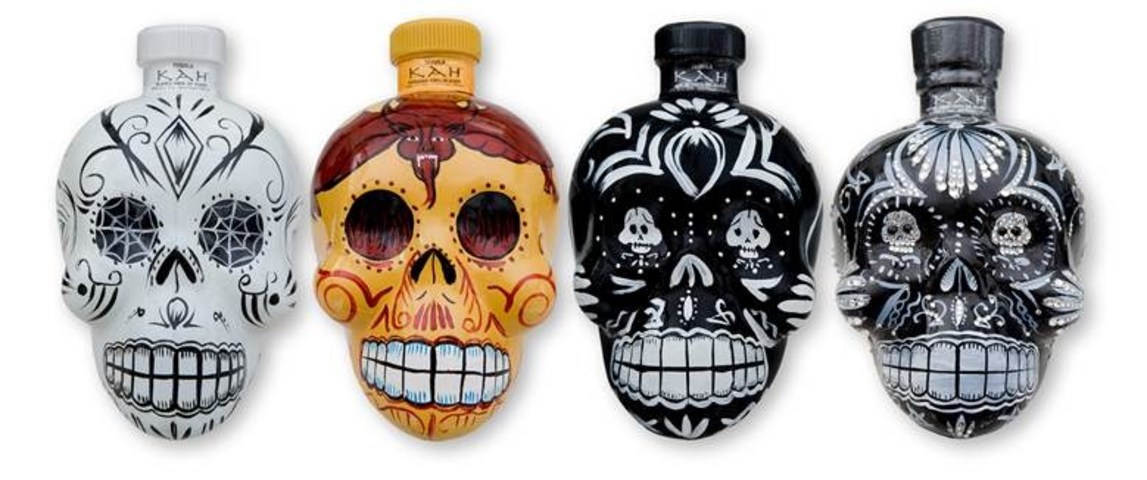
KAH, which translates to “life” in the ancient Mayan language, is produced by Fabrica de Tequilas Finos in Tequila, Jalisco, Mexico. It was designed to pay reverence and honor to Mexico and its people. The product range features four expressions with each being made from hand-selected 100% blue agave. Each is presented in its own uniquely decorated, spirited skull bottle.

  • KAH Blanco starts with a sweet taste, followed by a peppery spice and was awarded 96 points by The Spirits Institute, the highest score ever given to a blanco.
  • KAH Reposado features a powerful and viscous taste after going through a 10-month aging process and was nominated as “Best of the Best” in the high-proof tequilas category by tequila.net.
  • KAH Añejo, which was given “Gold” and “Best in Category” awards in the Spirits of Mexico Tasting Competition, has agave, chocolate and coffee notes.
  • KAH Extra Añejo has been matured for four and a half years in American oak casks and achieved “Best in Class – Platinum” at The Spirits International Prestige Awards.”We are on a fast track at Stoli Group with innovative line extensions and strategic portfolio expansion,” imparted Patrick Piana. “KAH Tequila is an inventive product line and provides a springboard into a category that is rising quickly in popularity with consumers. Our whole team is toasting to this new opportunity.”

    Stephen Ballard, SVP of Sales for North America, added, “Stoli Group USA relishes the chance to develop the KAH brand and expects to see it thrive on- and off-premise with the support of our strong network of distributor partners across America.”

    In September, it was announced that Stoli’s fellow SPI Group subsidiary, Amber Beverage Group, acquired a significant equity stake in Fabrica de Tequilas Finos.

    About Stoli Group USA
    Stoli Group USA, LLC is a U.S. importer and marketer of alcoholic beverages, headquartered in New York City. Stoli Group USA is a subsidiary of SPI Group based out of Luxemburg, one of the world’s most dynamic wine and spirits organizations. Formed in 2013, Stoli Group USA’s current portfolio of brands includes the Stolichnaya® brand of premium vodkas and Stoli Ginger Beer, ultra-premium elit® Vodka, Louisiana-distilled Bayou® Rum, artfully designed KAH® Tequila, Achaval-Ferrer™ from Argentina, and Arinzano wines of Spain.

    SOURCE Stoli Group USA, LLC

Budget proposal eyes liquor

Gov. recommends 50-cent hike per bottle

Oregon distillers are concerned that doubling a surcharge on their products next year will hurt an industry already generating a large portion of state revenue.

Gov. Kate Brown’s proposed state budget, yet to be hashed out in Salem, for the next biennium would increase a standing surcharge on distilled spirits from 50 cents to $1 per bottle for two years starting July 1. The Oregon Liquor Control Commission has renewed the surcharge three times since its inception in 2009.

Brown’s budget, which tries to close a $1.7 billion shortfall, recommends a number of increases on “sin taxes,” including an 85-cent hike on cigarette taxes to $2.18 per pack, along with increases on taxes on cigars and snuff. The proposed budget would increase all alcohol licensing fees, along with the liquor surcharge, except the fee for servers’ permits. The higher surcharge would raise an estimated $33.8 million for the state general fund; higher fees would raise another $5.3 million.

If the surcharge is increased, distillers said, they would likely pass the cost onto consumers. Some small distilleries may stumble should their sales decline just as those businesses are finding a foothold, they said.

“Any costs that raise the price of liquor, I don’t like because it raises my costs on the shelf,” said Nick Beasley, owner of Cascade Street Distillery, a small, 2-year-old business in Sisters.

Oregon consumers pay the second-highest taxes on liquor in the nation, an average $22.74 per bottle, according to the Tax Foundation, an independent research group.

The term “tax” when applied to distilled spirits is a misnomer in Oregon, where the state controls all sales of distilled spirits and acts as the sole distributor.

The OLCC generates revenue by marking up the price of a bottle by about 100 percent, a practice that goes back to 1991, according to the commission. In 2009, the OLCC first imposed a temporary, additional 50-cent-per-bottle surcharge, which the commission has renewed three times, the latest in August to expire in June 2019.

On the other hand, the tax on beer remains $2.60 per 31-gallon barrel, the amount set in 1977. The wine tax, also set in 1977 at 65 cents per gallon for wine under 14 percent alcohol by volume and 77 cents for wine above 14 percent, was increased in 1983 by 2 cents on lower strength wine to fund the Oregon Wine Board.

The Legislature sets the tax on beer and wine. Distilled spirits accounted for 96 percent of revenue collected by alcohol sales in the 2014-16 biennium, or $1.1 billion, according to the OLCC. The tax on beer and wine accounted for 3 percent, or $36 million.

Brown may more easily raise the liquor surcharge through the OLCC than seek a tax increase on beer and wine through the Legislature. Bryan Hockaday, a spokesman for Brown, in an email Wednesday wrote: “The governor has stated that this budget is the beginning of the conversation with the Legislature and Oregonians, and she looks forward to working on more sustainable funding solutions to meet the needs of Oregon families, support a thriving, statewide economy, and protect Oregon’s natural resources for future generations.”

Asked if higher beer and wine taxes would be part of that conversation, Hockaday replied: “Broadly speaking, all viable revenue reform proposals are likely to be part of the conversation this legislative session.”

Dan Engler, co-owner of Occidental Brewing Co., in Portland, and president of the Oregon Brewers Guild, said he anticipates a proposal during the 2017 legislative session to increase the tax on beer, which the guild would oppose. Engler said he opposes excise taxes in any form, whether directly or indirectly in the form of a surcharge.

“It’s a regressive tax regime,” he said. “We’ve shifted our revenue-generation scheme to corporate and individual income taxes rather than customs, duties and excise taxes from the old days.”

CEO Alan Dietrich of Bendistillery said he wants to hear the specifics of Brown’s proposed budget before he weighs in, but that the alcohol industry already contributes substantially to the state budget. More so than essentials like food or gas, once the cost of liquor climbs too high, consumers will cut back, which defeats the purpose of a surcharge hike, he said.

Likewise, Brad Irwin, owner and head distiller at Oregon Spirit Distillers, in Bend, said he wouldn’t suggest a tax hike on beer and wine, but distillers have thus far paid their share.

“I think it’s tough to ask us to pay more,” Irwin said, “when we’re already generating as much as we do.”

11 Unusual Liquors You Could Be Drinking

11 Unusual Liquors You Could Be Drinking

1. Baijiu11 Unusual Liquors You Could Be Drinking

What is it?: Baijiu is a Chinese liquor usually made of sorghum. It typically runs between 40 and 60 percent ABV and is definitely an acquired taste – people often refer to it as “The White Devil.”

Where have you heard of it? Moutai, one of the largest manufacturers of the stuff, came under fire last year for both a contamination scandal and the high price of the baijiu it sells. The latter is largely due to the drink’s popularity among government officials, which jacks up the cost.

Where can you get it? Baijiu is tricky to find in the U.S. because of import laws and the lack of an established market here, though manufacturers are trying to change that. Your best bet is heading to a Chinatown in your nearest city.

2. Malört11 Unusual Liquors You Could Be Drinking

What is it? Jeppson’s Malört is described as a Swedish-Style Brännvin, or a wormwood liqueur (what absinthe is made of). Though it’s been around for almost a century, only recently has malört gained popularity, despite its bitter taste.

Where have you heard of it? Perhaps on this very site!

Where can you get it? Though only manufactured in Chicago, out-of-towners can buy it online.

3. Fernet Branca

11 Unusual Liquors You Could Be Drinking

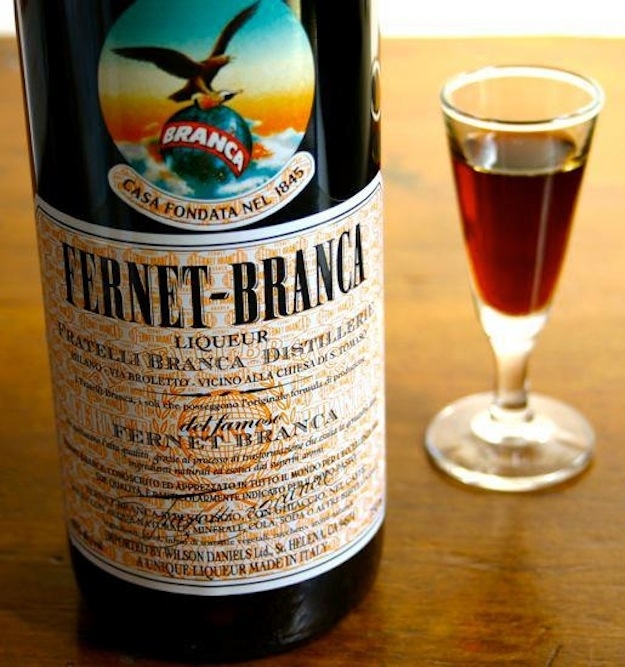
What is it? A bitter Italian aperitif that tastes like black liquorice, Fernet-Branca has a 40 ABV rating.

Where have you heard of it? Perhaps from one of the numerous articles touting its growing popularity among the San Francisco and Los Angeles hip. In fact, 35 percent of the consumption in the U.S. occurs in California. And some consider it a remedy for a stomach ache.

Where can you get it? You can buy other versions of fernet (which is an amaro) that are made in America, but Fernet Branca can be purchased at most specialty liquor stores.

4. Akvavit

11 Unusual Liquors You Could Be Drinking

What is it? A Scandinavian spirit, akvavit is usually flavored with caraway seeds and has about a 40 percent ABV. It’s traditionally drunk as a shot, sometimes chased with beer, but some bars will mix it into cocktails. It has a flavor not dissimilar to jäger.

Where have you heard of it? If you’ve been in Denmark and Norway around Christmas, you’ve seen akvavit used for holiday celebrations. Or at a place like New York’s Vandaag.

Where can you get it? Northshore Distillery in Illinois sells akvavit; you can purchase it through these venders online. House Spirits Distillery in Portland, Oregon also makes the beverage and you can buy it here.

5. Raki

11 Unusual Liquors You Could Be Drinking

What is it? The Turkish version of ouzo, raki is made from grapes and flavored with anise seeds. It’s often drunk mixed with water, turning it a milky color, which is why some people call it “lion’s milk.” It has a 45 percent ABV.

Where have you heard of it? Unfortunately for the Turkish economy, raki consumption in that country has fallen by 50 percent in the past several years. Economists attribute the drop to the low tax on alcohols like vodka, and the rising cost of raki.

Where can you get it? Popular brand Yeni Raki is distributed in 12 U.S. states.

6. Eiswein/Icewine

11 Unusual Liquors You Could Be Drinking

What is it? Literally what the name describes: a dessert wine made from grapes that were frozen while still on the vine. It’s typically produced in Germany or Canada, can be red or white and ranges from six to 13 percent ABV.

Where have you heard of it? It hasn’t been cold enough lately in Canada, so ice wine production is really suffering.

Where can you get it? If you’re in the United States, a large amount is produced in Michigan, but German and Canadian varieties are available online and at specialty wine shops.

7. Cachaça

11 Unusual Liquors You Could Be Drinking

What is it? Made of sugar cane juice, cachaça is often called Brazilian rum (though traditional rum is distilled from molasses). It runs between 38 and 48 percent ABV and is used in Brazil’s national drink the Caipirinha.

Where have you heard of it? Brand Leblon Cachaça started an ad campaign in 2012 called “Legalize Cachaça!” in order to increase the popularity of the drink in the United States.

Where can you get it? There are several popular brands available in liquor stores in the US, like Beleza de Minas and Pitu.

8. Pulque

11 Unusual Liquors You Could Be Drinking

What is it? Pulque is a fermented agave nector, yeasty-tasting and milky in color, made in Mexico. There, it’s served fresh at bars made for just drinking pulque, called pulqueria’s.

Where have you heard of it? If you’re an Anthony Bourdain fan, he talks about it on an episode of No Reservations.

Where can you get it? It’s not legal in every state in the U.S., but some companies do import it in cans and there is a pulqueria in New York (called Pulqueria).

9. White whiskey

11 Unusual Liquors You Could Be Drinking

What is it? Also called white dog by those in the industry, white whiskey is essentially a fancy way of saying moonshine. It’s a clear whiskey that hasn’t been aged in a barrel, usually made with a combination of rye, corn and barley, with anywhere from a 40 to 60 percent ABV.

Where have you heard of it? Well, it’s having a comeback, though some spirit sticklers take issue with that.

Where can you get it? Jack Daniels just released a white whiskey, but there are also a number of smaller American distilleries making their own as well.

10. Tej11 Unusual Liquors You Could Be Drinking

What is it? An Ethiopian mead also known as honey wine, tej can be home-brewed. Tej made in Ethiopia is usually between 6.98 and 10.9 percent ABV.

Where have you heard of it? A lot of Ethiopian restaurants brew their own, so you may have had it over dinner.

Where can you get it? Brotherhood Winery in New York makes a version of it; ENAT Winery does as well and you can order online. You can find tej at liquor stores in major metropolitan cities.

11. Soju11 Unusual Liquors You Could Be Drinking

What is it? A Korean liquor traditionally made from rice, though a lot of modern suppliers use other starches to make this alcohol, which is similar in taste to vodka. It can have an ABV of anywhere from 16 to 45 percent and is traditionally drunk straight.

Where have you heard of it? In states like New York or California, soju can be served in restaurants that would normally only be allowed to serve beer and wine because of its low ABV. Korean company Jinro’s soju has been the most popular liquor in the world for eleven years.

Where can you get it? You can find popular brands like Jinro all across the U.S.

This Drink Is Set To Be The Next Big Thing In Dublin Bars

This Drink Is Set To Be The Next Big Thing In Dublin Bars

Gin and tonic is everywhere around Dublin right now.

We have restaurants with special gin menus. We have specialised gin bars. Some bakeries have even started serving gin and tonic cupcakes.

Gone are the days when a gin and tonic meant Cork Dry and Schweppes. We have an embarrassment of choice nowadays, from the relatively well known Bombay Sapphire and Hendricks, to the newcomers like Monkey 47 and Gin Mare, as well as Irish-grown favourites like Dingle Gin and Blackwater Gin.

Bars even give you a choice of tonic in your G&T now that there are many more bespoke options.

The question now is, has gin reached the point of market saturation? Is there anywhere to go from here?

As gin is reaching peak hype, a few entrepreneurial bartenders are looking towards the next trend, hoping to make a name for themselves by launching the next big thing in Dublin.

A good indication of what’s coming next may be what’s happening in Australia at the moment.

When I went there for a year in 2012, the gin trend was already well underway. For us here in Ireland, it only really came to fruition in the last two years.

When I returned to Australia in 2014, a few new tequila bars had just opened.

I was sceptical. Most of my experiences with tequila had involved shots and massive hangovers. You needed to down it with salt and lime. Who would drink it straight?

But the problem was, in fact, that the tequila I had been drinking was bad. Not only was it bad, it was fake.

As it turns out, Mexican law lets you write ‘tequila’ on the bottle as long as it’s 51% tequila. The rest of the bottle was grain alcohol, water and molasses. After all, why bother doing the other 49% properly if people were just going to be downing it as shots?

The real deal is closer to a good whiskey than the tequila we know. It has complex tastes and no sugar, so it give you less of a hangover. It’s smoother than vodka and goes really well with tonic water. It also has slightly less calories than gin.

Tequila only needs to be aged for a few months too, rather than a decade, which makes it cheaper and faster to ramp up production than whiskey. Similarly, gin isn’t aged at all, which is why so many gin brands have been able to open up so quickly.

Drinks Industry Ireland say that whiskey and tequila are predicted to be the fastest growing spirits globally and tequila bars have also taken off in a big way in the US so there’s definitely weight to the theory that it’s about to take over our shores.

Mexican restaurants like Xico, 777 and Acapulco are hugely popular and could be key to bringing tequila appreciation to the masses.

It’s still mostly drunk in the form of margaritas and cocktails but it probably won’t be long until people are drinking it straight. Trust us, give it a try.

Your ‘Craft’ Rye Whiskey Is Probably From a Factory Distillery in Indiana

Your ‘Craft’ Rye Whiskey Is Probably From a Factory Distillery in Indiana

The artisan whiskey industry has a big secret—many of the ‘small-batch’ distillers are actually buying their product from a large factory in Indiana.

Read the promotional materials for the Rancho de Los Luceros Destilaría and you form an image of a supremely artisanal effort. The distillery creates “small batch heirloom spirits handcrafted in New Mexico.” Each batch of their rye whiskies, vodka, and gin is “individual and unique,” and “each bottle is hand bottled and hand marked with batch and bottle number.”

These are the standard selling points of the craft-distilling movement, with its locavore lingo, terroir talk, and handmade hype. But, in the new crowd of micro-distillers, it is now standard for the alcohol being sold to come not from their own distinctive stills, but from a hulking factory in Indiana.

Lawrenceburg, Indiana (not to be confused with bourbon-locale Lawrenceburg, Kentucky) is home to a massive brick complex that cranks out mega-industrial quantities of beverage-grade alcohol. The factory, once a Seagram distillery, has changed hands over the decades and was most recently acquired by food-ingredient corporation MGP. It is now a one-stop shop for marketers who want to bottle their own brands of spirits without having to distill the product themselves. MGP sells them bulk vodka and gin, as well as a large selection of whiskies, including bourbons of varying recipes, wheat whiskey, corn whiskey, and rye. (They also make “food grade industrial alcohol” used in everything from solvents and antiseptics to fungicides.) Their products are well-made, but hardly what one thinks of as artisanal. And yet, much of the whiskey now being sold as the hand-crafted product of micro-distilleries actually comes from this one Indiana factory.Your ‘Craft’ Rye Whiskey Is Probably From a Factory Distillery in Indiana

Upstart spirits companies selling juice they didn’t distill rarely advertise the fact. But there are ways to tell: whiskey aged longer than a distillery has been in business is one of the telltale signs that the “distiller” is actually just bottling someone else’s product. KGB Spirits, the company behind the New Mexico “destilaría,” was founded in 2009; but its flagship Ceran St. Vrain straight rye whiskey comes with an age statement of 15 years in the barrel. Or take Breaker bourbon, the “first bourbon produced in Southern California since Prohibition.” The Buellton, California company behind the brand, Ascendant Spirits, wasn’t started until 2013. Yet, they brag their “ultra small batch bourbon” is aged 5 years. So how do you open a distillery one year and have 5- or 15-year-old whiskey to sell the next? Not by making it.

“I have purchased hundreds of barrels of rye and bourbon from them,” John Bernasconi admits when asked about the Indiana factory. A principal in the New Mexico company, Bernasconi says that purchasing whiskey from MGP and bottling it is “a means to develop a brand and help fund the next step” of actually distilling a unique product. It may be a sensible enough business strategy, but as whiskey writer Charles Cowdery points out, “There’s no reason to think anyone knows how to make whiskey or can learn how to make whiskey based on buying whiskey.” Cowdery has been railing for years against the proliferation of what he calls “Potemkin distilleries,” many of which own shiny new copper stills to wow visitors, but actually sell factory-made spirits they’ve acquired in bulk.Your ‘Craft’ Rye Whiskey Is Probably From a Factory Distillery in Indiana

High West hopes to make the transition, at least in part. The Park City, Utah distillery has been celebrated for its well-aged rye whiskies and its bourbon-and-rye blends, all of which come from the Indiana factory, as owner David Perkins readily acknowledges. High West makes some un-aged spirits and they are currently aging some whiskey of their own, but they have no plans to stop using the whiskies available from Lawrenceburg. “Since MGP whiskey is [more than] 80 percent of my revenues, it might be silly to wean myself off of that,” Perkins says. “I don’t think my employees would like the pay cut!”

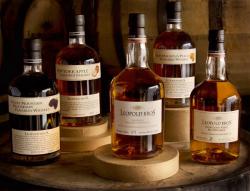
Part of the problem is the competition. MGP has plenty of aged whiskey ready to go in the bottle right now. An upstart distiller has to buy a still and learn how to use it; then buy all the ingredients and actually ferment and distill them; buy barrels and build or lease warehouses in which to put them; and then sit on the investment for years. Todd Leopold, master distiller at Denver’s Leopold Bros., has managed to do it. But how much easier, he says with disdain, for those who just buy whiskey off the shelf and market it. “All that they do is hire salespeople, make up a BS story, and boom, they look like a distillery,” Leopold says.

Dozens of new brands are packaging whiskey bought in bulk from Indiana. But it isn’t the only source. Some recently launched whiskey brands, such as the much-hyped WhistlePig Rye (which touts the product as “hand-bottled” on a Vermont farm), get their product from a factory distillery in Canada. Others are picking up cast-off barrels from high-volume Kentucky “macro-distillers” who occasionally find themselves with more whiskey than they can sell under their own labels. But Cowdery warns that the newbie “distiller” shouldn’t count on finding brilliant whiskies in the barrels being shed by the big brands: “They’re not getting rid of their best stuff.”

The Indiana distillery, by contrast, does sell its best stuff, because MGP Ingredients doesn’t have any brands of its own. Originally, the rye that was made there had a particular purpose—as a component to “flavoring whiskey” in the Seagram’s Seven Crown blend. But it turns out that the rye in MGP’s warehouses, when not used for blending, is very good whiskey all on its own—one more reason why the industrial product is behind so much of the “craft” rye revolution.

The most obsessive tracker of MGP whiskies is a food blogger known as “Sku.” He is Steve Ury, and on his Recent Eats blog he has published a near-comprehensive list of more than four-dozen brands bottling Indiana whiskey. He identifies the rye or bourbon from MGP in offerings from Arizona (Copper City) to Washington, D.C. (Filibuster), from Vermont (Smugglers’ Notch) to California (Hooker’s House). There has even been a boutique Indiana brand (W.H. Harrison) bottling factory-made Indiana bourbon.

Some on the long list own up to the source of their whiskies, but many do their best to suggest they’ve made it themselves. “New companies want to sell product as local or artisanal, and so that’s what they claim,” says Ury, who has been trying to do something about the practice. By day, Ury is a lawyer, and he has been needling the federal Alcohol and Tobacco Tax and Trade Bureau to be more aggressive in enforcing regulations requiring that whiskey bottles disclose where the spirit inside was distilled.

It isn’t just small start-ups using MGP rye. Though Bulleit is owned by drinks behemoth Diageo, the highly touted brand maintains a craft whiskey vibe, especially Bulleit Rye. The brand’s website says that “High rye content has always been the signature of Tom Bulleit’s distinctive bourbon. It was only a matter of time before he created a rye whiskey.” But “creating” isn’t the same thing as “distilling,” and, as Bulleit Rye properly discloses on its back label, the whiskey in the bottle comes from Lawrenceburg, Indiana.

Some of those bottling and branding MGP whiskey make an effort to give the juice some sort of finishing touch to make their product distinctive. George Dickel Rye starts with MGP whiskey but charcoal-filters it before bottling. Angel’s Envy buys Indiana rye, puts it in old rum casks to soak up a little sweetness, and then charges a hefty markup. Others, such as Redemption Rye, present their MGP whiskey as-is.

The prize for the most upfront bottler has to go to Blaum Bros. of Galena, Illinois, which market Knotter—read “not our”—Bourbon with the transparent admission “We didn’t distill this bourbon. Nope, not a drop.”

Templeton Rye, by contrast, has built its successful brand on being a product of Templeton, Iowa. They tell an elaborate story about how their recipe was used by the owner’s family to make illicit whiskey in Iowa during Prohibition, and how that rye had become Al Capone’s favorite hooch. They publish a description of their “Production Process” so detailed it lists the temperature (124 degrees) at which the “rye grain is added to the mash tank.” They brag that they focus their “complete attention on executing each step of the distillation process.” And yet, for all this detail, the official “Production Process” somehow fails to mention that Templeton doesn’t actually do the distilling.

Dig around enough on the Templeton Rye website, and you’ll find acknowledgment that their whiskey is factory-made in Indiana. But clinging to the craft distiller fiction, Templeton does its best to maintain that, rather than taking MGP whiskey off the shelf, they are somehow instructing the manufacturer how to make the juice.

“The smoke and mirrors used in this industry make it extremely difficult,” complains one micro-distiller who actually makes his own whiskey. “When one company talks about their heritage recipe that was a favorite of a gangster, even though it is just the stock MGP recipe, we all suffer,” because customers feel burned.

Another challenge actual craft distillers face is that the armies of new rye drinkers have come to expect whiskey with a particular flavor—that is, the taste of MGP rye. “If you’ve tried Dickel rye, Redemption, and Templeton, you’d think that’s how rye whiskey should taste,” says Clay Risen, author of American Whiskey, Bourbon & Rye. MGP’s whiskies are marketed under so many different labels that they “have colored perceptions” of what rye should be.

Which isn’t to say that no one succeeds in actually making their own craft-distilled whiskey. In addition to Leopold Bros. in Colorado, there are distillers such as Few in Evanston, Illinois, Catoctin Creek in Virginia, and Hudson Whiskey in New York state making good young rye from scratch.

Some of those selling MGP-made whiskies, such as High West’s David Perkins, would like to see a new transparency in the business. John Bernasconi of New Mexico’s KGB Spirits says, “I would welcome more disclosure and honesty in the spirits industry.”

A good idea, since there’s no reason to expect the ocean of Indiana whiskey to dry up anytime soon. Finding itself at the heart of the craft whiskey craze, MGP has cranked up its production, including a growing slate of new whiskey recipes offering customers greater variety.

Potemkin distillers are going to have all the juice they need for years to come.

5 Things to Know Before Trying Baijiu, the Best-Selling, Funkiest-Tasting Liquor in the World

5 Things to Know Before Trying Baijiu, the Best-Selling, Funkiest-Tasting Liquor in the World

On the stretch of Houston Street between Thompson Street and LaGuardia Place, tucked under a hat store, a four-month-old bar is marked only by a small sign in Chinese: jiǔguǎn, it reads, which translates, approximately, to “bar.” In a town full of faux speakeasies, this might seem otherwise unremarkable until you realize this bar — Lumos — is likely the only one in America that specializes in baijiu, the ancient Chinese liquor that’s probably the most surprising, divisive thing you can drink in the whole city.

Baijiu is rare in the states, though it is available at some cocktail joints around town — usually as a kind of one-off novelty that bartenders stock to impress one another. Though it’s scarce here, baijiu’s billion-strong fan base in China means it’s the best-selling liquor in the world. That it’s failed to gain a foothold in the West is not that surprising, actually, if you’ve talked to Americans who have tried it. The most common flavor descriptors are sweaty socks, or rotten fruit, or things that are even more foul. In other words: To the unaccustomed, this stuff tastes weird.

More generously, you might say it calls to mind the aroma of earthy, smoked pears, and Lumos’s owner, Orson Salicetti — who was formerly the head bartender at Apothéke in Chinatown — opened the bar because he has a romantic fondness for the spirit. “It was a secret,” he says of his first sip. “We all have the experience of traveling somewhere — even just Chinatown or Flushing — and discovering a new fruit, a new spice, so many new flavors.” And now he wants to introduce that flavor (gradually) to the varsity-level drinkers of New York. Here’s what you need to know before you take the plunge.

These are the basics.
In English, baijiu — báijiǔ, technically — is most often pronounced as “bye Joe,” but “bye Gio” is closer. “Bah-joo” works, too. It’s usually distilled from fermented sorghum, though other grains can be used as well. It is also strong. Really strong, running between 80 and 120 proof; this isn’t the kind of thing you drink by the bottle.

There are various baijiu classifications.
Like spirits such as gin and tequila, which have different classes, so does baijiu. Broadly, there are six of them, known as “fragrances,” which indicate the spirit’s flavor: honey fragrance, layered fragrance, light fragrance, rice fragrance, sauce fragrance, and thick fragrance. Western palates tend to favor the lighter and sweeter, but sauce fragrance, which is, admittedly, a tough one to get past for beginners, does pair well with pickled snacks.

There are various baijiu classifications.
Like spirits such as gin and tequila, which have different classes, so does baijiu. Broadly, there are six of them, known as “fragrances,” which indicate the spirit’s flavor: honey fragrance, layered fragrance, light fragrance, rice fragrance, sauce fragrance, and thick fragrance. Western palates tend to favor the lighter and sweeter, but sauce fragrance, which is, admittedly, a tough one to get past for beginners, does pair well with pickled snacks.

You should start gently.
Even Salicetti admits, “This is not a spirit you can just pour into a martini glass and enjoy.” But just as your first beer probably wasn’t a double IPA, your initial sip of baijiu doesn’t have to be the strongest stuff in the bar. In fact, Salicetti designed his menu to work as something of a progression. He suggests starting with one of his cocktails — new additions to the fall menu include a pumpkin drink with rum and a baijiu-spice reduction that tastes like some kind of amazing newfangled pumpkin pie, and another made with fig-infused baijiu and apple cider — before moving to pours of softer baijiu (he says newbies tend to enjoy rice fragrance), and so on.

A night at Lumos probably won’t be cheap.
Lumos’s cocktails start at $15 ($16 for higher-proof drinks), with house-infused baijiu (a dozen flavors, including fig, apple, or basil) going for $12 per shot, or $90 for a nine-ounce bottle. Meanwhile, one-ounce shots of pure baijiu range from $12 to $32. The drinks themselves, though, are spectacularly theatrical creations, in keeping with Salicetti’s run at Apotheke. For a cocktail of goji-infused baijiu and mezcal, which involves a salt-rimmed glass, Salicetti adds absinthe to a bowl of star anise and pink Himalayan rock salt, then lights it all on fire before painting the glass with the molten salt. “We’re not making margaritas,” he jokes.

You’re going to have fun.
You maybe didn’t love things like Laphroaig or Fernet Branca the first time you tried them, either. The trick to appreciating baijiu is embracing its unfamiliar flavor. At Lumos, you will be offered things you’ve never seen, and no matter what you order, you will probably be surprised by it — which is the whole point. When was the last time you drank something truly new at a bar? “Try this!” customers say to their friends after taking a sip of Salicetti’s drinks. “It’s like … ” they’ll start, struggling for a word to describe it. It’s like … It’s like … Well, it’s like something. But don’t worry about it. Instead: More sips. Enjoy.5 Things to Know Before Trying Baijiu, the Best-Selling, Funkiest-Tasting Liquor in the World5 Things to Know Before Trying Baijiu, the Best-Selling, Funkiest-Tasting Liquor in the World5 Things to Know Before Trying Baijiu, the Best-Selling, Funkiest-Tasting Liquor in the World

Farmer uses cow milk to produce udderly new vodka brand

Farmer uses cow milk to produce udderly new vodka brand

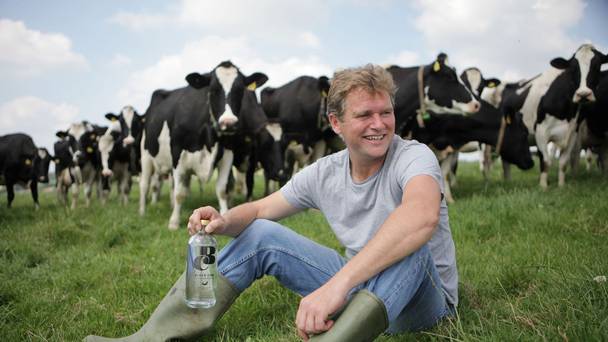
A Dorset farmer is producing vodka from milk in what he claims is a world first.

Dairy farmer Jason Barber invented his Black Cow vodka after wanting to diversify the produce from his 250-strong herd of cows, supported by his “deep personal interest” in the spirit.

The Beaminster farm’s pure milk vodka is made entirely from the milk of grass grazed cows and nothing else.

It is made after separating the milk into curds and whey, with the whey fermented into a beer using special yeast that converts the milk sugar into alcohol.

The milk beer is distilled and put through a secret blending process, and the vodka is then triple filtered and finished before being hand bottled.

The company said fresh whole milk made an “exceptionally smooth vodka with a unique creamy character”.

The vodka has no additives or flavourings, is gluten free and is suitable for those with lactose intolerance, as all the milk sugar has been converted into alcohol.

Black Cow co-founder Paul Archard said the company aimed to champion the work of British dairy farmers.

He said: “Often when we explain that Black Cow is vodka made from milk the reaction we get is ‘milk? Eugh.'”

But the vodka has already won a gold medal at the prestigious San Francisco World Spirits Awards, as well as various other UK awards.

It has also won plaudits from chefs and critics, with restaurateur Mark Hix describing a martini made with the vodka as his “drink of choice” and food writer Tom Parker Bowles calling it “one of the most remarkable things I’ve ever tasted”.