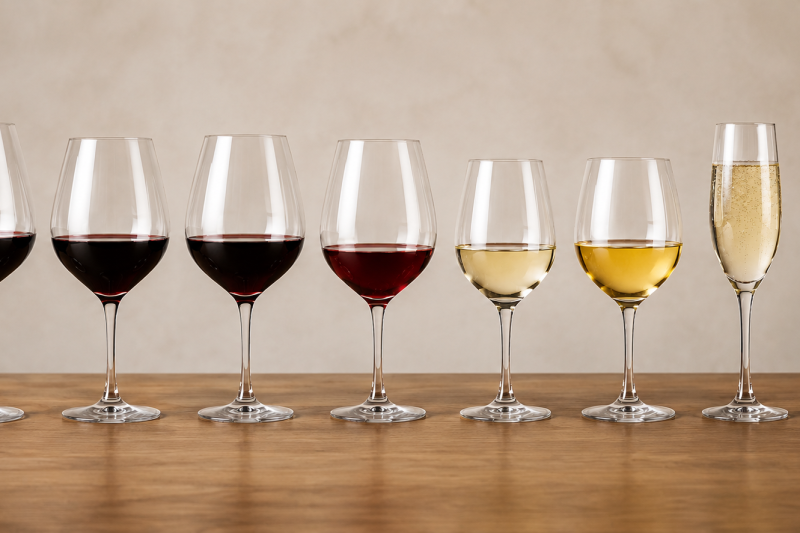
How are new craft beer trends influencing modern wine making techniques?
CrushBrew Editorial · Wine & Beer · 8 min read
Craft beer’s three decades of fermentation innovation have produced a toolkit that serious winemakers are now borrowing — deliberately and with increasing results. Dry hopping wine with Nelson Sauvin or Citra adds aromatic complexity without bitterness. Adjunct additions of cocoa nibs, vanilla, and hibiscus create flavor territory previously unavailable to grape-only production. Brewery-level sanitation protocols eliminate contamination risks that traditional wine cellars routinely accept. None of these techniques compromise wine’s identity — they extend its range.
Key Takeaways
Dry Hopping Wine Works: Adding aromatic hop varieties at 2–10 g/L during or after fermentation introduces fruit and citrus complexity without bitterness — the technique is established and reproducible. Nelson Sauvin and Citra are the most wine-compatible varieties.
Adjunct Fermentation Opens New Territory: Cocoa nibs, vanilla beans, hibiscus, and controlled Brettanomyces yeast strains allow winemakers to create flavor profiles that grape fermentation alone cannot produce — without losing the wine’s fundamental character when used correctly.
Sanitation Is the Underrated Upgrade: Brewery-level CIP (clean-in-place) protocols and multi-step chemical cleaning eliminate contamination and volatile acidity risks that traditional winemaking accepts as normal. The quality improvement is measurable and immediate.
The Cross-Pollination Is Accelerating: Between 1985 and 1997, US craft beer production expanded 20% per year on average, driving unprecedented fermentation experimentation. The techniques developed in that era are now reaching serious winemakers with a two-decade lag — and the results are compelling.
Start Small: Every technique covered here requires batch testing before scale-up. Hop dosage, adjunct timing, and fermentation temperature interactions are all wine-specific variables that require calibration per wine style.
In This Article
- What craft beer techniques can winemakers successfully apply?
- How do you properly dry hop wine for enhanced aromatics?
- Which hop varieties work best for winemaking experiments?
- What other brewing adjuncts are winemakers experimenting with?
- How do brewing sanitation practices improve wine quality?
- Frequently Asked Questions
- Craft Beer Technique Reference for Winemakers
What Craft Beer Techniques Can Winemakers Successfully Apply to Wine Production?
The craft brewing revolution generated three decades of disciplined fermentation science under commercial pressure — a pressure that traditional wine regions, protected by appellation convention and established markets, rarely experienced at the same intensity. The result is a body of technique that wine is only beginning to absorb. The most transferable methods share a common characteristic: they enhance or extend what fermentation already does rather than imposing artificial flavor.
Definition
Cross-Category Fermentation Innovation
The deliberate application of craft brewing techniques — developed for beer fermentation — to wine production contexts. Includes dry hopping, adjunct fermentation, wild yeast co-fermentation, precision temperature control, and enhanced sanitation protocols. Distinct from traditional winemaking innovation in that it draws on a separate beverage category’s decades of experimentation rather than evolving within wine’s own technical tradition. Not to be confused with hybrid beverages (grape-based beers or hop-infused cocktails) — cross-category fermentation produces wine, made with expanded methodology.
Six Craft Beer Techniques Transferable to Wine Production
| Technique | Beer Origin | Wine Application |
|---|---|---|
| Dry hopping | IPA aroma enhancement | Adds fruit and citrus aromatics post-fermentation without bitterness |
| Adjunct fermentation | Stout and specialty ale flavoring | Cocoa nibs, vanilla, spices added for flavor complexity |
| Wild yeast co-fermentation | Saison and farmhouse ale tradition | Brettanomyces additions for earthy, funky character |
| Precision temperature control | Lager fermentation discipline | Prevents off-flavors; preserves delicate aromatic compounds |
| CIP sanitation protocols | Brewery contamination prevention | Eliminates spoilage organisms; reduces volatile acidity risk |
| Ingredient experimentation | Craft beer adjunct innovation | Tests unconventional additions that complement grape character |
The critical distinction in all of these applications is dose and intent. A winemaker adding Nelson Sauvin hops is not making a beer — they are adding an aromatic tool borrowed from brewing to a wine fermentation. The grape character remains primary. The hop addition is a layer, not a replacement. This principle governs all successful cross-category technique transfer: the technique serves the base product rather than redirecting it.
How Do You Properly Dry Hop Wine for Enhanced Aromatics?
Dry hopping wine follows a straightforward protocol but requires precision on variety selection, dosage, timing, and duration. The goal is aromatic enhancement — fruit and citrus complexity added by the hop’s volatile oils — without the bitterness that comes from extended contact or excessive dosage. Getting the variables right takes small-batch testing; the principles transfer across wine styles.
Definition
Dry Hopping (Wine Application)
The process of adding whole hop flowers or pellets to wine during or after fermentation to impart aromatic compounds — primarily monoterpenes and ester molecules — without significant bitterness extraction. In beer, dry hopping is applied after the boil to preserve volatile hop aromatics that would otherwise evaporate. In wine, the same principle applies: hops are added cold (no boiling), preserving their aromatic oils while contributing negligible iso-alpha acids (the bitterness compounds). The technique was developed in the IPA style for beer and first applied to wine experimentally in the early 2000s by producers exploring hybrid fermentation approaches.
Step-by-Step: Dry Hopping Wine
The margin between a dry-hopped wine that is distinctive and one that is overwhelming is narrow. Both under-dosing (no detectable effect) and over-dosing (hop character dominates the wine completely) produce unsuccessful results. The sweet spot — hop aromatics that read as complexity rather than as an identifiable additive — typically falls between 3–6 g/L depending on wine style and hop variety.
Which Hop Varieties Work Best for Winemaking Experiments?
The most successful hop varieties for wine application are those bred or selected for their aromatic profile rather than their bittering power. These are typically referred to as “vinous” hops — a classification that emerged from the New Zealand and Australian breeding programs that produced varieties with wine-like terpene profiles. Nelson Sauvin is the canonical example: developed specifically for its gooseberry and white wine character, it was designed to bridge the sensory gap between hops and grapes.
Hop Varieties for Wine Experimentation
| Hop Variety | Primary Aromatics | Best Wine Pairing | Dosage Range (g/L) |
|---|---|---|---|
| Nelson Sauvin | Gooseberry, white wine character, tropical fruit | Sauvignon Blanc, Riesling | 2–8 |
| Citra | Grapefruit, lime, tropical fruit, lychee | Chardonnay, Albariño | 3–10 |
| Mosaic | Mango, pineapple, citrus, blueberry | Gewürztraminer, Viognier | 2–6 |
| Hallertau Blanc | Lemon zest, elderflower, grape, passion fruit | Pinot Grigio, Vermentino | 2–5 |
| Galaxy | Passionfruit, peach, citrus | Moscato, off-dry Riesling | 1–4 |
Nelson Sauvin was developed by the New Zealand Plant and Food Research program and released in 2000 — specifically bred for its wine-like aromatic characteristics, making it the most intentionally wine-compatible hop variety in commercial production. Its terpene profile overlaps significantly with Sauvignon Blanc’s characteristic thiol compounds, which is why the variety name echoes “Sauvignon.”
“We’re exploring coffee beans, cardamom, and even lavender to create wines that tell new stories while respecting the grape.” — Patrick Rue, Erosion Wine
The dosage ranges above are starting points, not ceilings. Galaxy at 1 g/L in a Moscato produces a barely detectable passionfruit lift. At 4 g/L in the same wine, it becomes the defining aromatic note. Neither is incorrect — the question is whether the winemaker wants the hop to be a supporting element or a lead character. That decision should be made before the first batch, not discovered during tasting.
What Other Brewing Adjuncts Are Winemakers Experimenting With?
Beyond hops, the craft brewing tradition has developed an extensive vocabulary of adjunct additions — ingredients added to fermentation or conditioning to achieve specific flavor outcomes. The most successful wine applications follow the same principle that governs dry hopping: use adjuncts at low enough concentration that they add complexity to the wine without becoming identifiable as foreign additions.
Definition
Brettanomyces in Winemaking
Brettanomyces (commonly called “Brett”) is a wild yeast genus that produces distinctive earthy, barnyard, and leather-like aromatic compounds during fermentation — specifically 4-ethylphenol and 4-ethylguaiacol. In traditional winemaking, Brett is typically considered a contaminant to be eliminated. In craft brewing, controlled Brett fermentation is a defining feature of Lambic, Saison, and farmhouse ales. Winemakers borrowing from this tradition add carefully cultivated Brett strains at controlled levels to produce a deliberate earthy complexity rather than allowing wild Brett contamination to occur unpredictably. The distinction between intentional and accidental Brett is entirely one of control and concentration.
Brewing Adjuncts Being Applied to Wine Production
| Adjunct | Flavor Contribution | Best Wine Application | Key Caution |
|---|---|---|---|
| Cocoa nibs | Chocolate, roasted earthiness, bitterness | Bold reds (Cabernet, Syrah) | Use post-fermentation; remove before bitterness overwhelms |
| Vanilla beans | Vanilla, cream, sweetness perception | Oak-aged whites, dessert wines | Split beans to expose interior; 1–3 beans per 5L is typical |
| Hibiscus flowers | Floral, tart, cranberry-raspberry notes | Rosé, light reds, sparkling wines | Deep red color extraction; will shift wine hue significantly |
| Sour cherries | Tart fruit, kirsch, lactic quality | Pinot Noir, light Italian reds | Add whole or frozen post-fermentation; monitor acidity shift |
| Brettanomyces (controlled) | Earthy, barnyard, leather, spice | Natural wine styles; farmhouse expressions | Requires strict quantity control; uncontrolled Brett is a fault |
| Coffee beans | Roasted, espresso, dark fruit amplification | Port-style wines, heavy reds | Brief contact only; coffee extraction accelerates; daily tasting required |
Patrick Rue of Erosion Wine — formerly of The Bruery craft brewery — represents the clearest example of a producer moving fluidly between both traditions. His exploration of cardamom, lavender, and coffee in wine production is informed directly by years of craft brewing adjunct experience. The skills transfer because the underlying discipline — understanding how a foreign ingredient interacts with a fermented base — is identical across categories.
How Do Brewing Sanitation Practices Improve Wine Quality?
Of all the techniques craft brewing has contributed to winemaking, enhanced sanitation is simultaneously the least glamorous and the most impactful on finished wine quality. The difference between traditional wine cellar cleaning and brewery-standard CIP (clean-in-place) protocols is not marginal — it is the difference between accepting contamination risk as normal and systematically eliminating it.
Definition
CIP — Clean-in-Place Sanitation
A multi-step sanitation system used in commercial brewing where tanks, lines, and contact surfaces are cleaned in sequence without disassembly. The typical CIP cycle involves: (1) pre-rinse with water to remove gross soils, (2) caustic wash (sodium hydroxide solution) to break down organic material, (3) acid rinse (phosphoric or citric acid) to neutralize caustic residue and remove mineral deposits, (4) sanitizer application (iodine-based or peracetic acid) to eliminate remaining microorganisms, (5) final verification. In contrast, traditional winery tank cleaning often relies on physical scrubbing, sulfur dioxide fumigation, and single-step chemical treatment — effective but less thorough. Implementing CIP-equivalent protocols in a winery environment dramatically reduces spoilage bacteria, wild yeast contamination, and volatile acidity development.
The practical impact on wine quality is most visible in the reduction of volatile acidity — the sharp, vinegar-like quality that results from acetic acid bacteria activity. Traditional winemaking accepts a certain level of volatile acidity as an expected characteristic. Brewery-standard cleaning significantly reduces the microbial load that produces acetic acid, resulting in cleaner, more stable wine across vintages.
The adoption of detailed cleaning logs — a standard brewery practice — is perhaps the simplest and highest-ROI sanitation upgrade available to winemakers. Logging every cleaning cycle, chemical concentration, contact time, and temperature creates accountability and pattern recognition that manual, informal cellar cleaning cannot provide. When a spoilage issue occurs, the log identifies where the protocol broke down. Without it, the cause remains unknown and the problem recurs.
Frequently Asked Questions About Craft Beer Techniques in Winemaking
🍷 Craft Beer Technique Reference for Winemakers
Cross-category fermentation guide · Technique, application, and key variables
| Technique | Wine Application | Key Variables | Risk Level |
|---|---|---|---|
| Dry hopping | Aromatic complexity in white and rosé wines | Variety, dosage (2–10 g/L), duration (2–7 days), timing | Low with testing; high if over-extracted |
| Cocoa nib addition | Chocolate and roasted complexity in bold reds | Post-fermentation; contact duration critical | Low; extraction is forgiving |
| Vanilla bean addition | Cream and sweetness perception in whites and dessert wines | 1–3 split beans per 5L; monitor weekly | Low |
| Hibiscus addition | Floral and tart notes in rosé and sparkling | Significant color shift; monitor hue change | Low flavor; medium for color impact |
| Brettanomyces (controlled) | Earthy, funky complexity in natural-style wines | Strict quantity and monitoring; daily tasting | High — requires full control protocol |
| CIP sanitation | Contamination prevention; volatile acidity reduction | Caustic → acid → sanitizer sequence; cleaning logs | No risk — baseline quality upgrade |
| Precision temperature control | Preserves delicate aromatics; prevents off-flavors | Fermentation temp management per yeast strain | No risk — standard quality improvement |
| Coffee bean addition | Roasted complexity in port-style and heavy reds | Very brief contact (24–48 hrs max); taste daily | Medium — over-extraction is rapid |