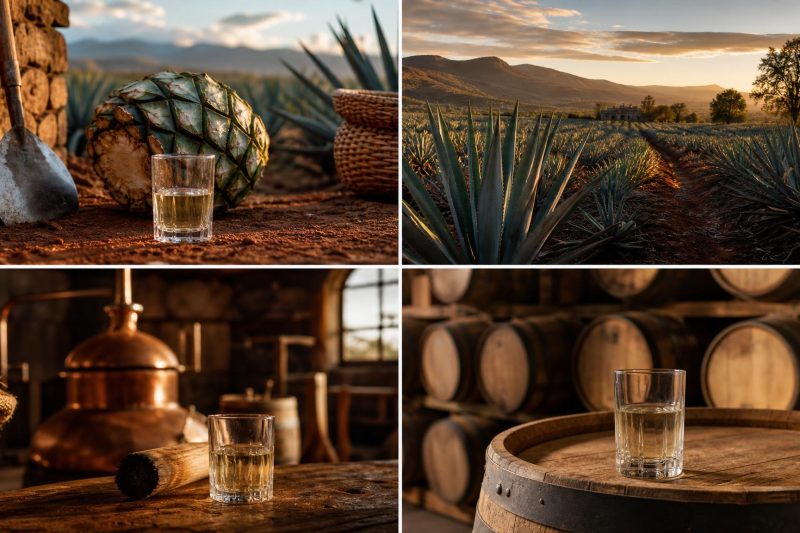
Complete Whiskey Guide 2026: Bourbon, Scotch, Irish, Japanese, Canadian and US
My father was a Scotch drinker. Not an everyday drinker — but whenever company came, out came the Dewar’s. That bottle on the shelf was as much a part of our home as anything else I remember growing up. When I turned 18 and was finally legal, Dewar’s and soda was my drink of choice. It felt like the right inheritance.
My career took me to New York City with a growing book of business. My clients were older, they appreciated a proper business lunch, and I learned quickly that a martini was the way to go. I always arrived early, introduced myself to the waiter and bartender, and made a standing arrangement: after one drink, make mine with water. A practice that served me well for years.
Scotch stayed with me through all of it — on the rocks now instead of with soda. Then I moved to Arizona, and everything changed. Scotch drinkers were rare out West. I learned the ways of whiskey and bourbon. And I discovered that the category I thought I already knew was much larger and more interesting than one bottle on my father’s shelf had suggested.
Today my go-to cocktails are a Martini and a Manhattan. I still love a good Scotch — The Macallan is my pour — and Irish whiskey and bourbon have earned permanent spots in the rotation. This guide is everything I wish someone had handed me when I started exploring. Whether you are just beginning or looking to go deeper, pull up a chair. There is a lot worth knowing — and a lot worth drinking. — Don Fiorentino, Editor/Publisher, CrushBrew
Whiskey is the most diverse spirits category in the world. Five major traditions — American bourbon, Scotch, Irish, Japanese, and Canadian — each with its own legal requirements, production methods, flavor signatures, and cultural identity. They share a basic framework: grain, fermentation, distillation, oak aging. Everything else is different. Understanding those differences does not require a spirits education. It requires a willingness to taste with curiosity rather than loyalty. This guide covers all five traditions — what makes each one distinctive, which bottles are worth your money, and what to make with them when the occasion calls for a cocktail rather than a neat pour.
In This Guide
- Bourbon — America’s native spirit
- Scotch — the regional map that changes everything
- Irish Whiskey — the smoothest door into the category
- Japanese Whisky — precision, Mizunara, and the man who started it all
- Canadian Whisky — the most underrated of the five
- What to drink when — the practical guide
- The Manhattan — the cocktail that ties it all together
Bourbon — America’s Native Spirit
Bourbon is the most precisely defined spirit in the American regulatory system. The rules exist not to intimidate but to guarantee: every bottle labeled bourbon has met the same production requirements, which means the label tells you something real about what is inside.
The mash bill must be at least 51% corn — the rest is typically rye, wheat, or malted barley, and those secondary grains are where bourbons begin to diverge in character. High-rye bourbons (Four Roses, Bulleit, Basil Hayden) are spicier, drier, and more assertive. High-wheat bourbons (Maker’s Mark, W.L. Weller) are softer, rounder, and sweeter. The corn provides the baseline sweetness; the secondary grain provides the personality.
The new charred oak barrel requirement is what gives bourbon its color and much of its flavor. Vanilla, caramel, toasted oak, and baking spice all come from the wood. A straight bourbon — aged a minimum of two years — has had enough time for the spirit to develop genuine complexity from the barrel.
Bourbon Cocktails
Old Fashioned: 2 oz bourbon, 1 sugar cube (or 1 tsp simple syrup), 2-3 dashes Angostura bitters, orange peel. Muddle sugar with bitters, add bourbon, stir with ice, strain over a large cube, express orange peel over the glass. The oldest cocktail in American drinking culture and still the best showcase for good bourbon.
Mint Julep: 2.5 oz bourbon, 6-8 fresh mint leaves, 1 tsp simple syrup, crushed ice. Muddle mint gently with syrup, add bourbon, pack with crushed ice, garnish with a mint bouquet. Use a high-proof bourbon — the ice dilutes aggressively.
Bourbon Sour: 2 oz bourbon, 0.75 oz fresh lemon juice, 0.75 oz simple syrup, optional egg white. Shake hard, strain over ice. A good introduction for anyone coming from the cocktail world rather than the spirits world.
Scotch — The Regional Map That Changes Everything
My father’s Dewar’s was a blended Scotch — a category that accounts for roughly 90% of all Scotch whisky sold worldwide and is, despite occasional snobbery from single malt enthusiasts, a genuinely great product. Dewar’s White Label blends grain whisky with Highland malt whiskies for a smooth, accessible pour that has introduced more people to Scotch than probably any other bottle. There is nothing wrong with starting there. There is a great deal to discover from there.
The single most useful piece of information on any bottle of Scotch is the region. Scotland’s five whisky regions each produce a recognizable style, and knowing the map is the fastest way to find what you like.
A note on Glenmorangie worth passing along: if you visit the distillery in the Scottish Highlands — and it is worth the trip — you will learn that the correct pronunciation is Glen-MORE-n-gee, with the emphasis on MORE and the final syllable rhyming with “gee.” The distillery receives early morning calls from the United States several times a week from someone in a bar trying to settle a drinker’s bet on the pronunciation. They are always happy to answer. Now you know.
Scotch Cocktails
Rob Roy: 2 oz blended Scotch, 1 oz sweet vermouth, 2 dashes Angostura bitters. Stir with ice, strain into a coupe, garnish with a cherry. The Scotch Manhattan — and a very good one. Dewar’s works beautifully here.
Penicillin: 2 oz blended Scotch, 0.75 oz fresh lemon juice, 0.75 oz honey-ginger syrup, 0.25 oz Islay single malt floated on top. One of the great modern cocktails, invented at Milk and Honey in New York City in 2005. The Islay float adds smoke without dominating.
Scotch and Soda: 2 oz Scotch, 4-5 oz good sparkling water, large ice cube. The drink my father poured for company. Some things do not need improving.
Irish Whiskey — The Smoothest Door Into the Category
If you are introducing someone to whiskey for the first time, start with Irish. Triple distillation — standard practice in Ireland and unusual almost everywhere else — removes more of the harsh compounds that make spirits rough, producing a naturally gentle spirit that does not require an acquired taste to enjoy. Irish whiskey is also typically unpeated, giving it a clean grain and malt character without the smokiness that puts some drinkers off Scotch.
The Irish whiskey category is having a remarkable renaissance. In 1980 there were two operational distilleries in Ireland. Today there are over 40 — a craft distilling boom driven by global appetite for premium Irish expressions and a new generation of distillers pushing beyond the traditional pot still style.
Pure pot still Irish whiskey — made from a mash of malted and unmalted barley distilled in a copper pot still — is Ireland’s most distinctive contribution to the whiskey world. The unmalted barley gives it a spicy, creamy texture unlike anything produced anywhere else. Redbreast is the category’s benchmark expression and one of the most rewarding bottles in the entire whiskey world.
Irish Whiskey Cocktails
Irish Coffee: 1.5 oz Irish whiskey, 5 oz hot black coffee, 1 tsp brown sugar, lightly whipped cream floated on top. The original was created at Foynes Flying Boat Terminal in County Limerick in 1943 to warm transatlantic passengers. The cream should float, not sink — pour it over the back of a spoon.
Irish Mule: 1.5 oz Irish whiskey, 4 oz ginger beer, 0.5 oz fresh lime juice, served over ice in a copper mug. Lighter and more approachable than its vodka counterpart.
Tipperary: 1.5 oz Irish whiskey, 0.75 oz sweet vermouth, 0.75 oz green Chartreuse, 2 dashes Angostura bitters. Stir, strain into a coupe. One of the oldest Irish whiskey cocktails in the canon and one of the most underappreciated.
Japanese Whisky — Precision, Mizunara, and the Man Who Started It All
The story of Japanese whisky begins with one man and a set of notebooks. In 1918, a young Japanese chemist named Masataka Taketsuru enrolled at the University of Glasgow to study organic chemistry. He apprenticed at several Scottish distilleries, learned every aspect of Scotch production, married a Scottish woman named Rita Cowan, and returned to Japan in 1920 with detailed notebooks covering distillation, maturation, and blending. He first partnered with Shinjiro Torii — founder of what would become Suntory — to establish Japan’s first commercial whisky distillery at Yamazaki in 1923, near Kyoto, chosen for its exceptional water quality and humid climate. In 1934, the two men parted ways and Taketsuru founded his own distillery at Yoichi on Hokkaido, Japan’s northernmost island, where the cool damp climate resembled Scotland most closely. His company eventually became Nikka. The two companies he helped create still dominate Japanese whisky today.
What Japanese distillers did with Taketsuru’s Scottish foundation was something genuinely new. They applied Japanese manufacturing philosophy — precision, consistency, and a commitment to doing one thing exceptionally well — to a craft the Scots had built on tradition and terroir. A single Japanese distillery like Suntory’s Yamazaki produces dozens of distinct base whiskies in-house, varying still shape, wash composition, yeast strain, and cask type, then blends them to achieve remarkable consistency year over year.
The other thing that makes Japanese whisky unique is Mizunara oak — a native Japanese wood used for aging that imparts flavors found nowhere else in the whisky world: sandalwood, coconut, and a distinctive incense-like quality that the Japanese call “oriental spice.” Mizunara casks are expensive, rare, and notoriously difficult to work with, but the flavor contribution is so distinctive that it has become one of the most sought-after cask types in the global whisky market. According to Liquor Geeks (April 2026), Mizunara-influenced expressions like Hibiki Japanese Harmony and Yamazaki 12 are among the most internationally recognized bottles in the category.
A note on the legal landscape: Japanese whisky labeling has historically operated on voluntary industry standards rather than law. As of March 2026, the Japanese National Diet is actively working toward establishing legal definitions for the category — which will mean the JSLMA-compliant bottles you buy today are positioned on the right side of what is coming.
Japanese Whisky Cocktails
Japanese Highball (Mizuwari): 1.5-2 oz Japanese whisky, 4-5 oz cold sparkling water, large ice cubes. Stir gently — do not shake, do not over-stir. A national institution in Japan, where it is consumed the way Americans drink beer with food. Suntory Toki was developed specifically for this drink.
Japanese Old Fashioned: 2 oz Nikka From the Barrel, 1 tsp simple syrup, 2 dashes Angostura bitters, expressed yuzu or orange peel. The bourbon Old Fashioned with a Japanese substitution that produces a richer, more complex result than most people expect.
Canadian Whisky — The Most Underrated of the Five
Canadian whisky has a reputation problem it has not entirely deserved for at least two decades. The reputation — smooth, light, unremarkable, the whisky you drink when you do not really care about whisky — was earned by a generation of mass-market expressions designed for maximum accessibility. It was never the complete picture, and the best Canadian whiskies today make that clear.
The defining characteristic of Canadian production is flexibility. Canadian law allows distillers to blend aged whiskies from multiple grains, add flavoring spirits, and adjust the final blend in ways that bourbon and Scotch regulations do not permit. That flexibility produced the light, easy-drinking blends that defined the category’s reputation. It also produces the high-rye expressions that have earned Canadian whisky its current critical rehabilitation.
Canadian rye — particularly 100% rye expressions like Lot No. 40 and Alberta Premium — shares enough character with American rye and bourbon that crossing over feels natural rather than like a category change. The spice, the sweetness, the oak structure are all there. The Canadian version tends to be slightly lighter and more polished, a product of longer cold-climate maturation cycles.
Canadian Whisky Cocktails
Rye Manhattan: 2 oz Canadian rye (Lot No. 40 or Crown Royal Northern Harvest Rye), 1 oz sweet vermouth, 2 dashes Angostura bitters. Stir with ice, strain into a coupe, garnish with a cherry. Lighter and drier than a bourbon Manhattan — a genuine alternative worth knowing.
Whisky Sour: 2 oz Canadian whisky, 0.75 oz fresh lemon juice, 0.75 oz simple syrup, optional egg white. Shake hard, strain over ice. Crown Royal’s smoothness makes it one of the best whisky sour bases in the category.
American Whiskey Beyond Bourbon — Tennessee, Single Malt, and the Craft Revolution
Bourbon gets the attention, but American whiskey is a broader category than any single style. Two other traditions deserve a place in any complete guide — Tennessee whiskey, which is bourbon’s closest relative and most frequent rival, and American single malt, a craft category that has grown from almost nothing twenty years ago into one of the most exciting corners of the whiskey world.
Tennessee Whiskey — One Extra Step That Changes Everything
Tennessee whiskey meets every legal requirement for bourbon — 51% corn mash, new charred oak barrel, proof requirements and all. But it adds one step that bourbon does not require and that legally distinguishes it from bourbon entirely: the Lincoln County Process. Before aging, the new spirit is filtered slowly through ten feet of sugar maple charcoal, which removes certain congeners and imparts a distinctive smoothness and subtle sweetness that bourbon does not have. Jack Daniel’s — the world’s best-selling American whiskey — uses this process. So does George Dickel, whose No. 12 is one of the most underrated value bottles in American whiskey. Tennessee law now requires this charcoal filtering for any whiskey labeled as Tennessee whiskey, which means the distinction is protected and genuine. Tennessee whiskey is not bourbon. Bourbon is not Tennessee whiskey. The difference is one step and it is a real one.
American Single Malt — The Craft Category Worth Watching
American craft distilleries have been producing single malt whiskey — made from 100% malted barley, distilled at a single facility — for two decades, and the category has matured into something genuinely impressive. The American Single Malt Whiskey Commission established a legal definition for the style in 2024, giving the category the regulatory framework it needed to compete internationally. The bottles worth knowing: Westland Distillery in Seattle produces the most nationally recognized American single malt — the Peated expression in particular earns favorable comparisons to Islay Scotch from people who know both well. Stranahan’s in Denver has been making Colorado single malt since 2004 and remains one of the most decorated American craft whiskey producers. Hillrock Estate Distillery in the Hudson Valley of New York grows its own grain, malts on-site, and ages in a solera system — one of the most complete grain-to-glass operations in American whiskey. Tuthilltown Spirits in Gardiner, New York — whose Hudson Baby Bourbon was one of the first craft bourbons produced in New York after Prohibition — also produces a compelling Hudson Single Malt that reflects the Hudson Valley terroir as directly as any American whiskey. The American craft single malt category is young, ambitious, and producing bottles that reward the attention of any serious whiskey drinker.
What to Drink When — The Practical Guide
The Quick Reference
First drink of the evening, social setting: Irish whiskey neat or with a single large cube. Smooth, approachable, conversation-friendly.
Business dinner, you want one drink to last: Scotch on the rocks — The Macallan or Glenmorangie. Slow to dilute, complex enough to sip, classic enough to project confidence.
Cocktail hour, making drinks for guests: Bourbon Old Fashioned or Manhattan. Both work for a wide range of palates and both are easy to make well.
After dinner, quiet evening: Japanese whisky neat — Hibiki Harmony or Nikka From the Barrel. Complex enough to hold your attention, smooth enough to sip without distraction.
Celebrating something genuinely special: Redbreast 12 or The Macallan 18, neat, in a good glass. Give it ten minutes to open up. Do not rush it.
Someone says they do not like whiskey: Start them with Irish — Jameson or Green Spot. Triple distillation removes the harshness most whiskey skeptics are reacting to. If they like gin, try Suntory Toki in a highball. Clean, light, and nothing like what they expect whiskey to taste like.
Cooking with whiskey: Do not cook with anything you would not drink. A splash of bourbon in a sauce or barbecue glaze genuinely improves it. Elijah Craig is the right call here.
Budget is tight: Canadian whisky. Lot No. 40 at around $40, Forty Creek at similar pricing. Both deliver more than the price suggests.
The Manhattan — The Cocktail That Ties It All Together
The Manhattan is the whiskey cocktail. It works with bourbon (richer, sweeter, more American), rye (spicier, drier, more assertive), Scotch in the Rob Roy variation, Canadian rye (lighter, more polished), and even Irish whiskey in a pinch. It is the one cocktail that travels across every whiskey tradition and produces something excellent in each one.
The recipe is simple and the ratios matter more than the brand: two parts whiskey to one part sweet vermouth to two dashes of Angostura bitters. Stir — never shake — with ice until properly cold and slightly diluted, approximately 30 seconds. Strain into a chilled coupe. Garnish with a Luxardo maraschino cherry or an expressed orange peel.
The most important variable after the whiskey is the vermouth. Vermouth is a wine-based product and it goes stale after opening. Keep it in the refrigerator and replace it every two to three weeks. A Manhattan made with fresh vermouth and one made with a bottle that has been open on a room-temperature shelf for three months are genuinely different drinks. The vermouth matters more than most people realize.
The Perfect Manhattan — Three Variations
Bourbon Manhattan: 2 oz Blanton’s or Elijah Craig, 1 oz Carpano Antica sweet vermouth, 2 dashes Angostura bitters, Luxardo cherry. Rich, sweet, classic. The one to make when you want to impress.
Rye Manhattan: 2 oz Basil Hayden or Bulleit Rye, 1 oz Dolin Rouge vermouth, 2 dashes Angostura bitters, expressed orange peel. Drier, spicier, and more complex. The one to make when you want something to think about.
Scotch Manhattan (Rob Roy): 2 oz Dewar’s White Label or The Macallan 12, 1 oz sweet vermouth, 2 dashes Angostura bitters, cherry. The one that would have made my father proud.
Frequently Asked Questions
What is the actual difference between whiskey and whisky?
The spelling reflects the country of origin, not a difference in the product. Ireland and the United States use “whiskey” with an e. Scotland, Japan, and Canada use “whisky” without. The distinction is purely orthographic — a matter of national tradition rather than a signal about what is in the bottle. Both spellings are correct in their respective contexts.
Can bourbon be made outside Kentucky?
Yes — bourbon can legally be produced anywhere in the United States. The regulations governing bourbon apply federally, not by state. Kentucky produces approximately 95% of the world’s bourbon supply, partly because of its limestone-filtered water and partly because its extreme temperature swings between summer and winter cause the spirit to expand into and contract out of the barrel wood dramatically, accelerating flavor development. But bourbon from Texas, New York, Colorado, and elsewhere is legitimate bourbon.
What makes Scotch smoky and how do you know if a bottle will taste that way?
The smokiness comes from peat — partially decomposed organic matter burned to dry malted barley during production. Peat levels are measured in phenol parts per million (PPM) and some bottles disclose this on the label. Islay whiskies (Laphroaig, Ardbeg, Bowmore) are typically the peatiest. Highland and Speyside malts are generally unpeated or lightly peated. If a label does not indicate peating level, region is the most reliable guide — Islay means smoky; Speyside almost certainly means it will not be.
Is Japanese whisky worth the premium over Scotch at the same price point?
At the entry level — Suntory Toki, Nikka From the Barrel — Japanese whisky delivers exceptional quality relative to its price and compares favorably with Scotch at the same tier. At the premium level, Japanese whisky commands a significant premium for scarcity as much as quality. For pure drinking pleasure relative to price, the entry-level Japanese expressions are among the best value whisky bottles in the world.
What is Mizunara oak and why does it matter?
Mizunara is a native Japanese oak species used for whisky maturation that produces flavors found nowhere else — sandalwood, coconut, incense, and what Japanese distillers describe as “oriental spice.” It is rare, expensive, porous, and requires longer aging periods than American or European oak. Whisky aged in Mizunara casks commands a premium, but the flavor contribution is genuinely distinctive and worth seeking out if you want to understand what Japanese whisky does that Scotch cannot replicate.
How should whiskey be stored once the bottle is open?
Upright, away from direct light and heat, with the cap sealed tightly. A bottle more than half empty will oxidize more quickly because of the increased air-to-liquid ratio. Consider transferring the remainder to a smaller bottle to minimize air contact. Whiskey does not need refrigeration. The goal is a cool, dark, consistent environment — a liquor cabinet rather than a countertop next to the stove.
Sources
- Best Japanese Whiskey 2026 — Liquor Geeks, April 2026
- The 11 Best Japanese Whisky Brands to Buy Now — Robb Report, January 2026
- Japanese Whisky New Releases Spring 2026 — Sip Japan, February 2026
- 10 Best Canadian Whiskey Brands Ranked — Thirsty Bear, April 2026
- 16 Best Canadian Whiskies to Savor in 2026 — Men’s Journal, December 2025
- Canada’s Best Whisky — Canadian Whisky Awards 2026, Forbes, January 2026