Craft Beer Style Guide: Every Style Explained, From Pilsner to Imperial Stout
You walk into a good bottle shop and the cooler holds two hundred beers. The tap list at the brewery down the street has thirty options. None of them are labeled in a way that tells you what they taste like. This guide fixes that. Every major style explained: what is in it, what it tastes like, how strong it is, and what to eat with it.
Key Takeaways
◆ All beer is either an ale or a lager. The difference is the yeast and the temperature at which it ferments. Everything else flows from ingredients and process.
◆ IPAs remain the most popular craft style, but lagers and pilsners are the fastest-growing segment as drinkers move toward cleaner, more drinkable beer.
◆ ABV, IBU, and SRM are the three numbers that tell you what to expect before you taste. ABV is strength, IBU is bitterness, SRM is color.
◆ The best food pairings follow a simple rule: match the weight of the beer to the weight of the food. Light lager with fish, imperial stout with braised short ribs.
◆ Fresh matters for hoppy beers. IPAs are best within two to four months of canning. Barrel-aged stouts and sours can improve with a year or more of cellaring.
In This Article
- What makes a beer style?
- Lagers: clean, cold, and harder to make than they look
- IPAs: still the heart of craft beer
- Ales: the broad middle of beer
- Dark beers: stouts and porters
- Wheat beers: light, cloudy, and underrated
- Belgian styles: yeast is the point
- Sour and wild ales: the category that changed everything
- Specialty and seasonal styles
- How to buy, store, and drink craft beer
- Frequently asked questions
- Style quick reference
What Makes a Beer Style?
Every beer starts with four ingredients: water, malted grain, hops, and yeast. The style is determined by how those four ingredients are combined and what happens during fermentation. Change the grain bill and you change the color and sweetness. Change the hops and you change the bitterness and aroma. Change the yeast and you change the flavor compounds. Change the fermentation temperature and you change everything else.
The broadest division in beer is between ales and lagers. Ales use a top-fermenting yeast that works at warmer temperatures (60 to 75 degrees Fahrenheit) and produces a range of fruity, spicy flavor compounds. Lagers use a bottom-fermenting yeast that works cold (35 to 50 degrees) and produces a cleaner, crisper result. Most of the classic European beer traditions (German, Czech, Belgian, British) are rooted in one or the other. American craft brewing has expanded both categories in directions the original brewers could not have imagined.
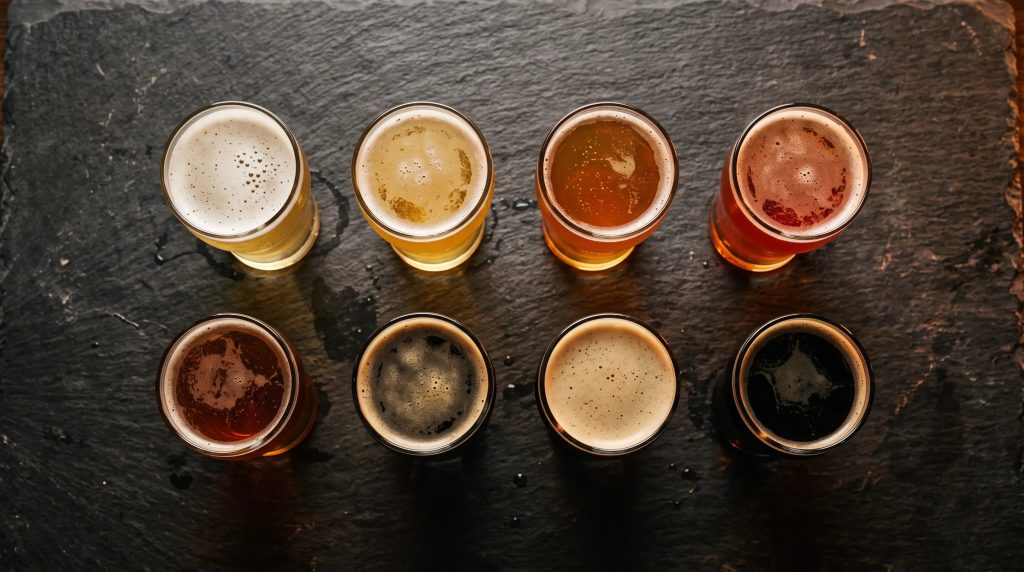
Three numbers appear on a lot of beer labels and tap lists. ABV (alcohol by volume) measures strength. IBU (International Bitterness Units) measures hop bitterness on a scale where 10 is barely perceptible and 100 is intensely bitter. SRM (Standard Reference Method) measures color from 1 (pale straw) to 40-plus (black). These numbers are not the whole story, but they are a useful shorthand before you order.
Lagers: Clean, Cold, and Harder to Make Than They Look
Lagers are the most widely consumed beers in the world, and for most of American history, “beer” meant a mass-produced lager. Craft brewing shifted the conversation to ales for thirty years. Now the lager is having its moment. Small breweries are investing in lagering tanks, cold-conditioning properly, and producing pilsners and helles that rival the best in Germany and the Czech Republic.
| Style | ABV | IBU | Character | Pair With |
|---|---|---|---|---|
| Czech Pilsner | 3.2-5.6% | 15-45 | Rich malt, herbal Saaz hops, lingering bitterness. Pilsner Urquell is the benchmark. | Spicy food, roast pork, soft cheeses |
| German Pilsner | 3.2-5.6% | 25-45 | Crisper and more floral than the Czech version. Drier finish. | Grilled fish, poultry, light salads |
| Helles | 4.5-5.5% | 15-22 | Munich’s everyday lager. Softer than a pilsner, gentle malt sweetness, low bitterness. | Bratwurst, pretzels, mild cheese |
| Marzen / Oktoberfest | 5.0-6.0% | 18-30 | Amber, toasty, bready. Originally brewed in March and lagered through summer. | Roast chicken, braised pork, caramelized onions |
| Dunkel | 4.5-5.6% | 15-25 | Dark lager, roasted character, light-bodied and smooth. Less intense than a stout. | Smoked meats, sausage, roasted root vegetables |
| Schwarzbier | 3.8-5.0% | 20-30 | Black lager that drinks lighter than it looks. Coffee and chocolate without the heaviness. | Grilled meats, dark chocolate, aged cheddar |
| Mexican Lager | 4.0-5.5% | 10-20 | Light, crisp, extremely food-friendly. Fastest-growing craft lager style in the US. | Tacos, ceviche, grilled shrimp |
|
Who Is Doing It Well Cohesion Brewing Co. in Denver has built its entire reputation on Czech-style lagers brewed and served traditionally. Alternate Ending Beer Co. in New Jersey makes lagers from around the world, including Thai-inspired and Iberian versions. Marlowe Artisanal Ales in New York focuses on sessionable lagers and hoppy ales that drink easily. |
IPAs: Still the Heart of Craft Beer
The India Pale Ale has dominated American craft brewing for twenty years, and for good reason. It is versatile, hop-forward, and rewards brewers who are willing to experiment. The category has expanded into a dozen subcategories, each with a distinct character. Here is how to tell them apart.
| Style | ABV | IBU | Character | Pair With |
|---|---|---|---|---|
| American IPA | 5.5-7.5% | 40-70 | Citrus, pine, tropical fruit from Cascade, Centennial, and Simcoe hops. Clear, dry finish. | Spicy food, grilled fish, sharp cheddar |
| West Coast IPA | 6.0-7.5% | 50-80 | Crisper and more aggressively bitter. Piney, resinous, dry. Think Stone Brewing, Ballast Point. | Fatty foods, burgers, blue cheese |
| New England IPA | 6.0-8.0% | 25-60 | Hazy, soft, juicy. Tropical fruit and citrus dominate. Low bitterness despite high hop additions. Best within four to six weeks of canning. | Mild cheeses, sushi, light pasta |
| Double / Imperial IPA | 8.0-14.0% | 60-100 | Amplified everything. Bold bitterness, warming alcohol, intense aroma. Not for the casual occasion. | Rich fatty foods, aged cheeses, dessert |
| Session IPA | 3.5-5.0% | 30-50 | Hop character without the alcohol. Built for drinking more than one. | Light snacks, salads, shellfish |
| Fruited IPA | 5.0-8.0% | 20-50 | Real fruit (apricot, mango, grapefruit, watermelon) added to a hop base. Ballast Point’s Grapefruit Sculpin made this category mainstream. | Spicy food, fish tacos, tropical fruit desserts |
Ales: The Broad Middle of Beer
Most of craft beer’s variety lives in the ale category. Ales ferment warmer and faster than lagers, and the yeast produces a wider range of flavor compounds. The result is a spectrum from the light and delicate to the dark and complex.
| Style | ABV | IBU | Character | Pair With |
|---|---|---|---|---|
| Pale Ale | 4.0-5.5% | 15-45 | The gateway beer. Balanced malt and hops. American versions lean citrus and pine; English versions are earthier and biscuity. | Italian food, fried foods, pepper jack cheese |
| Amber / Red Ale | 4.5-6.2% | 20-40 | Caramel malt backbone with moderate hop bitterness. Color comes from crystal malt. | Burgers, barbecue, grilled sausage |
| Brown Ale | 4.0-6.3% | 15-30 | Caramel, nuts, toffee. English versions toasty and biscuity; American versions add chocolate and coffee notes. | Beef stew, red meat, gouda |
| Kolsch | 4.4-5.2% | 18-30 | Clean, delicate German ale lagered after fermentation. Light fruit, subtle grain, crisp finish. Style legally protected in Cologne. | Salads, light seafood, goat cheese |
| English Bitter / ESB | 3.5-6.0% | 20-50 | Fruity yeast, toasty malt, earthy hops. Low carbonation, meant to be drunk in pints at the pub. The ancestor of the modern pale ale. | Fish and chips, shepherd’s pie, cheddar |
Dark Beers: Stouts and Porters
Dark beer gets unfairly dismissed as heavy. A dry stout is lighter in body than many IPAs. A schwarzbier is lighter than a pale ale in calories. The darkness comes from roasted malt, not from weight or alcohol.
| Style | ABV | IBU | Character | Pair With |
|---|---|---|---|---|
| Dry Stout | 3.8-5.0% | 30-45 | Roasted, coffee-like, dry finish. Guinness is the template. Deceptively light in body. | Oysters, beef stew, chocolate |
| Milk / Sweet Stout | 4.0-6.0% | 20-40 | Lactose adds creamy sweetness and full body. The base for most pastry stouts. | Chocolate desserts, vanilla ice cream, brie |
| Imperial Stout | 8.0-14.0% | 50-90 | Rich, complex, intense. Dark fruit, chocolate, oak from barrel aging. Goose Island Bourbon County is the American benchmark. Can be cellared for years. | Braised short ribs, aged cheeses, dark chocolate |