Cocktails Around the World: Same Drink, Very Different Rules
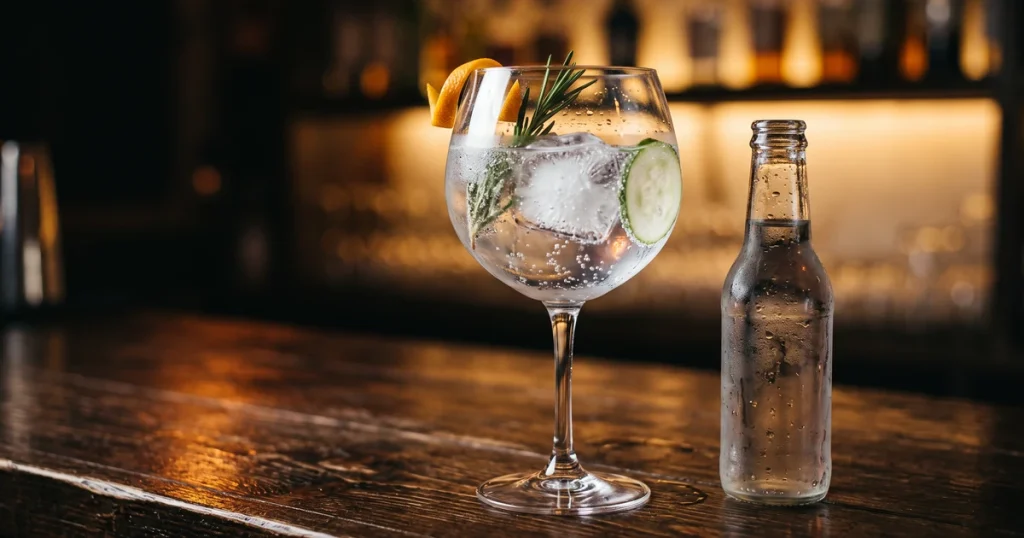
The menu said gin and tonic. What arrived was something else entirely: a wide balloon glass, a single oversized ice cube, a small arrangement of citrus peel and fresh herbs, and the gin already poured. Then the server set down a small bottle of premium tonic on the side and walked away. The pour was yours to make. That is how they do it in Spain, and once you have had it that way, the highball glass version feels like it is missing something.
That moment is a good reminder that the same drink can mean very different things depending on where you are standing. Here are five classics and what happens to them when they cross a border.
The Gin and Tonic: Britain Invented It, Spain Perfected It
The gin and tonic is a British invention, born in colonial India as a way to make quinine more palatable. The British version is simple: gin, tonic, ice, a wedge of lemon or lime in a highball glass. Functional and fine.
Spain took the same two ingredients and built a ritual around them. The copa de balon, a wide-mouthed balloon glass, is the foundation. It concentrates the aromatics so the nose of the gin opens before you take the first sip. The ice is large and spherical or cubed, never crushed, to slow dilution. The garnish is chosen to complement the gin’s botanicals: juniper-forward gins get rosemary or black pepper; floral gins get cucumber or elderflower; citrus-driven gins get orange peel and a cardamom pod. The tonic is served separately, chilled, in a small bottle, so the drinker controls the ratio and the carbonation stays intact until it hits the glass. It is a two-minute ritual for a drink most people make in ten seconds. Spain is now the largest consumer of gin in Europe. The ritual is a big part of why.
|
THE TAKEAWAY US version: gin, tonic, ice, lime in a highball. Spanish version: copa de balon, large ice, botanical garnish chosen to match the gin, premium tonic poured at the table. Same two ingredients, completely different experience. |
The Negroni: Italy Invented It, Then Accidentally Made It Better
The Negroni is Italian: equal parts gin, Campari, and sweet vermouth, stirred and served over ice with an orange peel. It was invented in Florence around 1919 when Count Camillo Negroni asked a bartender to strengthen his Americano by swapping soda water for gin. It has not changed much since.
What changed was the Negroni Sbagliato, which translates roughly as “wrong Negroni.” A bartender at Bar Basso in Milan accidentally reached for a bottle of Prosecco instead of gin sometime in the 1960s. The result replaced the gin with sparkling wine, making a lighter, more effervescent version of the same drink. It is the standard aperitivo order in Milan and much of northern Italy. The accidental version became a classic. In the United States the Negroni is a craft cocktail bar staple; the Sbagliato is still largely unknown outside Italian restaurants. Worth ordering if you see it.
|
THE TAKEAWAY Classic Negroni: gin, Campari, sweet vermouth, stirred. Negroni Sbagliato: Prosecco replaces the gin. Lighter, bubblier, easier to drink before dinner. The accidental version is the right call in warm weather. |
The Martini: Drier as You Go North
The American martini has drifted far from its origins. Order a martini at most US bars and you will get a large pour of cold vodka with a splash of vermouth, stirred or shaken, in a chilled glass. Bone dry. Very cold. Mostly vodka.
The British tend toward gin and treat the vermouth ratio as a serious matter: a proper London dry martini uses a meaningful amount of dry vermouth, not just a rinse of the glass. French bartenders lean toward a slightly wetter pour with more vermouth influence, closer to what the original recipe would have been a century ago. In Japan, the martini is approached with the precision the country applies to everything: the gin is often Japanese, the vermouth is measured carefully, the glass is chilled for longer, and the stir is deliberate and slow. The drink is smaller, colder, and technically immaculate. Each version reflects how the country thinks about drinking: American (big and cold), British (classic and principled), French (balanced), Japanese (precise and ceremonial).
|
THE TAKEAWAY US: large, dry, often vodka. UK: gin, proper vermouth ratio. France: wetter, more balanced. Japan: smaller, technically precise, often Japanese gin, slow stir. The martini is a window into how each country thinks about a drink. |
The Bloody Mary vs. The Michelada: Same Idea, Different Hemisphere
The Bloody Mary is an American brunch institution: vodka, tomato juice, Worcestershire, hot sauce, horseradish, lemon, celery salt. Served tall, garnished aggressively, consumed with eggs. It is a morning drink, a recovery drink, a reason to stay at the table.
Mexico’s answer is the Michelada, and it covers the same territory from a completely different angle. Beer replaces the vodka. The glass is rimmed with chili salt. The base is usually lime juice, Worcestershire, hot sauce, and tomato juice or Clamato, poured over ice with a cold lager on top. The result is lighter, more refreshing, and more sessionable than a Bloody Mary. Where the Bloody Mary is rich and substantial, the Michelada is bright and savory. Both are drinks built for mornings when you want something with a little heat and a lot of flavor. Neither is better; they are just solving the same problem from opposite sides of the border.
|
THE TAKEAWAY Bloody Mary: vodka base, thick, substantial, the American brunch drink. Michelada: beer base, chili salt rim, bright and savory, the Mexican answer to the same morning-after question. If you have never had a Michelada, start there. |
The Whisky Highball: Japan Turned a Simple Drink Into an Art Form
In the United States, a whiskey and soda is a nothing order: a convenience drink, something to have when you do not want to think about it. In Japan, the whisky highball is a cultural institution with its own standards, its own glassware, and its own technique.
The Japanese highball, called a Haiboru, starts with the glass: a tall, thin tumbler, chilled until it frosts. The whisky goes in first, then the ice, stirred exactly 13 and a half times to bring the drink to the right temperature without over-diluting it. The soda water is poured slowly down the side of the glass to preserve carbonation. A final gentle stir. The result is cold, light, and deeply refreshing in a way that the American version rarely is. Japanese distilleries design their whiskies specifically to work in a highball, which is why Suntory Toki and Nikka From The Barrel both perform so well in the glass. In Japan the highball is what beer is at an American sports bar: the default, the casual choice, the drink everyone orders without thinking. The care put into the default is the whole point.
|
THE TAKEAWAY US whiskey and soda: casual, no particular technique. Japanese Haiboru: chilled glass, measured stir, slow pour of soda, whisky chosen for the format. The same two ingredients, one treated as an afterthought, one as a craft. |
The next time a menu says gin and tonic, ask how they make it. The answer tells you something about where you are, and sometimes the answer is worth the trip. CrushBrew covers cocktails, beer, and wine. More at CrushBrew.com.