Why Decanting Is Not Optional for Aged Wine: A Lesson from a 2005 Chateau Montrose
The bottle had been waiting twenty-one years. A 2005 Chateau Montrose, Saint-Estephe, one of the great Bordeaux vintages of the modern era. The cork came out a little soft but intact. And then I made the mistake every experienced wine drinker makes at least once: I skipped the decant and poured straight into the glass.
The first sip was ordinary. Flat, closed, the fruit buried somewhere under layers of tannin that had not yet had a chance to open. For a moment I thought the wine was lost. Twenty-one years in the cellar and I had ruined it in twenty seconds by being impatient.
Twenty minutes later, the second pour was a completely different wine. The fruit had emerged. The structure had softened. The complexity that made the 2005 Montrose one of the most discussed Bordeaux of its generation was finally showing up in the glass. The wine was not lost. It was just closed, and it needed air to remember what it was.
What Was Actually Happening
When a wine spends two decades in bottle, it goes into a kind of hibernation. The chemical compounds that produce aroma and flavor are compressed, the tannins tightly wound, the whole structure locked down in a way that protects the wine over time but also makes it nearly inaccessible the moment you pull the cork. The wine is not broken. It is simply not awake yet.
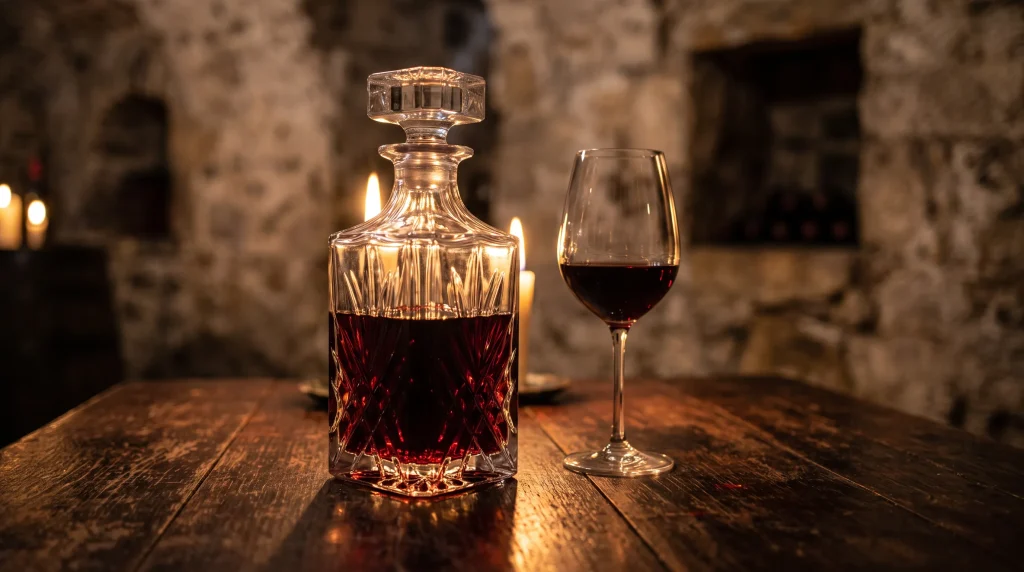
Exposure to oxygen is what wakes it up. Decanting pours the wine against a broad surface area, introducing air gradually and allowing those compressed compounds to unfurl. The tannins begin to soften. The fruit emerges from behind the structure. The aromatics open up. What smelled like nothing twenty minutes ago starts to smell like what a wine critic spent 150 words describing.
The 2005 Bordeaux vintage is worth understanding in this context. It was a hot, dry growing season that produced wines of exceptional concentration and tannic structure. The great Left Bank estates, Montrose among them, made wines built for the long haul. Cabernet Sauvignon dominant, deeply colored, dense, structured in a way that demanded time in both the cellar and the decanter. At twenty-one years old the fruit is finally integrating with the structure, but the wine still needs help getting there. An hour in a decanter is not excessive. Two hours would not have hurt.
|
CHATEAU MONTROSE 2005 AT A GLANCE Appellation: Saint-Estephe, Left Bank Bordeaux. Blend: approximately 77% Cabernet Sauvignon, 19% Merlot, 4% Cabernet Franc. Classification: Second Growth, 1855. Vintage: one of the great modern Bordeaux years, intense concentration, high tannin, built for long aging. Drinking window: now through 2035 and beyond. Decant: at minimum 1 hour, ideally 2. |
When Decanting Matters Most
Not every wine needs a decanter. A fresh Pinot Noir opened for a Tuesday dinner is fine poured straight from the bottle. A New Zealand Sauvignon Blanc will not benefit from it at all, and an overly aromatic white can actually lose something in the process. The wines that genuinely require decanting fall into two clear categories.
Young, tannic reds that need time to open up. Full-bodied Cabernet Sauvignon, Syrah, Nebbiolo, Aglianico, and Bordeaux blends under ten years old are closed in a way that air can fix. The tannins are still aggressive, the fruit has not yet integrated with the structure, and the aromatics are compressed. An hour in a decanter does more for a young Napa Cabernet than any amount of swirling in the glass.
Aged reds with sediment need decanting for a different reason. As wine ages, compounds precipitate out of the liquid and settle as sediment at the bottom of the bottle. The sediment is harmless but tastes bitter and gritty if it ends up in the glass. Decanting separates the clear wine from the sediment by pouring slowly and stopping when you see the sediment approaching the neck. Stand the bottle upright for an hour before opening to let the sediment settle first.
| Wine Type | Decant? | How Long | Why |
|---|---|---|---|
| Young Bordeaux / Cabernet (under 10 years) | Yes | 1 to 2 hours | Tannins need air to soften, fruit needs to open |
| Aged Bordeaux (10 to 25 years) | Yes | 30 to 60 minutes | Separate sediment, allow closed wine to wake up |
| Very old Bordeaux (25 years plus) | Yes, carefully | 15 to 30 minutes max | Needs air but fragile; too much oxygen and it fades |
| Barolo / Barbaresco | Yes | 1 to 3 hours | Nebbiolo is among the most tannic grapes; needs extended air |
| Rhone / Syrah | Yes | 1 to 2 hours | Opens up dark fruit and pepper; reduces gaminess in young bottles |
| Pinot Noir | Sometimes | 20 to 30 minutes | Light Pinot rarely needs it; older or more structured examples benefit |
| White Wines | Rarely | 20 to 30 minutes if needed | Only aged, full-bodied whites showing a closed or funky character |
| Sparkling / Champagne | No | Never | Kills the bubbles |
The Rule for Aged Wine Specifically
Older wines are more fragile than younger ones. The compounds that give them their complexity have been developing slowly for years, and they can fade almost as quickly as they bloom once exposed to too much oxygen. The window on a very old wine can be short. A 1990 Bordeaux opened and left in a decanter for three hours may have already given its best by the time you pour the second glass.
The practical rule for aged wine is to taste immediately after decanting and then again every fifteen minutes. When the wine is showing its best, that is the moment to pour for the table. Do not leave it in the decanter indefinitely. And do not rush it into the glass before it has had a chance to open. Twenty-one years of patience deserves at least thirty minutes of yours.
|
THE LESSON FROM THE MONTROSE A wine that tastes closed, flat, or disappointing on the first pour is not necessarily a bad bottle. If it has age and structure, give it air before you give up on it. Stand it upright for an hour before opening. Decant slowly against a light source so you can see the sediment. Taste it every fifteen minutes. The wine you thought was lost may turn out to be the wine of the evening. |
More on serving temperatures, cellaring, and getting the most out of aged wine at CrushBrew.com.