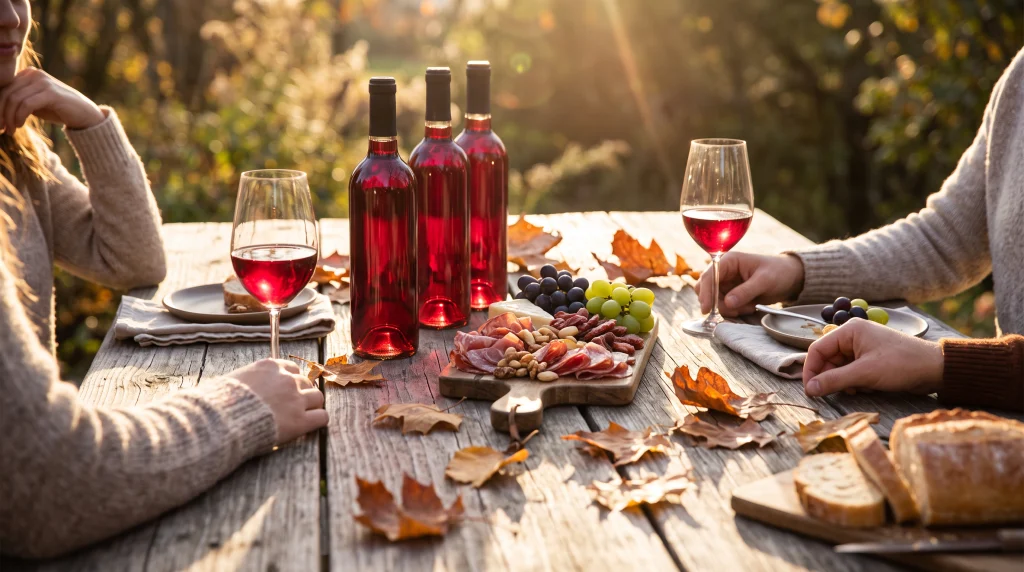
Beaujolais Nouveau 2026: Open It Now, Not Later
About forty-five years ago I was talking with a colleague about Beaujolais Nouveau. He had never heard of it, asked a few questions, and seemed genuinely interested. The next day he came in and announced that he had gone out and bought six bottles. He was planning to hold on to them so they could mature.
He was not wrong to be excited. He was just about forty-eight months too late with the aging plan.
Beaujolais Nouveau is not a wine you cellar. It is a wine you open the week it arrives, share with people you like, and finish before the year is out. The whole point is the freshness. That is not a limitation. It is what the wine is.
Why Nouveau Is Different From Every Other Wine
Beaujolais Nouveau is made from Gamay grapes grown in the Beaujolais region of France, just south of Burgundy. What makes it unusual is the production method. Standard red wine fermentation extracts color, tannin, and structure from the grape skins over a period of weeks. Nouveau uses a process called carbonic maceration, where whole uncrushed grapes ferment inside a sealed tank in a carbon dioxide environment. The fermentation happens inside the berry itself before the skins are ever broken.
The result is a wine that is low in tannin, high in fresh fruit, and loaded with the kind of vivid, juicy character that disappears with age rather than developing through it. The banana and bubble gum aromas that Nouveau is known for are byproducts of carbonic maceration, specific compounds that form during that style of fermentation. They are not a flaw. They are the signature.
By law, Beaujolais Nouveau cannot be released until the third Thursday of November. Every year, on that day, the same wine arrives simultaneously around the world. It is a celebration of the harvest just completed, not a wine built for the long haul.
|
BEAUJOLAIS NOUVEAU AT A GLANCE Grape: Gamay. Region: Beaujolais, France. Method: carbonic maceration. Release date: third Thursday of November every year. Flavor profile: fresh red fruit, cherry, raspberry, light body, low tannin, sometimes a hint of banana. Serve: lightly chilled, around 55 degrees. Drink by: spring of the following year at the latest. Do not cellar. |
How to Actually Drink It
Serve Beaujolais Nouveau slightly chilled. Not cold, not room temperature. Around 55 degrees Fahrenheit, which is about fifteen minutes in the refrigerator if the bottle has been sitting at room temp. The light chill brings out the fruit and keeps the wine from going flat and flabby, which it will do at a warm table.
It pairs well with almost anything you would serve at a casual fall dinner. Roast chicken, charcuterie, mild cheeses, Thanksgiving leftovers. It is not a wine that demands food, but it is better with it. The low tannin and bright acidity make it one of the most genuinely food-friendly bottles you will open all year.
Producers worth looking for: Georges Duboeuf is the name most associated with Nouveau and reliably delivers at around $12 to $15. Louis Jadot and Joseph Drouhin both release versions that are a small step up in complexity for a few dollars more. Any of them will do what Nouveau is supposed to do.
The Right Way to Think About It
My colleague’s instinct was not entirely wrong. Beaujolais, the broader appellation, produces wines that do age beautifully. The Cru Beaujolais villages, Morgon, Moulin-a-Vent, Fleurie, and the others, make Gamay at a level of seriousness that rewards five to ten years in the cellar. Those are wines worth holding.
Nouveau is a different animal. It is the harvest party in a bottle. It is the winemaker saying the vintage is in and here is what it tasted like two months after picking. Open it, share it, enjoy it for what it is. Six bottles aging in a rack somewhere is not going to give you anything that six bottles opened in November would not have given you better.
|
THE RULE FOR BEAUJOLAIS NOUVEAU Buy it. Open it this week. Share it with people you like. If you have a bottle left in March, it is not better for the wait. Beaujolais Nouveau is one of the few wines in the world where the best version is always the one you are drinking right now. |
More on Beaujolais, Gamay, and the Cru villages at CrushBrew.com.