Red Wine vs White Wine: Which Has More Alcohol?
#p style=”font-size:0.78rem;letter-spacing:0.15em;text-transform:uppercase;color:#7a6b72;margin-bottom:24px;”>CrushBrew Editorial · Wine Knowledge · 6 min read
Red wines typically contain slightly more alcohol than white wines — but the difference is often smaller than people expect, and color is far from the only factor. Most reds run 12.5–15% ABV; most whites run 11–14%. What actually drives alcohol content is sugar in the grape at harvest, not the color of the skin. Here’s the science behind the numbers and what they mean for your glass.
Key Takeaways
In This Article
Why Do Red Wines Often Have More Alcohol Than White Wines?
Red wines tend to run slightly higher in alcohol than whites for three interconnected reasons: where the grapes are grown, when they’re harvested, and what the winemaker is trying to achieve. None of these is absolute — there are light reds and powerful whites — but as a general pattern, the logic holds.
Red wine grapes are typically grown in warmer climates where they fully ripen and develop higher sugar levels before harvest. Think Napa Valley Cabernet Sauvignon or Barossa Valley Shiraz — regions where the sun concentrates sugars to levels that drive alcohol above 14%. White wine grapes like Sauvignon Blanc and Riesling are more commonly associated with cooler growing regions where they retain bright acidity and develop less sugar. Red wine grapes are also generally harvested later in the season, when sugar levels peak and rich, concentrated flavors develop. White wine grapes are often picked earlier to preserve freshness and acidity — before sugars climb as high.
ABV (Alcohol by Volume)
The standard measure of how much ethanol is present in an alcoholic beverage, expressed as a percentage of total volume. In wine, ABV is determined primarily by how much sugar was present in the grape juice at the time of fermentation — more sugar produces more alcohol when converted by yeast. US regulations require wine labels to display ABV but allow a tolerance of up to 1.5 percentage points, meaning a wine labeled 13.5% could legally contain between 12% and 15% alcohol.
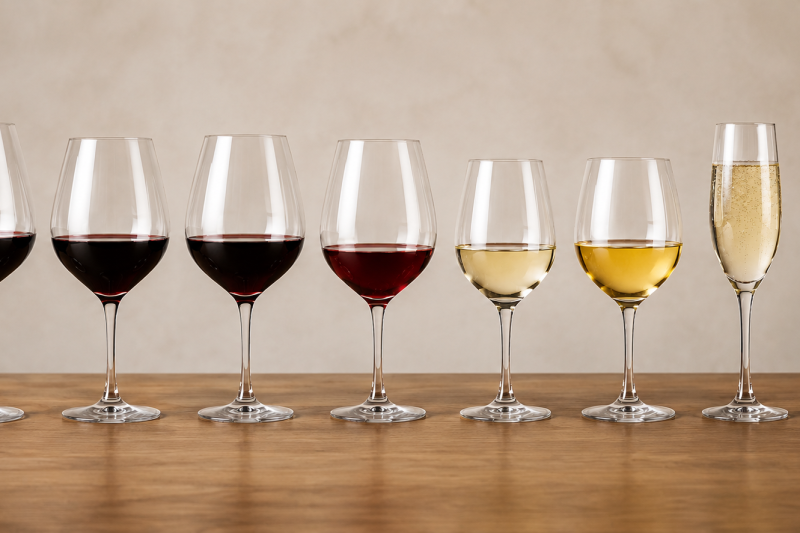
That said, color alone never determines alcohol content. A light Pinot Noir from Oregon might sit at 12.5% ABV — lower than a full-bodied Chardonnay from the same state. The grape variety, growing region, vintage conditions, and winemaker’s decisions all play a role. Color is a rough proxy, not a rule.
What Actually Drives Alcohol Content in Wine?
Alcohol in wine is the direct byproduct of fermentation — yeast consuming grape sugar and converting it to ethanol and carbon dioxide. The more sugar in the grape at harvest, the more potential alcohol in the finished wine. Everything else is variation on that core chemistry.
Brix
The scale used to measure the sugar content of grape juice before fermentation, expressed as grams of sugar per 100 grams of juice. Brix levels at harvest directly determine the wine’s potential alcohol: grapes at 24 Brix will produce a wine of roughly 14% ABV, while grapes at 22 Brix yield approximately 12.5% ABV. Winemakers monitor Brix throughout the growing season to time harvest precisely, balancing sugar accumulation against the retention of natural acidity.
What Are the Biggest Myths About Wine and Alcohol Content?
Wine alcohol myths are persistent because the rules of thumb that created them contain a grain of truth — but only a grain. Each of the following “rules” breaks down in practice more often than it holds.
Common Wine Alcohol Myths — Debunked
| The Myth | The Reality |
|---|---|
| “Red wine always has more alcohol” | A crisp Albariño from Spain might contain 13.5% ABV while a light Oregon Pinot Noir sits at 12.5%. Color doesn’t determine strength. |
| “Sweet wines are lower in alcohol” | Port can hit 20% ABV. Late-harvest Rieslings often reach 14–15%. Sweetness comes from residual sugar, not low alcohol. |
| “Expensive wines have more alcohol” | Price and alcohol have zero correlation. German Rieslings and French Burgundies — among the world’s most prestigious wines — can be relatively low in alcohol. |
| “You can taste a 1% ABV difference” | Most people can’t detect differences this small. What reads as “stronger” is usually tannins, body weight, or flavor concentration — not a detectable alcohol difference. |
What ABV Ranges Should I Expect by Wine Style?
The ranges below reflect real-world variation across growing regions and winemaking styles — not a single fixed number. A Riesling from Germany’s Mosel at 8% ABV and one from Alsace at 14% are both Riesling. Where it’s grown and how it’s made determine where it lands in the range.
ABV Ranges by Varietal
| Varietal | Typical ABV Range | Notes |
|---|---|---|
| Riesling | 8–12% | German styles especially low; Alsace runs higher |
| Pinot Grigio / Pinot Gris | 12–13.5% | Italian style lighter; Alsace Pinot Gris can be richer |
| Sauvignon Blanc | 11.5–14% | Loire Valley lower; New Zealand and California higher |
| Chardonnay | 12–14.5% | Chablis on the low end; California and Australia higher |
| Gewürztraminer | 13–14% | Aromatic; naturally richer style |
| Pinot Noir | 12–14% | Burgundy and Oregon lower; California can run higher |
| Merlot | 13–15% | Medium-bodied; warm-climate versions push higher |
| Cabernet Sauvignon | 13.5–15.5% | Full-bodied; Napa and Australia tend toward the high end |
| Syrah / Shiraz | 13.5–15.5% | Northern Rhône lower; Australian Barossa Valley higher |
| Zinfandel | 14–16% | Among the highest ABV table wines; bold and jammy |
How Do You Read Wine Alcohol Labels Correctly?
Every wine bottle sold in the US must display its alcohol content, but the number requires more interpretation than it appears to at first glance. Knowing what you’re looking at — and what the legal tolerances allow — helps you make more informed decisions at the shelf.
Residual Sugar vs. Alcohol
Residual sugar is the natural grape sugar left in a wine after fermentation stops — either because the yeast ran out of nutrients, the winemaker deliberately halted fermentation, or fermentation reached completion and the wine is dry. Residual sugar and alcohol content are inversely related when fermentation is stopped early: the sweeter the wine, the less sugar was converted to alcohol, and therefore the lower the ABV. However, this relationship breaks down for fortified wines like Port, where grape spirit is added after partial fermentation — creating both high residual sugar and high alcohol simultaneously.
Frequently Asked Questions About Wine and Alcohol Content
🍷 Wine Alcohol Content at a Glance
ABV ranges by style, what drives them, and what to choose when alcohol content matters
| Wine Style | ABV Range | Primary Driver | Best For |
|---|---|---|---|
| German Riesling (Mosel) | 7–9% | Cool climate; early harvest | Extended drinking; lower alcohol preference |
| Pinot Grigio (Italy) | 11.5–12.5% | Early harvest; light style | Sessionable; food-friendly |
| Beaujolais | 12–12.5% | Cool climate; carbonic maceration | Light red for extended meals |
| Burgundy Pinot Noir | 12.5–13.5% | Cool French climate | Moderate alcohol; elegant structure |
| Chablis / Unoaked Chardonnay | 12–13% | Cool climate; early harvest | Crisp white; lower alcohol option |
| Napa Cabernet Sauvignon | 14–15.5% | Warm climate; late harvest | Full-bodied; higher alcohol |
| California Zinfandel | 14–16% | Very ripe grapes; warm climate | Bold, jammy style; smaller pours |
| Port (fortified) | 19–22% | Added grape spirit | Dessert / nightcap; very small pours |