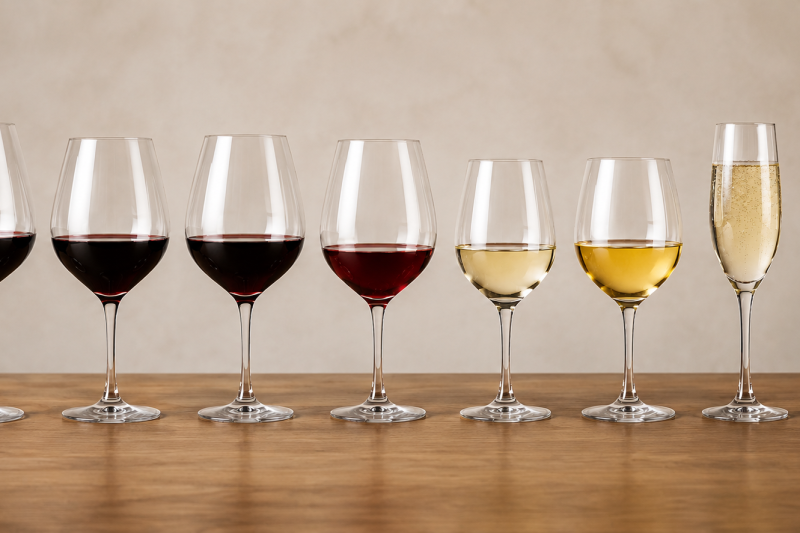
The Science Behind Wine Aeration: Does Letting Wine Breathe Really Improve the Taste?
Blog — PAA Optimized, Evergreen
┌─────────────────────────────────────────────────────────────────────┐
│
CrushBrew Editorial · Wine Knowledge · 6 min read
Yes — wine aeration genuinely improves taste for specific wine types, and the mechanism is chemical, not ceremonial. Studies show tannin polymerization reduces astringency by 30–40% in young Cabernet Sauvignon after 60–90 minutes of air exposure. The effect works through three simultaneous processes: tannin molecules polymerize into smoother chains, harsh volatile compounds evaporate, and controlled oxidation develops secondary flavor complexity. But the same exposure that transforms a young Barolo destroys a 20-year-old Burgundy. Whether aeration helps or harms depends entirely on the wine’s age, tannin level, and aromatic structure.
Key Takeaways
Aeration Works Chemically: Tannin polymerization, volatile compound evaporation, and controlled oxidation are measurable chemical processes — aeration is not a ritual, it is a transformation with quantifiable outcomes (30–40% astringency reduction in young Cabernet Sauvignon after 60–90 minutes).
Who Benefits Most: Young tannic reds under 8 years old with tannin levels above 2.5 g/L — particularly Cabernet Sauvignon, Syrah, Malbec, and Bordeaux blends. These wines show dramatic improvement from controlled air exposure.
Who Is Harmed: Aged wines (15+ years), light whites (Pinot Grigio, Sauvignon Blanc), and all sparkling wines. Fragile aromatic compounds dissipate rapidly under the same conditions that improve young tannic reds.
Timing by Wine Type: Young tannic reds need 60–120 minutes. Medium-bodied reds need 15–30 minutes. Aged reds need 10–15 minutes maximum. Most whites need 0–10 minutes. Opening the bottle alone does not aerate — the neck opening is too small to meaningfully increase surface area.
Tool Choice Depends on Time: Decanting (4–6x surface area increase) is best for young reds with 30–120 minutes available. Aerator tools (10–15x oxygen contact increase per pour) are best for immediate consumption. Swirling is best for monitoring aromatic development between pours.
In This Article
What Does Wine Aeration Actually Do Chemically?
Wine aeration is a controlled chemical transformation, not a presentational gesture. When wine contacts oxygen, three processes occur simultaneously — and the balance between them determines whether aeration improves or damages the wine. Understanding each process clarifies why the same 90-minute decant that transforms a young Napa Cabernet would ruin a 20-year-old Burgundy.
Process 1
Tannin Polymerization
Oxygen molecules combine individual tannin molecules into longer polymer chains. These larger structures interact differently with saliva proteins — smaller tannin molecules bind tightly to saliva, creating the dry, puckering astringency characteristic of young tannic wines. Larger polymerized tannin chains bind less aggressively, producing a smoother, more velvety mouthfeel. Studies document a 30–40% reduction in perceived astringency in young Cabernet Sauvignon after 60–90 minutes of aeration. This is the primary mechanism behind aeration’s improvement of young tannic reds.
Process 2
Volatile Compound Evaporation
Air exposure allows volatile compounds — excess ethanol, sulfur dioxide (added during bottling to prevent oxidation), and other harsh low-molecular-weight compounds — to evaporate from the wine’s surface. This evaporation simultaneously concentrates the less volatile aromatic compounds responsible for the wine’s desirable fruit, floral, and spice characteristics. The net effect is a wine that smells and tastes more focused and expressive after aeration than immediately upon opening. This process is beneficial for wines with detectable “closed” or “sulfurous” characteristics immediately after opening — common in freshly bottled wines.
Process 3
Controlled Oxidation and Acetaldehyde Formation
Oxygen reacts with ethanol to form acetaldehyde, a compound that acts as a binding agent between tannin molecules, accelerating polymerization and promoting flavor development. In controlled quantities over appropriate time periods, acetaldehyde formation produces secondary flavor complexity — the development of earthy, leathery, and savory notes that emerge alongside primary fruit character. In excess (too much oxygen over too long a period), the same process becomes destructive: the wine oxidizes past its peak and develops flat, stale, or sherry-like characteristics. This is why aeration requires monitoring rather than assumption.
The three processes operate on different timescales. Volatile compound evaporation begins immediately and is largely complete within 15–30 minutes. Tannin polymerization accelerates over 30–120 minutes. Oxidative development continues beyond that, eventually crossing from beneficial to damaging. For young tannic reds, the window of improvement is wide; for delicate or aged wines, it is narrow or nonexistent.
Which Wines Benefit from Aeration?
The primary indicator for aeration benefit is tannin level. Wines with tannin concentrations above 2.5 g/L show measurable improvement from controlled air exposure. Below that threshold, the tannin polymerization benefit is minimal while the risk of aromatic compound loss increases. Age is the second critical variable: young wines have more tannin and fewer fragile aromatic compounds than aged wines, making them both more in need of aeration and less at risk from it.
Wines to Aerate vs. Wines to Avoid Aerating
| Wine | Aerate? | Why |
|---|---|---|
| Young Cabernet Sauvignon (0–8 years) | Yes — 60–90 min | High tannins soften dramatically; 30–40% astringency reduction documented |
| Bordeaux blends and Super Tuscans | Yes — 60–120 min | Dense structure opens, revealing fruit layers hidden behind tannin wall |
| Young Syrah and Malbec | Yes — 45–90 min | Aggressive spice notes mellow while dark fruit intensifies |
| Aged wines (15+ years) | No — or 10–15 min max | Fragile tertiary compounds break down rapidly; the wine has already completed its evolution |
| Light whites (Pinot Grigio, Sauvignon Blanc) | No | Delicate aromatic compounds dissipate within minutes; nothing structural to improve |
| Sparkling wines | Never | CO2 escapes, eliminating the effervescence that defines the wine’s character and texture |
Regional context matters when applying these rules. Young Barolo from Piedmont — with among the highest tannin levels of any wine globally — benefits dramatically from 90–120 minutes of aeration. Young Burgundy (Pinot Noir) sits at the opposite end of the tannin spectrum and needs at most 15–20 minutes. Both are young reds, but their tannin structures place them in fundamentally different aeration categories.
How Long Should You Let Wine Breathe?
Aeration timing is determined by tannin level and wine age — not grape variety alone. A young Chianti and a young Barolo are both Sangiovese-based Italian reds, but their tannin structures call for different aeration durations. The most reliable approach is tasting every 15–20 minutes after initial pouring and evaluating whether harsh edges are softening while primary fruit character remains vibrant. When both conditions are true, the wine is at its optimal aeration point.
Aeration Timing by Wine Category
| Wine Category | Optimal Duration | Examples | Key Signal |
|---|---|---|---|
| Young tannic reds (0–5 years) | 60–120 minutes | Napa Cabernet, Barolo, Bordeaux, Amarone | Tannin astringency softens while fruit remains primary |
| Medium-bodied reds | 15–30 minutes | Pinot Noir, Chianti, Côtes du Rhône | Aromatics open without losing delicacy |
| Aged reds (10+ years) | 10–15 minutes max | Aged Burgundy, old Rioja Reserva | Stop at first sign of tertiary complexity opening; do not push further |
| Full-bodied whites | 5–10 minutes | Aged white Burgundy, white Rhône blends | Texture softens slightly; stop before aromatics dissipate |
| Light whites and sparkling | 0 minutes | Pinot Grigio, Sauvignon Blanc, Champagne | Pour and drink immediately; aeration causes net loss |
“Simply opening the bottle provides minimal aeration — the neck opening is too small to meaningfully increase surface area. True aeration requires decanting or pouring to increase wine-to-air contact.”
The common mistake is believing that opening the bottle 30 minutes before serving constitutes aeration. The wine’s neck opening provides negligible surface area — only the top fraction of an inch contacts air in any meaningful quantity. Real aeration requires either decanting (pour wine into a wider vessel, increasing surface area 4–6 times) or using a wine aerator during pouring (forces air contact 10–15 times per pour). If you opened a bottle and are waiting for it to “breathe” in the bottle, you are largely waiting for nothing.
What’s the Difference Between Decanting, Swirling, and Aerator Tools?
Each aeration method operates on different physics, delivers different oxygen contact levels, and serves different use cases. The choice between them depends on how much time you have and what the wine requires — a 90-minute decant for a structured young Bordeaux is not interchangeable with a 30-second aerator pour, even though both provide oxygen contact.
Aeration Methods Compared
| Method | Oxygen Contact | Time Required | Best Used For |
|---|---|---|---|
| Decanting | 4–6x surface area increase | 30–120 minutes | Young tannic reds requiring extended breathing; aged reds needing sediment removal |
| Aerator tools | 10–15x oxygen contact per pour | Instant (during pouring) | Immediate consumption; when no time for decanting; weeknight drinking |
| Glass swirling | Minimal — releases trapped aromatics | 30–60 seconds per swirl | Aroma evaluation; monitoring whether further decanting would help; real-time assessment |
How Aerator Tools Work
Venturi Chamber Aeration
Quality wine aerator tools use a venturi chamber — a narrowing passage that accelerates wine flow and draws in air through side ports as the wine passes through, creating turbulent mixing of wine and oxygen. This forced aeration increases oxygen contact 10–15 times per pour compared to simply pouring from a bottle. The result approximates 20–30 minutes of decanting time in a single pour — useful for wine that benefits from some aeration but does not require a full decanting protocol. The limitation: aerators cannot replicate the gradual, staged tannin polymerization that extended decanting provides for highly structured young reds.
The practical decision tree: young Bordeaux or Barolo being served at a dinner party — decant 90 minutes before service. Same wines on a Tuesday evening — use an aerator. A 15-year-old Rioja Reserva — decant 15 minutes maximum, no aerator (too much oxygen contact too fast). Pinot Noir or Chianti — 15–20 minutes of gentle aeration, swirl to evaluate. Champagne, Prosecco, Sauvignon Blanc — open and pour immediately.
Frequently Asked Questions About Wine Aeration
🍷 Wine Aeration Quick Reference
Aeration guide by wine type · Method, timing, and key variables
| Wine Type | Aerate? | Method | Duration | What You’re Looking For |
|---|---|---|---|---|
| Young Cabernet Sauvignon | Yes | Decant | 60–90 min | 30–40% astringency reduction; fruit opens |
| Bordeaux / Barolo / Amarone | Yes | Decant | 90–120 min | Dense tannin structure opens; fruit layers emerge |
| Young Syrah / Malbec | Yes | Decant or aerator | 45–90 min | Spice notes mellow; dark fruit intensifies |
| Pinot Noir / Chianti | Gently | Light decant or swirl | 15–30 min | Aromatics open; stop before delicacy lost |
| Aged red (10–20 years) | Carefully | Brief decant — sediment only | 10–15 min max | Sediment removed; do not over-aerate fragile structure |
| Full-bodied white (aged Chardonnay) | Briefly | Swirl in glass | 5–10 min | Texture softens; stop before aromatics dissipate |
| Light white (Pinot Grigio, SB) | No | Pour and serve | 0 min | No tannin benefit; aromatic loss begins immediately |
| Sparkling wine | Never | Pour and serve immediately | 0 min | CO2 loss eliminates effervescence; irreversible damage |