Wine and Food Pairing: Five Things Actually Worth Knowing
Wine and food pairing has accumulated a reputation for being complicated, rule-bound, and slightly intimidating — which is unfortunate, because the actual principles behind it are simple, the science is genuinely interesting, and the whole point is to make both the food and the wine taste better than they would alone. Here are five things worth knowing. Rule One comes first because it’s the most important.
1. The Rules Exist to Help You — Not to Judge You
If you like your porterhouse steak with Pinot Grigio, drink it. The pairing guidelines that follow are not commandments — they’re patterns that tend to work for most palates, most of the time. They exist because understanding why certain combinations taste good helps you make better decisions, not because drinking outside them is wrong. Personal preference is real and legitimate. With that established, here’s why the patterns work — and what to do with them.
2. White Wine — Match the Weight
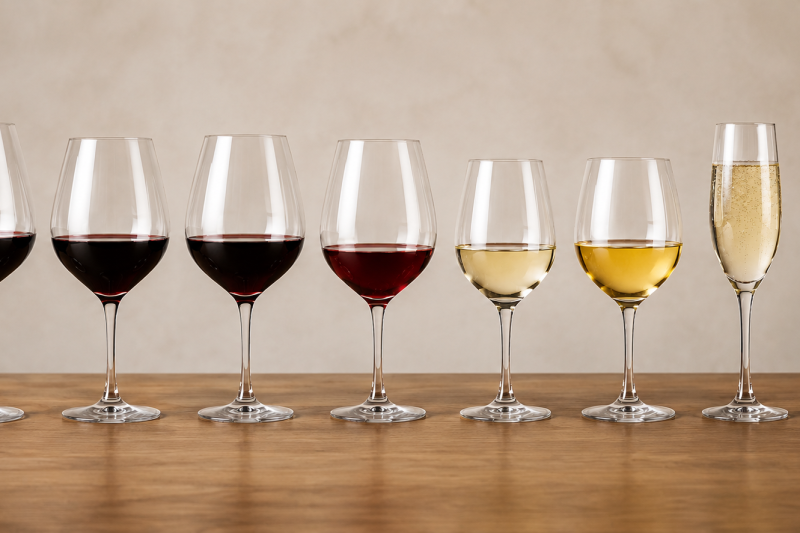
The single most useful principle for white wine pairing is weight: match the body of the wine to the body of the dish. Light food, light wine. Rich food, rich wine.
Crisp, high-acid whites — Sauvignon Blanc, Pinot Grigio, dry Riesling — work with light, fresh, or slightly acidic dishes: salads, sushi, raw shellfish, ceviche, goat cheese, lightly spiced Thai and Vietnamese food. The acidity in the wine mirrors the acidity in the dish and everything stays vivid and clean. Dry Alsace Riesling specifically is one of the most food-versatile whites available — its combination of mineral intensity and high natural acidity means it handles Thai curry, Vietnamese pho, and spicy Indian dishes with authority that softer whites cannot match.
Fuller, richer whites — oaked Chardonnay, Viognier, white Burgundy — belong with richer preparations: roast chicken, lobster with butter, cream-based pasta, pork tenderloin, rich fish like halibut or salmon. The wine needs enough body to stand next to the dish without being overwhelmed. Fettuccine Alfredo with a steely Sauvignon Blanc is a mismatched fight; the same dish with a well-made Chardonnay is a conversation between equals.
3. Red Wine — Tannin Is the Key Variable
Tannins — the compounds in red wine that create that drying, gripping sensation on your gums — are the most important variable in red wine pairing. Tannins interact with protein and fat: a big, tannic Cabernet Sauvignon with a fatty ribeye softens beautifully because the protein neutralizes the tannin and the fat carries the wine’s fruit flavors. The same wine with a delicate piece of salmon creates a metallic clash because there’s nothing to absorb the tannin.
The practical guide: high-tannin reds (Cabernet Sauvignon, Nebbiolo, young Syrah) need substantial food — red meat, game, aged hard cheese, rich braises. Medium-tannin reds (Merlot, Sangiovese, Grenache) are more flexible — they handle pasta with meat sauce, pizza, roasted vegetables, charcuterie. Low-tannin reds (Pinot Noir, Gamay, Barbera) are the most food-versatile red wines available — their lower tannin and higher acidity means they work with everything from mushroom risotto to grilled salmon to roasted chicken to cheese boards. Gamay in particular — the grape of Beaujolais — is worth knowing specifically for its ability to handle spiced and aromatic food that would overwhelm a bigger red.
The “pair with regional food” principle is genuinely reliable: a rustic Tuscan Sangiovese with a Tuscan pasta, a Southern Rhône Grenache blend with a Provençal lamb dish, a Rioja Tempranillo with grilled lamb chops. Centuries of culinary tradition tend to have worked out the combinations already.
4. Sparkling Wine — The Most Underused Food Wine at the Table
Sparkling wine is chronically underestimated as a food wine. Most people think of it as a celebration pour — the opening act before the real wine arrives. This is a mistake.
The effervescence and acidity of sparkling wine make it uniquely suited for salty, fatty, and fried food — the bubbles literally scrub the palate clean between bites. Fish and chips with Champagne is one of the great pairings in the world. Fried chicken with Crémant d’Alsace is spectacular. Potato chips, prosciutto, oysters, tempura, anything with a high salt or fat content — sparkling wine handles it when almost no other wine comfortably can. Salt makes tannic reds bitter and can make oaky whites taste flat; carbonation and acidity turn those same salty, fatty flavors into a feature rather than a problem.
The practical implication: if you’re serving a spread of appetizers or small plates at the start of a meal, one bottle of good sparkling wine will outperform any still wine at the table. It’s also the right choice when you genuinely don’t know what to pour — sparkling wine’s versatility means it pairs acceptably with almost everything and brilliantly with more things than people expect.
5. When in Doubt — Acidity Is Your Friend
If there’s one principle that covers the most situations where pairing feels uncertain, it’s this: choose the wine with the higher acidity. High-acid wines — Riesling, Sauvignon Blanc, Barbera, Gamay, Champagne — are genuinely difficult to pair badly. Their acidity refreshes the palate, cuts through fat, balances salt, and provides contrast to sweet and spicy flavors. A wine that feels sharp and tart on its own almost always becomes more pleasant with food.
The reverse is also true: low-acid, high-alcohol wines — the big, extracted, over-oaked style of red or white — are the hardest to pair successfully because they overwhelm delicate food and fight rather than complement rich food. If you’re uncertain about what to open, the most acidic bottle in the rack is usually the safest bet.
Quick Reference — When You’re Not Sure What to Open
Appetizers and small plates: Sparkling wine, always. Spicy food: Dry Riesling, off-dry Gewürztraminer, or cold beer. Rich cream sauces: Full-bodied white (oaked Chardonnay, white Burgundy). Red meat: Match tannin to protein — bigger cut, bigger red. Fish and seafood: Crisp white or low-tannin red (Pinot Noir, Gamay). Cheese boards: Whatever you’re already drinking — cheese is almost universally wine-friendly. You have no idea: Open the most acidic bottle you have. It will be fine.