Driftless Glen Distillery: How Wisconsin’s Ancient Geology Made a Great Bourbon
Fifteen thousand years ago, the glaciers that flattened most of the Midwest stopped just short of a corner of southwestern Wisconsin. The ice retreated, the floodwaters drained, and the land that remained was unlike anything around it — rugged hills, deep river valleys, ancient limestone bluffs, peat bogs, and a natural sandstone aquifer producing some of the purest water in the Great Lakes region. This unglaciated corner of the continent is called the Driftless Area, named for the geological “drift” — the debris of glacial deposits — that is absent here but everywhere else. Brian and Renee Bemis didn’t choose Baraboo for their distillery because it was convenient. They chose it because no other place in the country offered the exact combination of water, grain terroir, and landscape their bourbon and rye required. The spirits they have been making here since 2012 — grain-to-glass, locally sourced, aged in a rack house overlooking the Baraboo River — are among the most distinctly American being produced anywhere in the Midwest.
In This Profile
The Driftless Area — The Geology That Makes the Spirits Possible
Most of the American Midwest was reshaped by glaciation. The ice sheets that covered the Great Lakes region carved the landscape flat, deposited glacial drift across the terrain, and left behind the sandy soils and lake-fed geography that define most of Illinois, Indiana, Iowa, and the majority of Wisconsin. Most, but not all.
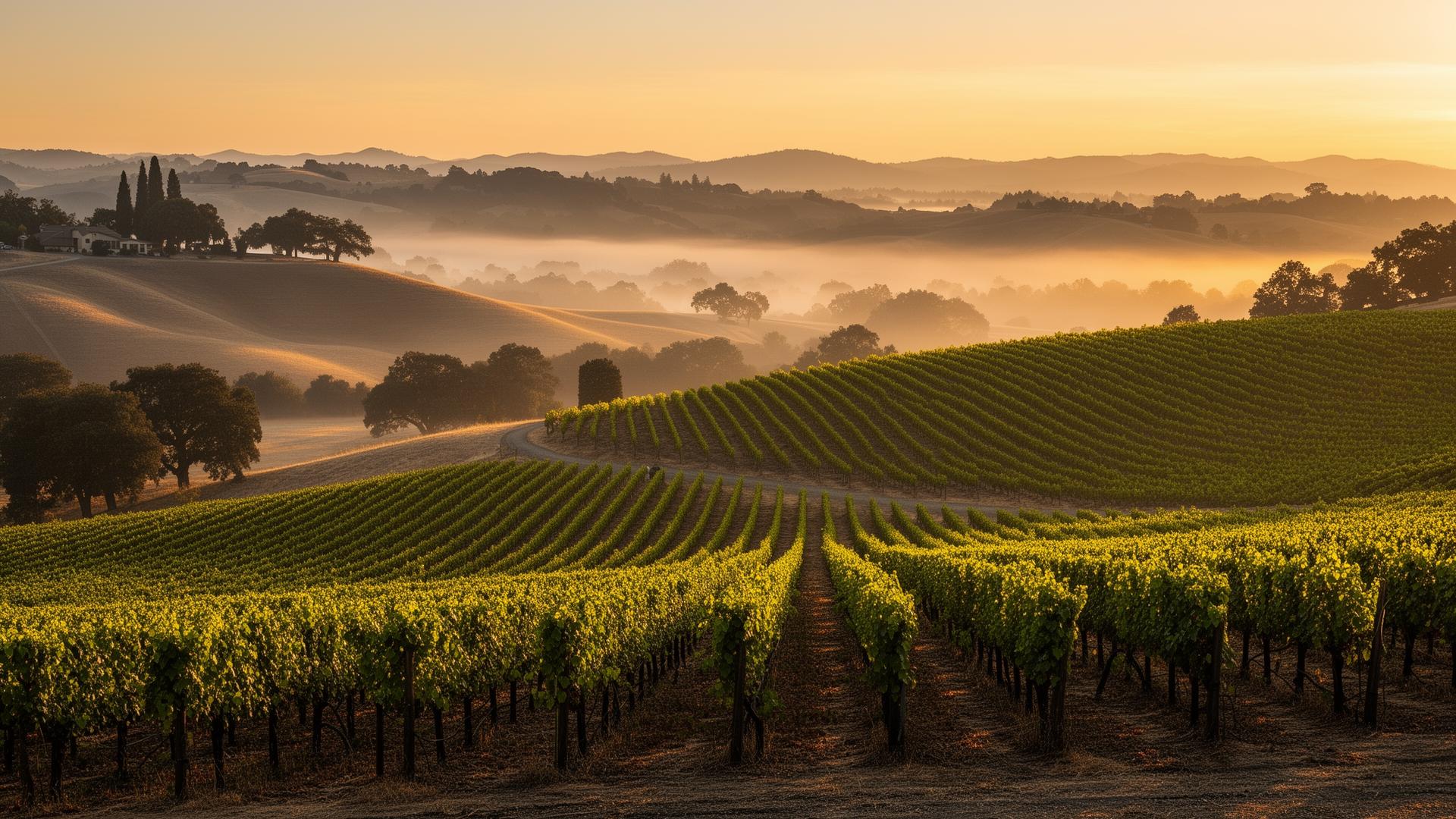
The Driftless Area — roughly 24,000 square miles spanning parts of Wisconsin, Minnesota, Iowa, and Illinois — was bypassed. The glaciers surrounded it on three sides and somehow never covered it. The result is a landscape that looks dramatically different from everything around it: ancient limestone bluffs, steep river valleys carved by ten thousand years of water working through unglaciated bedrock, peat bogs, oak savannas, and a natural sandstone aquifer system that produces water of exceptional purity and mineral composition.
Why the Driftless Area Matters for Whiskey
The water: The natural sandstone aquifer beneath the Driftless Area produces water with a distinctive mineral composition — ideal for whiskey production in the same way that Kentucky’s limestone-filtered water is ideal for bourbon. The water is what the yeast ferments in; the water is what dilutes the spirit to bottle proof; the water is in every glass.
The grain: The Driftless Area’s edge — known as Sand County — has unusually sandy soil for the Midwest, producing grain with distinctive character. Brian and Renee Bemis source locally rather than using commodity grain from outside the region, which means the grain in every bottle reflects the same unusual terroir as the water.
The climate: The Driftless Area’s temperature variation — warm summers, cold winters — puts barrels through the expansion and contraction cycle that drives flavor development in whiskey. Not as extreme as Texas, not as gentle as Scotland. A Midwest climate that produces a distinctly Midwest whiskey.
Brian and Renee Bemis searched the country before choosing Baraboo. They were looking for the specific combination of water quality, grain terroir, and natural beauty that would give their distillery an identity grounded in place rather than borrowed from somewhere else. The Driftless Area was the answer. “Brian and Renee didn’t choose their home for the Driftless Glen distillery,” one early profile noted. “Rather they discovered a bountiful region rich with peat, bogs, an amazing aquifer, and uncommon sandy soil for grains to grow in.”
Brian and Renee Bemis — The Founders and Their Story
The Bemis story does not follow the expected craft distillery template. Brian spent nearly 40 years as a car dealer and entrepreneur — a career that required the same disciplines that building a distillery demands: understanding customers, managing complex operations, maintaining quality at scale, and building a brand from scratch. Renee is a world-class sculptor, an artist whose work requires precision, patience, and the ability to see the finished object in the raw material long before it’s visible to anyone else.
Both are from the Northern Illinois area, local to St. Charles, and both are deeply hands-on in the distillery’s operations. The team they have built around them — distillers, bartenders, chefs, tour guides — reflects their emphasis on excellence and their understanding that a destination distillery is a hospitality business as much as a production business. Every bottle that leaves the rack house has, in the language their own brand materials use, “the imprint of their fingerprints.”
They broke ground in Baraboo in 2012. The decision to locate in Wisconsin rather than Kentucky or Tennessee was deliberate: they didn’t want to make a version of Kentucky bourbon. They wanted to make something that could only come from this particular corner of the world. The Driftless Area gave them the terroir; the grain-to-glass commitment gave them the production philosophy; the riverside location gave them the setting. The spirits gave them the awards.
The Spirits — What Driftless Glen Makes and Why It Matters
The Awards — What the Industry Has Said
For a distillery founded in 2012 in a state not traditionally associated with American whiskey, Driftless Glen’s award record is remarkable. The honors span multiple competitions across multiple spirits and multiple years — evidence of consistent quality rather than a single lucky entry.
The 2025 Platinum Independent Craft Legend designation and the 2026 Double Platinum from ASCOT are the most current recognitions — confirming that the quality trajectory is upward rather than coasting on earlier accolades. For a distillery approaching its fifteenth year in production, the awards suggest a house that is still improving.
Visiting Driftless Glen — Tours, Tastings, and the Restaurant
Driftless Glen is a complete destination rather than just a tasting room. The experience is built around three overlapping offerings — the distillery tour, the tasting room, and the restaurant — that can be combined into a half-day or full-day visit depending on appetite and ambition.
Visit Driftless Glen Distillery
Address: 300 Water Street, Baraboo, WI 53913
Phone: (608) 356-4536
Hours (Summer, May-October): Monday-Thursday 11am-8pm, Friday-Saturday 11am-10pm, Sunday 11am-8pm
Hours (Winter, November-April): Wednesday-Thursday 11am-8pm, Friday-Saturday 11am-10pm, Sunday 11am-8pm; closed Monday-Tuesday
Location: Less than 30 minutes from Wisconsin Dells
Web: driftlessglen.com
Book distillery tours in advance through the website, especially for weekends. The riverside patio is the place to be in summer. The Single Barrel Bourbon 96 Proof is the bottle to take home.
tribune.com