Paul Mathew Vineyards: The Graton Winery Where You Forage for Mushrooms Before Lunch
Once a year, the wine club members of Paul Mathew Vineyards drive out to a seasonal bed and breakfast on 20 acres in Cazadero, meet a mycologist named David Campbell, and spend two hours in the Sonoma County woods looking for mushrooms. They come back wet, cold, and carrying armfuls of chanterelles and hedgehogs and whatever else the forest offered up that morning. Then they sit down to a hearty lunch — local mushrooms prepared multiple ways, paired with Paul Mathew wines — and talk about what they found. This is not a typical wine club event. It is, however, entirely typical of Paul Mathew Vineyards, a small-production Graton winery where Mat Gustafson makes Pinot Noir from the Green Valley sub-appellation of the Russian River Valley using indigenous yeast and low-input winemaking, and where Barb Gustafson has spent more than a decade building the case — one pairing seminar, one farmers market, one mushroom foray at a time — that food and wine are not separate pleasures but a single conversation.
The Winery — Indigenous Yeast, Green Valley Pinot, and Small Lots
Mat Gustafson started Paul Mathew Vineyards in 1999 after more than two decades in the wine and restaurant industry — as a sommelier, a restaurant manager, and eventually a winemaker at Sebastopol-Dutton Estate Winery and as co-winemaker at Moshin Vineyards. He knew every aspect of the wine industry before he started making wine under his own label. The name Paul Mathew is Mat’s middle name reversed — a small personal detail that sets the register for everything the winery does: quietly personal, not loudly branded.
The winemaking philosophy is low-input and deliberately unhurried. Indigenous yeast — the wild yeasts naturally present on the grape skins and in the winery environment — ferments all the wines rather than commercial laboratory yeasts selected for speed and predictability. Indigenous malolactic bacteria handles the secondary fermentation. The process is slower, less controllable, and more expressive of the specific site and vintage than conventional commercial winemaking. It is also, as any natural winemaker will tell you, significantly harder to manage. Mat’s twenty years of wine industry experience before starting the label is the reason it works.
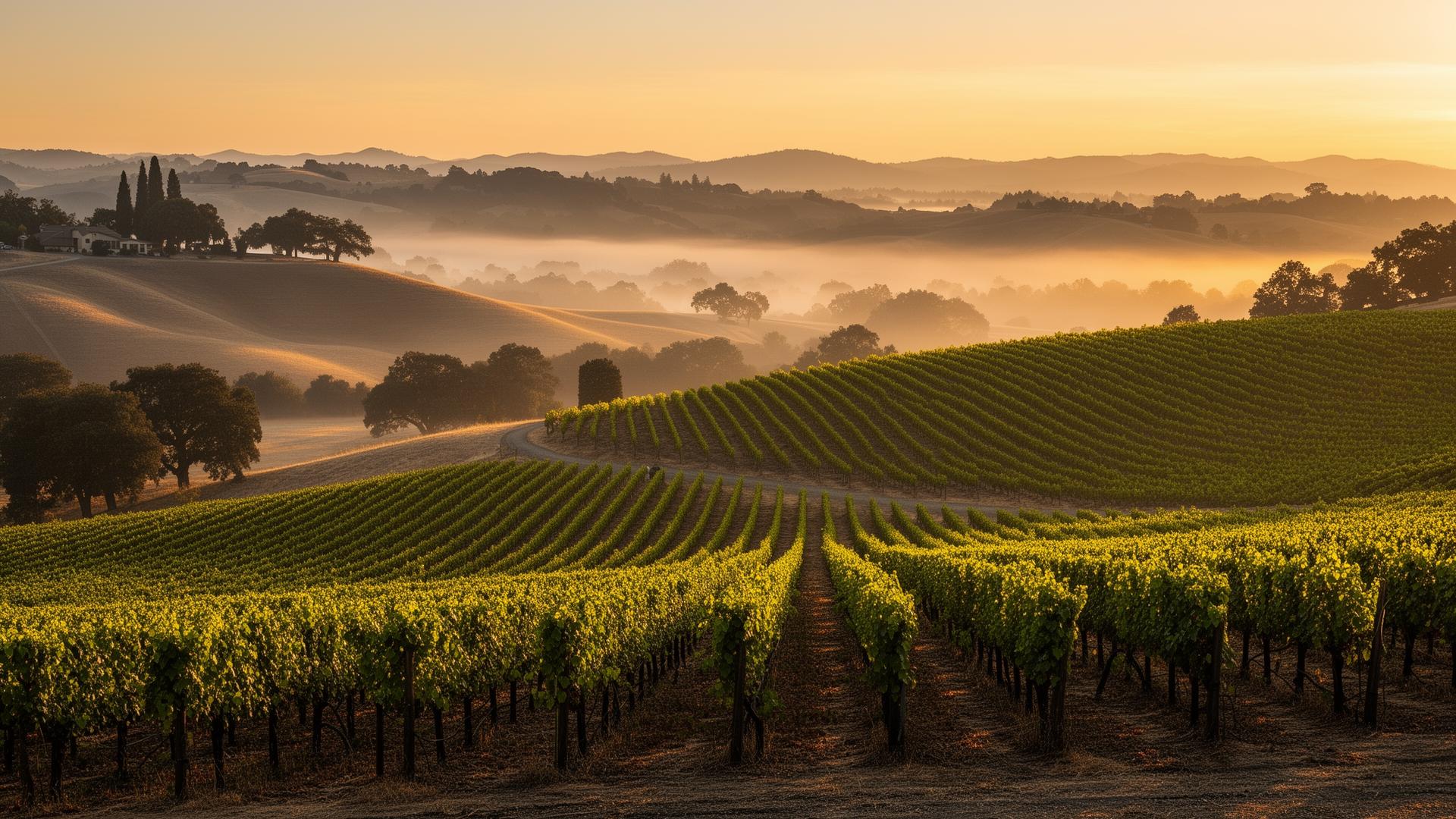
The fruit comes from the Green Valley sub-appellation of the Russian River Valley — a cooler, foggier corner of an already cool and foggy region, producing Pinot Noir of genuine elegance and restraint. Mat sources from small family-owned vineyards in West County, keeping the connections personal and the fruit traceability complete. Pinot Noir is the primary focus, with Chardonnay, Rosé of Pinot Noir, and Valdiguié produced in small quantities alongside it.
The Food Philosophy — Pairings You Discover Yourself
Barb Gustafson’s approach to wine education comes directly from her and Mat’s shared restaurant background: show people, don’t tell them. The foodie seminars at Paul Mathew set up multiple preparations of a single local ingredient alongside a lineup of four different wines, then let guests work through each combination and reach their own conclusions. The consensus of the room — which pairing did people prefer? — is the lesson.
The ingredients are local and specific: Liberty Farms duck from Sonoma County, Hog Island oysters from Tomales Bay, Dungeness crab from the Pacific coast, local cheeses from West County creameries. These are not generic pairing examples. They are the foods that the wines actually live alongside in this specific corner of California — the same terroir argument that applies to the winemaking applies to the pairings.
Barb’s philosophy on the food-wine connection is earned rather than theoretical. “When you experience great food pairings and enjoy both food and wine, you realize the experience can be so heightened by the right pairing,” she says. “A lot of people don’t have clear flavor distinctions or wide range of flavor interests, so it’s hard for them to get it. The best thing to get one started is to dine at restaurants with sommeliers and get them to pair for you.” The seminars at Paul Mathew are, in effect, that experience made accessible at the winery itself.
Visit Paul Mathew Vineyards
Address: 9060 Graton Road, Graton, CA 95444
Hours: Thursday-Friday 10:30am-4:30pm; Saturday-Sunday 10:30am-4:30pm
Web: paulmathew.com
Location: In the village of Graton, West Sonoma County, in the heart of the Russian River Valley wine community
For wine club membership and information about the annual mushroom foray, pairing seminars, and other events, contact the winery directly through the website. The mushroom foray fills quickly — if foraging for chanterelles in the Sonoma County woods followed by a wine-paired lunch sounds like your idea of a perfect day, get on the list early.