The rehabilitation of boxed wine is complete. Tablas Creek — an acclaimed, certified organic estate in Paso Robles — put a portion of its Patelin de Tablas Rosé in a three-liter bag-in-box and priced it at $95. Wine Spectator asked six top US sommeliers to recommend their favorite boxed wines and published the results. A NYC sommelier declared that “gone are the days of only bland and unremarkable wines in boxes.” The case for boxed wine in 2026 is no longer about overcoming stigma — it’s about understanding what the format genuinely does better than glass, and which producers are taking it seriously enough to be worth your money.
◆Boxed wine stays fresh for four to six weeks after opening — The vacuum-sealed bag inside the box collapses as you pour, preventing oxygen from reaching the wine. An open bottle of wine starts oxidizing immediately and is typically past its best within a day or two. For anyone who drinks a glass at a time rather than a bottle at a sitting, the box is objectively the better format.
◆A 3-liter box equals four bottles — and costs significantly less — The bag-in-box format uses 91% less packaging material than equivalent glass bottles, weighs a fraction as much, and costs less to ship. Those savings are passed to the consumer. A $25 three-liter box of decent wine is the equivalent of four $8 bottles — but without the compromise in quality that $8 bottles usually require.
◆The environmental case is genuine — A 2018 UCLA life-cycle analysis found boxed wine has roughly half the carbon footprint of equivalent bottled wine, due to lighter weight across the supply chain. Tablas Creek’s decision to move to bag-in-box was explicitly driven by a carbon footprint audit that showed a 40% emissions reduction compared to glass bottling.
◆No cork taint is possible — Cork taint (TCA contamination) affects a meaningful percentage of natural-cork-sealed bottles — estimates range from 1% to 5% of all bottles. Bag-in-box packaging eliminates the possibility entirely. The wine you pour from a box will be exactly what the winemaker intended.
◆The format has real limitations — know them before you buy — Boxed wine has a shelf life of approximately six months unopened (the plastic bag is slightly permeable to oxygen), versus years for a properly cellared bottle. It is not a format for wine you want to age. Premium boxed wine is excellent; collectable or age-worthy boxed wine does not exist.
In This Article
How Bag-in-Box Wine Actually Works
The term “boxed wine” is slightly misleading — the important technology is the bag inside the box, not the box itself. The wine is sealed in a flexible plastic bladder (typically multi-layer polyethylene) with an attached spout valve, then placed inside a cardboard box for protection and structure. When you pour from the spout, the bag collapses around the remaining wine rather than allowing air to fill the space left behind. This is the mechanism that makes boxed wine’s extended freshness possible.
The Technology That Changed Everything
Why the bag keeps wine fresh — and what its limits are
Wine’s enemy is oxygen. The moment a bottle is uncorked, oxidation begins — the same process that turns a cut apple brown. In a standard bottle, the space above the wine increases as you pour, filling with oxygen-rich air that begins degrading the wine immediately. In a bag-in-box, there is no headspace: the bag collapses as wine is dispensed, maintaining an oxygen-free environment around the remaining wine. This extends freshness from days to weeks. The limitation: the plastic bag is slightly permeable to oxygen over time, which means unopened box wine has a shelf life of roughly six months in optimal conditions (cool, dark storage) rather than the years or decades that a properly sealed glass bottle can achieve. The box format is optimal for wine you plan to drink soon; it is not for wine you want to age.
The format was invented in 1965 by Australian winemaker Thomas Angove, who patented the concept of packaging wine in a collapsible plastic bladder. The early product was basic and the wines inside were typically basic as well — which is where the format’s reputation problem originated. The stigma was never about the technology; it was about what producers used the technology for. That has changed significantly.
What Boxed Wine Does Better Than Bottles
Where the Box Wins
Freshness after opening — Four to six weeks compared to one to three days for an open bottle. This is not a marginal advantage; it is a fundamental format difference that changes how wine fits into everyday life. One glass per evening from a box stays fresh all month. One glass per evening from a bottle means most of it goes down the drain.
Value per glass — A standard 3-liter box contains the equivalent of four 750ml bottles. At $20–$25 for everyday boxed wine, the per-glass cost is often $1.25–$1.50 — comparable to what you’d spend on the cheapest possible bottled wine, but with significantly better quality at that price point thanks to packaging cost savings. A restaurant saving 20% on by-the-glass pouring cost by eliminating bottle waste is passing real money back to either the business or the drinker.
No cork taint — Cork taint (TCA contamination) is a genuine problem in natural-cork-sealed wine, affecting an estimated 1–5% of all bottles. Bag-in-box wine has no cork; the risk is zero. Every glass pours exactly as the winemaker intended.
Environmental footprint — A 2018 UCLA life-cycle analysis found boxed wine generates roughly half the carbon emissions of equivalent bottled wine, primarily due to lighter weight across the full supply chain. A standard 3-liter box uses 91% less packaging material than four glass bottles and weighs a fraction as much to ship. Glass bottles are recycled at only about 27% — the cardboard box is more easily and more commonly recycled.
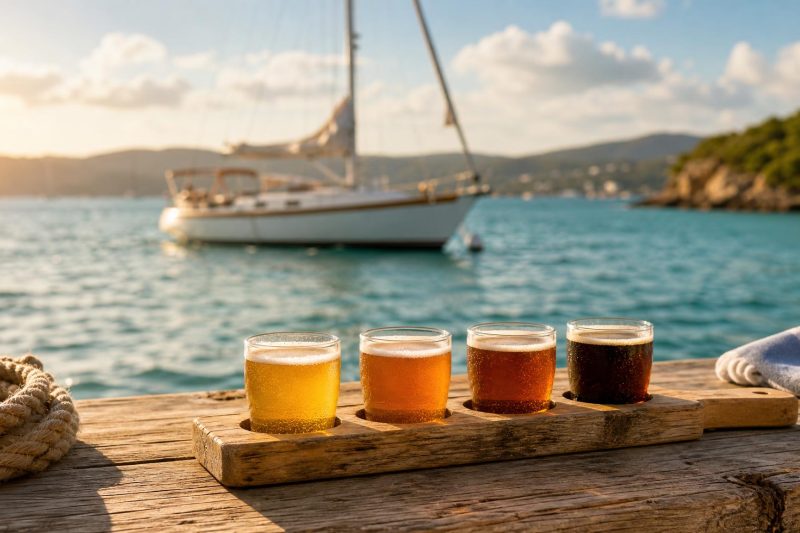
Portability — Picnics, camping, boats, pool days, venues that prohibit glass — the box goes where glass cannot. This is not a minor consideration; it expands the occasions where good wine is accessible.
The Real Limitations — What the Box Can’t Do
The case for boxed wine is genuine, but it has real constraints that matter for how you buy and use it.
Where the Box Has Real Limits
Shelf life before opening is limited — The plastic bag is slightly permeable to oxygen over time. Boxed wine is best consumed within six months of production — a year at absolute maximum in cool storage. Check the “best by” date on the box and take it seriously. A bottle of properly made wine can age for decades; a box cannot.
Not a format for wine you want to age — If you’re buying wine to cellar, to give as a special gift, or to serve at a formal occasion where the bottle itself carries meaning, the box is the wrong format. The Tablas Creek Patelin de Tablas Rosé at $95 is genuinely excellent wine — but you wouldn’t put it in a cellar for five years.
Ritual and presentation — Pouring wine at a dinner party from a box rather than a bottle communicates something different to guests, fairly or unfairly. For some occasions this genuinely matters; for others it doesn’t. Know your audience.
Quality ceiling is lower than bottles — The best wine in the world does not come in a box. The most complex, age-worthy, and collectible expressions remain in glass. Premium boxed wine occupies an excellent quality tier for everyday drinking; it does not compete with Grand Cru Burgundy or First Growth Bordeaux.
The Premium Tier — Serious Producers Taking the Box Seriously
The most significant development in boxed wine since 2016 is the entry of genuinely serious wine producers into the format — estates whose reputation is built on quality bottled wine, who have chosen bag-in-box for specific environmental or market reasons rather than cost-cutting.
The clearest example is Tablas Creek Vineyard in Paso Robles, California. Tablas Creek is one of America’s most respected Rhône-variety producers — certified organic, biodynamic, and a leader in sustainable viticulture. In 2022, following an internal carbon footprint audit that showed a 40% emissions reduction from switching to bag-in-box, they released a portion of their popular Patelin de Tablas Rosé in a three-liter box priced at $95. The packaging explicitly stated the wine came from the same Paso Robles vineyards as their bottled wines. The message was unambiguous: this is a serious wine in a different container, not a different wine for a different customer.
This move — and similar decisions by other quality-focused producers — represents the completion of boxed wine’s rehabilitation. When a respected estate with no financial pressure to cut corners voluntarily chooses the box format for environmental reasons, the format’s legitimacy is established on its own terms rather than as a budget compromise.
Brands Worth Knowing in 2026
Boxed Wine Worth Buying — 2026
Bota Box (~$22 for 3L) — The reliable everyday benchmark. Widely available, consistently decent quality, and the brand most responsible for demonstrating that everyday boxed wine can be genuinely enjoyable rather than merely tolerable. Their Old Vine Zinfandel is a particular standout — earthy, spicy, and significantly more interesting than the price suggests.
Black Box (~$20–25 for 3L) — One of the earliest brands to position boxed wine as a quality option rather than purely a budget choice. Consistent quality across their California Cabernet Sauvignon and Sauvignon Blanc, and widely available nationally. A strong starting point for skeptics.
Tablas Creek Patelin de Tablas Rosé (~$95 for 3L) — The prestige reference point. An organic, biodynamic Paso Robles Grenache/Mourvèdre/Counoise rosé in a bag-in-box that is simply better than most bottled rosés at any price. Deliberately not a value play — a quality play. Proof that the format’s ceiling is higher than its reputation suggested.
Quadrum (~$20–28 for 3L) — Spanish — A sustainably farmed, hand-harvested Spanish wine that happens to be in a box. The Tempranillo/Garnacha rosé is a Wine Spectator sommelier recommendation — lovely ripe red fruit with surprising structure for the format. One of the best international boxed wine options available in the US.
La Vieille Ferme Rouge (~$18 for 3L) — French — A Perrin family wine (the same family behind Château Beaucastel, one of Châteauneuf-du-Pape’s greatest estates) in a 3-liter box. Rhône-style red blend — approachable, food-friendly, and the most compelling argument for French wine in a box. Widely available at Whole Foods and specialty retailers.
Frequently Asked Questions About Boxed Wine
Boxed Wine: Common Questions Answered
How long does boxed wine stay fresh after opening?
Four to six weeks when stored in the refrigerator — substantially longer at room temperature is less reliable. The vacuum-sealed bag collapses as you pour, preventing oxygen from entering and degrading the wine. This is the single most important practical advantage of the format. By comparison, an open bottle of wine is typically past its best within one to three days even with a vacuum stopper.
Is boxed wine lower quality than bottled wine?
Not inherently — the format doesn’t determine the quality; the wine inside does. Historically, producers used the box format primarily for cheap, high-volume wine, which created the stigma. Today, premium and even prestige producers (Tablas Creek at $95/3L) use bag-in-box for serious wine. The quality ceiling is lower than bottled wine — the world’s greatest wines don’t come in boxes — but for everyday drinking, premium boxed wine can match or exceed equivalent-priced bottled wine in quality while offering better value and freshness longevity.
Is boxed wine actually better for the environment?
Yes, meaningfully so. A 2018 UCLA life-cycle analysis found boxed wine generates roughly half the carbon emissions of equivalent bottled wine, primarily from lighter weight across the full supply chain. A 3-liter box uses 91% less packaging material than four glass bottles and weighs a fraction as much to ship. Glass bottles are recycled only about 27% of the time in the US; cardboard boxes are recycled at significantly higher rates. The bag inside the box is plastic, which is less recyclable, but the net environmental impact is still considerably better than glass.
How long does an unopened box of wine last?
Approximately six months in optimal conditions (cool, dark, away from temperature fluctuations) — up to a year at absolute maximum. The plastic bag inside the box is slightly permeable to oxygen over time, which gradually degrades the wine even before opening. Always check the “best by” or “drink by” date on the box and follow it. This is the format’s primary limitation compared to properly sealed glass bottles, which can age for years or decades.
Should I refrigerate boxed wine?
White and rosé boxed wine should absolutely be refrigerated after opening and are best served cold. Red boxed wine can be stored at room temperature or refrigerated (and allowed to come to serving temperature before pouring). Refrigerating all boxed wine after opening extends freshness and is generally recommended by most producers. The box fits easily in a standard refrigerator — one of the practical advantages over large glass bottles.
🍷 Boxed Wine vs. Bottled Wine — Quick Reference
When the box wins, when the bottle wins, and what each format is best for
| Category |
Boxed Wine |
Bottled Wine |
| Freshness after opening |
Box wins — 4–6 weeks |
1–3 days even with vacuum stopper |
| Shelf life unopened |
6 months optimal; 1 year maximum |
Bottle wins — years to decades for quality wine |
| Value per glass |
Box wins — lower packaging cost passes to consumer |
Higher cost at equivalent quality tier |
| Environmental impact |
Box wins — ~50% lower carbon footprint; 91% less packaging material |
Higher carbon footprint; glass recycled only 27% of the time |
| Cork taint risk |
Box wins — zero risk |
1–5% of natural-cork bottles affected |
| Quality ceiling |
Excellent for everyday; premium tier exists |
Bottle wins — world’s greatest wines are in glass |
| Aging potential |
None — drink within 6 months of production |
Bottle wins — properly sealed bottles can age for decades |
| Best use case |
Everyday drinking; glass-at-a-time; outdoor/travel; by-the-glass restaurant pour |
Special occasions; cellaring; gifts; premium and collectable wine |