In 2016, wine writer Lenn Thompson posed two questions about Long Island wine that he said might not be answered for decades: would the North Fork become a wine region defined by quality, or an agritainment destination where wine happened to be served between the live music and the food trucks? And would local government work with the wine industry or against it? Ten years later the answers are emerging — and they are more interesting than either a triumphant yes or a pessimistic no. Long Island wine in 2026 is genuinely better than it has ever been, more ambitious, more connected to place, and more willing to take risks. Cabernet Franc is having a defining moment. A new generation of producers is doing wild yeast fermentation and skin-contact whites. Rose Hill Vineyards won the 2025 New York Governor’s Cup. And 2.84 million tourists a year are coming to the North Fork — which is both the answer to Thompson’s agritainment question and the region’s greatest ongoing challenge.
◆Cabernet Franc is Long Island’s defining variety in 2026 — and the wine world is noticing — In a James Suckling Cabernet Franc tasting earlier in 2026, Long Island wines scored 90 points or higher across the board. The variety that has always been part of the region’s Bordeaux-blend tradition is now being made as a standalone — stripped of skins in steel for whites and rosés, barrel-aged for structured reds, made sparkling, made with wild yeast. Cabernet Franc from the North Fork is having its moment.
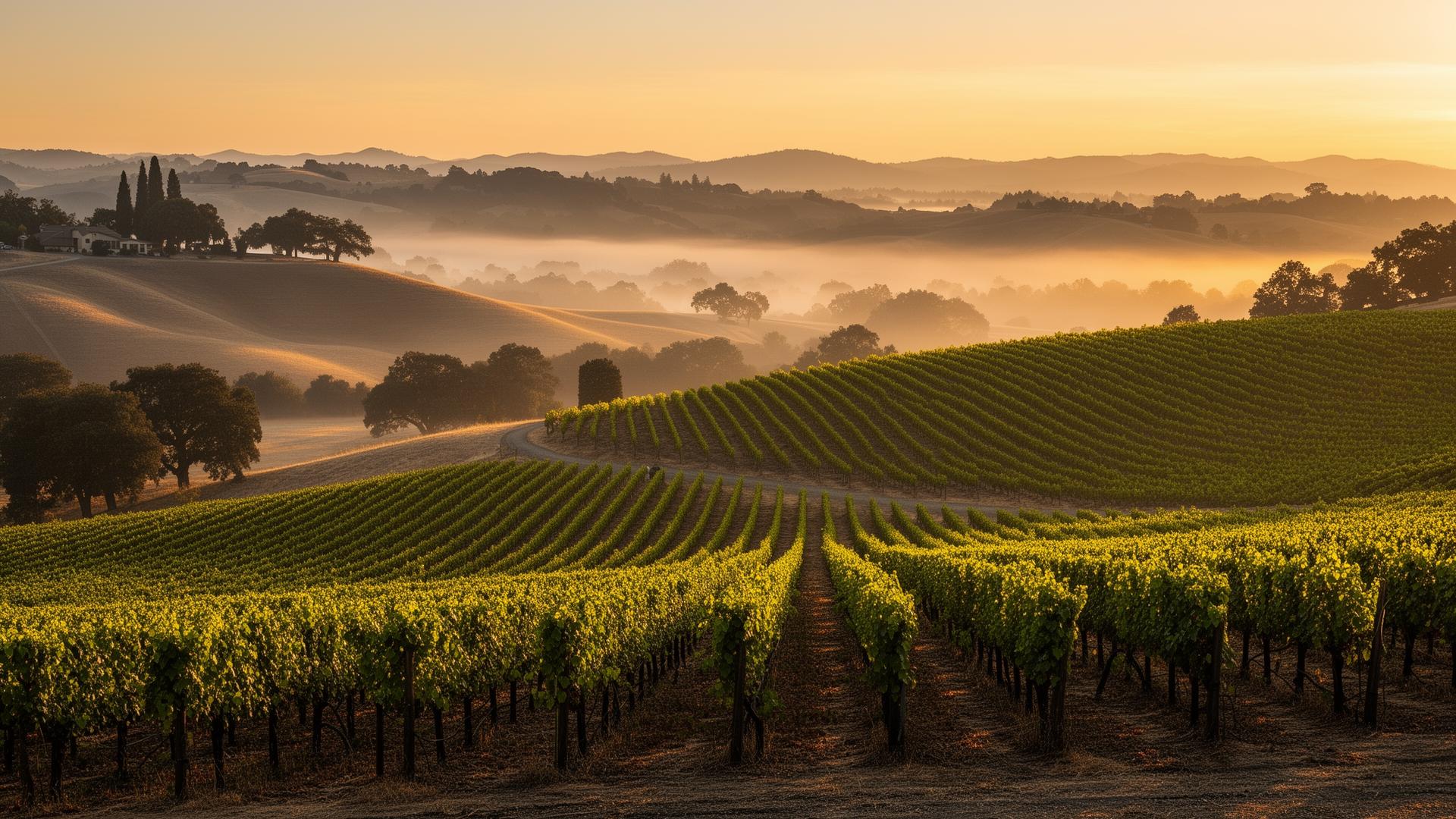
◆The maritime terroir is the region’s irreplaceable advantage — The North Fork AVA sits between Long Island Sound to the north and Peconic Bay to the south, with the Atlantic moderating temperatures year-round. The result is a growing season that is warmer and longer than the latitude would suggest, with enough cooling influence to preserve acidity. The sandy, well-drained loam soils force vine roots deep, concentrating flavor. It is a genuine terroir — not borrowed from Bordeaux or Napa but specific to this particular stretch of the East End.
◆A new generation is pushing into natural wine and low-intervention production — Wild yeast fermentation, skin-contact whites, concrete egg aging, high-density planting, hand harvesting at tiny production scales — the natural wine movement that transformed French, Italian, and California wine is arriving on the North Fork. These producers are not making Bordeaux-style wines for aging; they are making wines for curious drinkers who want to taste a place.
◆The agritainment question Thompson raised in 2016 is still unresolved — but quality is winning — 2.84 million annual tourists visit the North Fork wine region. The large tasting halls along Route 25 are busy, loud, and profitable — and they are not always about wine. But the small family estates, the hidden-gem producers working gravel paths away from the main road, the winemakers doing 400-case skin-contact Cabernet Franc in steel tanks — they are still here, still getting better, and increasingly attracting a different kind of visitor who came specifically for the wine.
◆Long Island wine is underpriced for its quality — and most American wine drinkers don’t know it exists — The region produces serious Merlot, Cabernet Franc, Petit Verdot, and increasingly interesting whites from Sauvignon Blanc, Chardonnay, and experimental varieties like Albariño, Carménère, Auxerrois, and Sémillon. Most of it never leaves New York. What reaches the rest of the country is a fraction of what the region produces. For anyone who can find it, Long Island wine is consistently underpriced relative to its California and Washington counterparts at equivalent quality levels.
In This Guide
The Terroir — What Makes Long Island Wine Different
The North Fork of Long Island sits at roughly the same latitude as the Loire Valley in France and the Rioja in Spain — but those latitudinal comparisons mislead more than they inform. What actually shapes Long Island wine is the water on three sides: Long Island Sound to the north, Peconic Bay to the south, and the Atlantic Ocean offshore. The maritime influence moderates temperature year-round — warming the growing season beyond what the latitude alone would suggest and cooling it enough to preserve acidity in the grapes.
The soil is the other defining factor. The North Fork’s sandy, well-drained loam forces vine roots deep in search of water and nutrients, stressing the vines in the productive way that winemakers everywhere seek to replicate. The same soil drains quickly after rain, reducing disease pressure and allowing grapes to ripen fully without waterlogging. Combined with the maritime climate, it produces a growing environment that is legitimately specific to this place — not borrowed from Bordeaux or Napa but earned through fifty years of viticulture on the East End.
North Fork AVA — Key Facts
Location: Eastern tip of Long Island, New York. Approximately 100 miles east of Manhattan.
Climate: Maritime, moderated by Long Island Sound, Peconic Bay, and the Atlantic. Average growing season 210-220 days — among the longest in New York State.
Soil: Sandy, well-drained loam with low fertility. Excellent drainage, deep root development, vine stress that concentrates flavor.
Primary red varieties: Merlot, Cabernet Franc, Cabernet Sauvignon, Petit Verdot, Malbec.
Primary white varieties: Chardonnay, Sauvignon Blanc, Riesling, Gewürztraminer. Emerging: Albariño, Sémillon, Auxerrois.
Wineries: Approximately 56 producers across North Fork and South Fork (Hamptons) AVAs.
Annual visitors: 2.84 million to the North Fork wine region.
The History — From Potato Farms to Wine Country
The North Fork was potato country before it was wine country. The same sandy, well-drained soil that proved so suitable for viticulture had been growing potatoes for a century before Louisa and Alex Hargrave planted the first commercial Vinifera vineyard on Long Island in 1973 — converting a former potato farm in Cutchogue into what would become Hargrave Vineyard, the founding document of Long Island wine.
The Hargraves’ bet was audacious: conventional wisdom in 1973 held that quality Vinifera grapes — Cabernet Sauvignon, Merlot, Chardonnay — could not be successfully grown on the East Coast. They could be grown in California. They could be grown in the Pacific Northwest. They could not be grown in New York, where winter cold and summer humidity conspired against them. The Hargraves proved that wrong. The maritime influence that moderates the North Fork’s climate protected their vines where inland New York vineyards would have failed.
By the 1980s other producers had followed: Lenz, Bedell, Paumanok, Pellegrini. By the 1990s the region had earned national attention and a reputation for Merlot that rivaled Washington State. The North Fork was producing Bordeaux-style wines from maritime-influenced terroir — a combination that had no American precedent and generated genuine excitement in the wine world. The first fifty years of Long Island wine were about proving the region could make serious wine. The second fifty, now beginning, are about discovering what the region’s serious wine actually is.
The Varieties — Cab Franc, Merlot, and What’s New
Long Island’s Key Varieties — What to Know and What to Try
Cabernet Franc — The variety of the moment and increasingly the variety that defines what Long Island does better than anyone else. Medium-bodied, versatile, expressing the maritime terroir with a characteristic herbal, red fruit, and sometimes slightly saline character. In a 2026 James Suckling tasting, Long Island Cabernet Franc scored 90 points or higher across the board. Producers are now making it every way imaginable: as a traditional red, as a rosé, as a skin-contact white, as a sparkling wine, with wild yeast, in steel, in barrel, in concrete. The North Fork’s Cabernet Franc moment has arrived.
Merlot — The variety that built Long Island’s national reputation in the 1990s and remains its most widely planted red. At its best, North Fork Merlot is supple, dark-fruited, with an earthiness and coastal salinity that distinguishes it from California or Washington expressions of the same variety. The large-scale Merlot producers along Route 25 produce reliable, food-friendly wines at accessible price points; the best small-scale Merlots — including 100% varietal expressions and old-vine bottlings — represent some of the East Coast’s most compelling red wine.
Petit Verdot — A Bordeaux blending variety that rarely makes it as a standalone anywhere but has found an enthusiastic home on the North Fork. The 2022 Musée Petit Verdot blend (51% Petit Verdot, 24% Cabernet Franc, 13% Malbec, 12% Merlot) with wild yeast fermentation shows where the variety can go in ambitious hands. Dense, structured, and capable of real complexity.
Chardonnay and Sauvignon Blanc — The region’s primary whites, ranging from neutral and unoaked to full malolactic and barrel-fermented depending on the producer’s philosophy. The best North Fork Chardonnays and Sauvignon Blancs have a salinity and acidity from the maritime influence that distinguishes them from inland New York expressions.
The experimentals — Albariño, Carménère, Auxerrois, Sémillon — A new generation of producers is planting varieties not typically associated with Long Island and finding that the maritime terroir is more versatile than the Bordeaux-varietal focus of the founding generation assumed. Albariño from the North Fork has a genuine affinity with the coastal terroir. Sémillon and Auxerrois produce distinctive whites that reward the curious drinker willing to try something unfamiliar.
Producers Worth Knowing
North Fork Producers Worth Knowing in 2026
Rose Hill Vineyards — 2025 New York Wine Classic Governor’s Cup and Best Red Wine for the 2019 Clarity Cabernet Sauvignon. The highest recognition in New York wine going to a North Fork Cabernet Franc is a statement about where the region’s identity is heading. Worth seeking out for the Clarity and whatever else Patrick Caserta is making.
Bedell Cellars — One of the founding-generation producers and still among the most consistent. The estate Merlot and Cabernet Franc are benchmarks for what North Fork can do with its signature varieties. Macari Vineyards, another established estate, has added biodynamic farming credentials to an already strong winemaking program.
Paumanok Vineyards — Family-owned since 1983, producing some of the North Fork’s most age-worthy Cabernet Franc and a Chenin Blanc that consistently surprises visitors who didn’t expect that variety here. One of the estates that rewards visiting in person — the tasting experience is intimate in the way that a 400-case producer’s should be.
The next generation — A cluster of small producers doing wild yeast fermentation, skin-contact whites, and concrete or steel alternatives to oak is emerging on the North Fork. Production numbers in the hundreds of cases, distribution limited to the tasting room and a handful of New York restaurants. These are the producers Lenn Thompson was calling for in 2016 — the ones bringing new ideas and new approaches. They are here now. Finding them requires turning off Route 25.
South Fork / Hamptons — The Hamptons AVA produces a different style from the North Fork — lighter, more delicate, the Atlantic influence more pronounced. Channing Daughters is the benchmark producer: adventurous, diverse, making wine from more than a dozen varieties and willing to take risks that the larger North Fork estates cannot. The rosé program is among the best on the East Coast.
The Open Questions — Wine Region or Agritainment?
In 2016, Lenn Thompson asked whether Long Island would become a wine region or an agritainment destination — and noted that the answer might not arrive for decades. Ten years later the question is clearer even if the answer isn’t settled.
The 2.84 million annual visitors to the North Fork are both the region’s greatest asset and its most complex challenge. The large tasting rooms along Route 25 that operate more as event venues than wine destinations are profitable, accessible, and genuinely part of the local economy. They are also not primarily about wine. They attract a visitor who came for the experience of “going to wine country” rather than one who came specifically to taste Cabernet Franc from sandy maritime soils. Both visitors are legitimate. They are not the same visitor.
What Thompson didn’t fully anticipate in 2016 was the emergence of a third category: the small, serious producer working 200-500 cases off the main road, making wine that competes on quality with anything produced in more famous American wine regions, and attracting a younger, more wine-literate visitor who specifically sought them out. This visitor found them on Instagram, in wine publications, at natural wine bars in Brooklyn where a North Fork Cabernet Franc appeared on the list. This visitor drove to Cutchogue not for the live music but for the 190-case wild yeast Cabernet Franc fermented in stainless steel at 12% alcohol. This visitor is the region’s future.
The tension between these audiences — the agritainment visitor and the serious wine visitor — is unlikely to be fully resolved. Wine regions elsewhere have navigated it: Napa has both serious collector estates and tourist-oriented destination wineries; Sonoma has both; Bordeaux has both. Long Island can too. What matters is whether the serious producers stay and grow, or whether the economics and the local government friction Thompson described drive them out. Southold Farm + Cellar leaving the North Fork in 2016 was the clearest example of the second possibility. The next chapter is being written now.
Visiting the North Fork
The North Fork Wine Trail runs primarily along Route 25 (Main Road) from Riverhead east to Orient, with most tasting rooms concentrated around Cutchogue, Peconic, and Southold. The large estate wineries along Route 25 are easy to find and offer consistent, welcoming tasting experiences. The more interesting small producers often require advance planning — calling ahead, booking by appointment, or following local wine writers who track what’s being poured where.
North Fork Visit Tips
Go on a weekday: Weekend traffic on Route 25 in summer and fall is significant. Weekday visits — particularly Tuesday through Thursday — are quieter, more personal, and more likely to result in a conversation with an actual winemaker.
Turn off Route 25: The most interesting small producers are not on the main road. Ask your Route 25 tasting room hosts for recommendations of smaller producers worth visiting. The serious wine community on the North Fork is genuinely collegial and happy to point visitors toward neighbors whose work they respect.
Book appointments for small producers: A producer making 300 cases does not have staff for walk-in traffic. Book ahead, show up when you said you would, and bring genuine curiosity about what they’re making.
Try the Cabernet Franc first: It is where the North Fork is most distinctive and most compelling in 2026. Taste it from multiple producers across the visit to understand the range of what the variety does in this maritime terroir.
Stay over if you can: The North Fork wine region rewards more than a day trip. Greenport is a charming small town with good restaurants and accommodation. Orient at the end of the Fork is worth the extra miles for the scenery alone.
Frequently Asked Questions About Long Island Wine
Long Island Wine: Common Questions Answered
Is Long Island wine worth drinking?
Yes — and it is consistently undervalued relative to its quality. The North Fork produces serious Merlot, Cabernet Franc, and Petit Verdot at price points that would seem impossible for comparable quality from Napa or Washington. The maritime terroir — sandy, well-drained soil between Long Island Sound and Peconic Bay — produces wines with genuine character. The best North Fork Cabernet Franc in 2026 is as good as anything produced in the eastern United States.
What grape variety is Long Island most known for?
Merlot built Long Island’s national reputation in the 1980s and 1990s and remains the most widely planted red variety. But Cabernet Franc is the variety that most excites serious wine drinkers in 2026 — medium-bodied, versatile, with a maritime character that is specific to the North Fork. In a 2026 James Suckling tasting, Long Island Cabernet Franc scored 90 points or higher across the board. It is the region’s most distinctive variety right now.
How far is the North Fork wine region from New York City?
Approximately 100 miles east of Manhattan — typically a two-to-three hour drive depending on traffic, which can be significant on summer and fall weekends. The Long Island Rail Road also serves the North Fork with a connection at Riverhead; train-and-taxi or rideshare combinations are viable for a day trip without driving. Staying overnight in Greenport or elsewhere on the Fork makes the experience considerably more relaxed.
What is the difference between North Fork and South Fork (Hamptons) wine?
The North Fork AVA is the primary wine region — more wineries, more acreage, and the maritime climate best suited to Bordeaux varieties. The South Fork (Hamptons) AVA produces lighter, more delicate wines influenced by the more direct Atlantic exposure. Channing Daughters in Bridgehampton is the benchmark South Fork producer — adventurous, diverse, making wine from more than a dozen varieties. The two forks produce different styles; visiting both gives the fullest picture of what Long Island wine can do.