Tag Archives: drink

Samuel Adams Taps Entrepreneurial Spirit overtaking Austin: Hosts Brewing the American Dream Pop-Up Pitch Room Competition to Celebrate Food & Beverage Innovators in Austin, TX

Samuel Adams Entrepreneurial Spirit Hosts Brewing the American Dream Pop-Up Pitch Room

Click here to view original web page at www.prnewswire.com

AUSTIN, Texas, March 14, 2017 /PRNewswire/ — Samuel Adams Brewing the American Dream hosted its first-ever Pop-Up Pitch Room Competition in celebration of start-ups gathering in Austin, TX. Brewing the American Dream, Samuel Adams’s core philanthropic program, provides micro-lending, coaching and mentoring to food, beverage, and craft brewing small business owners nationwide and welcomed Grand Prize and People’s Choice winner Barbecue Wife Bloody Mary Mix to its national network of innovative and passionate entrepreneurs.

The Pitch Room was hosted by an expert panel of judges who heard 2-minute business pitches from five Austin-based food and beverage small businesses including Joe’s Microgreens, Banner Distilling, Barbecue Wife Bloody Mary Mix, FOND Bone Broth, and GFY Kitchen. After posing questions and providing critical, real-world advice, the judges selected Catherine Stiles, founder of Barbecue Wife Bloody Mary Mix, as having the best pitch based on the quality of the presentation, creativity, passion and product viability. Stiles won a $10,000 business grant, a media package from Foursquare, and will receive extensive business mentorship from of the team at Samuel Adams. Tapping into Austin’s celebration of interactive technology, drinkers at the event and nationwide were invited to virtually vote on Facebook Live for the “People’s Choice Award”, a $5,000 prize which Stiles also took home.

The expert panel of judges for the Pitch Room included:

Samuel Adams Brewer Jennifer Glanville on the Pitch Room:
“From amazing BBQ food trucks and taco stands to fellow craft breweries, the Austin food and drink scene is fueled by some of the most passionate people,” said Jennifer Glanville, Samuel Adams brewer. “I was honored to be a judge alongside industry innovators, and award Catherine Stiles Barbecue Wife Bloody Mary Mix $15,000 to help her grow her business. Catherine is creating an inventive business, providing jobs, and making a local impact not mention, Barbecue Wife Bloody Mary Mix is absolutely delicious.”

Pitch Room Winner Catherine Stiles of Barbecue Wife Bloody Mary Mix:
“I was on cloud nine and so humbled by the entire Pitch Room experience. As an entrepreneur, just having the validation that someone finds your business interesting by being selected to the final pitch round was a thrill in-itself,” said Catherine Stiles, founder of Barbecue Wife Bloody Mary Mix. “To have won both the judges selection and the People’s Choice Award, was beyond my comprehension. I am so very thankful for the experience – the monetary prize will be a wonderful boost that will help with the growth of Barbecue Wife as well as the invaluable mentorship from the Samuel Adams team. I am so excited for the next step of Barbecue Wife Bloody Mary Mix with the Samuel Adams team and appreciative of the entire judging team for supporting entrepreneurs.”

About Samuel Adams Brewing the American Dream – Inspiration & Impact
Samuel Adams is celebrating 33 years of brewing and despite the craft brewery’s success, Founder & Brewer Jim Koch hasn’t forgotten how hard it is to start and run a successful small business. That’s why he created Samuel Adams Brewing the American Dream, a philanthropic program that provides the two things he wishes he had when starting Sam Adams: real-world business advice and a loan.

Samuel Adams Brewing the American Dream was launched in 2008 in partnership with Accion, the nation’s leading nonprofit microlender. Through the support of Brewing the American Dream, Accion has lent more than $15.5 million to roughly 1,200 businesses nationwide. Just as important, Samuel Adams has coached or mentored over 7,000 businesses and created or saved more than 4,900 jobs. Nearly $1 million of this capital has been lent to 40 U.S. brewers nationwide. To learn more please visit: http://www.brewingtheamericandream.com.

About Samuel Adams and The Boston Beer Company
The Boston Beer Company began in 1984 with a generations-old family recipe that Founder and Brewer Jim Koch uncovered in his father’s attic. Inspired and unafraid to challenge conventional thinking about beer, Jim brought the recipe to life in his kitchen. Pleased with the results of his work, Jim decided to sample his beer with bars in Boston in the hopes that drinkers would appreciate the complex, full-flavored beer he brewed fresh in America. That beer was aptly named Samuel Adams Boston Lager, in recognition of one of our nation’s great founding fathers, a man of independent mind and spirit. Little did Jim know at the time, Samuel Adams Boston Lager would soon become a catalyst of the American craft beer revolution.

Today, The Boston Beer Company brews more than 60 styles of beer. It relentlessly pursues the development of new styles and the perfection of classic beers by searching the world for the finest ingredients. Using the traditional four vessel brewing process, the Company often takes extra steps like dry-hopping, barrel-aging and a secondary fermentation known as krausening. The Company has also pioneered another revolution, the ‘extreme beer’ movement, where it seeks to challenge drinker’s perceptions of what beer can be. The Boston Beer Company has been committed to elevating the image of American craft beer by entering festivals and competitions around the globe, and is one of world’s most awarded breweries at international beer competitions. As an independent company, brewing quality beer remains its primary focus. Although Samuel Adams beer is America’s leading craft beer, it accounts for only one percent of the U.S. beer market. The Boston Beer Company will continue its independently-minded quest to brew great beer and to advocate for the growth of craft beer across America. For more information, please visit www.samueladams.com.

Samuel Adams, Sam Adams, Samuel Adams Boston Lager, and Samuel Adams Brewing the American Dream are registered trademarks of The Boston Beer Company.

SOURCE Boston Beer Company

Where does 'craft' sit in soft drinks? - Comment

Where does ‘craft’ sit in soft drinks? – Comment

By | 28 February 2017

While the term craft continues to dominate many areas of the drinks industry, the soft drinks category appears to be immune to the concept. Richard Corbett considers the opportunity, and looks at those who come closest to donning the craft mantle.

Both the beer and spirits categories have experienced – are experiencing – the craft movement; a wave of producers rising up from nothing to compete with the corporate and highly-polished brands that have refreshed consumers for years. Every craft product has its own story, a product beginning life as a dream discussed around a kitchen table rather than a concept put forward on a boardroom table. The artisan techniques and personalised stories giving consumers an experience as much as giving them a drink.

The category has a range of handicaps to deal with. For a start, there are so many more soft drink consumption occasions than there are for alcoholic drinks. Then, the core alcohol consumer is more mature, making them more affluent and, thus, more willing to pay a premium. And, craft alcohol consumers are more fashion-conscious, making them more likely to respond to marketing.

For these reasons, the fuse has barely been lit on a craft soft drink segment.

Dipping their toes in have been the likes of PepsiCo, with its craft-positioned Stubborn Soda range. Launched in mid-2015, the concept adopts flavours with a ‘spin on the traditional’, delivering the product in a stylish glass bottle and from a specially-designed fountain that creates a “tap-like pouring ritual”. The problem is that there is no real story behind the brand: Stubborn Soda has not been on a journey to demonstrate its provenance. What PepsiCo has created here is a craft-themed adult soft drink, not a craft soda.

While there may not be a clearly-defined craft soft drink movement, one could argue that some of the most successful new entries into the soft drinks market in the last decade or two could be described as craft-style drinks. The one factor that ties them together is that they are all enjoyed by an adult audience.

Historically, UK smoothie and juice producer Innocent has targeted the same age-profile of audience as craft beer has. Indeed, as with many craft beer brands, the company – now part of The Coca-Cola Co – took a marketing tack that could fairly be described as ‘off the wall’. The labels didn’t just tell you what goes into the drink, they would also try to entertain. It was all authentic, too, and being unorthodox was very much part of the culture of the company. I recall calling head office in the company’s early days, only to be told that the whole office had gone snowboarding for a couple of days. Innocent was a start-up company with an ethic that made us all want it to succeed.

Founded in 2002 the Monster energy drink brand continues to appeal to a 15-24 crowd, promoting itself as rebellious, insubordinate and unconventional. The more Monster’s consumers were told that energy drinks were bad for them, the more they would drink: hence, the popularity of the bigger 50cl can. Comparisons of the brand’s approach can be drawn with a number of craft beers, but one popular craft operator, BrewDog, come immediately to mind.

UK-based Fever-Tree’s roots, meanwhile, were planted a little over a decade ago, and began with the Phileas Fogg-like search for the highest-quality quinine, the key ingredient of tonic water. The quest concluded in the war-torn Democratic Republic of Congo. Ingredient sourcing for its products is a major part of the brand’s positioning and, by highlighting the effort that goes into securing such provenance will always justify a premium price. The company may be young, but the brand oozes heritage, making Fever-Tree a craft contender.

Fever-Tree’s craft influence is illustrated by the recent emergence in its portfolio of a number of traditional-style drinks like Madagascan Cola, Sicilian Lemonade and ginger beer. While these fit the craft bill, I would be surprised if they ever make a meaningful contribution to the Fever-Tree’s bottom line. As with Stubborn Soda, they are more adult soft drinks and will remain niche.

“There is still no identifiable craft soft drink movement that comes close to rivalling beer or spirits”

The line between an adult- and a craft-soft drink is pretty blurred. While there are soft drinks brands that have enjoyed fabulous success because they have a story and a provenance, or have adopted similar marketing strategies to craft beer brands, there is still no identifiable craft soft drink movement that comes close to rivalling beer or spirits.

Despite this, the lack of a craft segment in the wider soft drinks world shouldn’t be seen as bad news for the larger soft drinks players out there. In reality, it should be celebrated by them. After all, their brands will not come under the same threat that the major brewers and distillers’ brands have done in recent times.

Expert analysis

Soft Drinks Global Overview: Growth Opportunities Between Category Lines

Economic uncertainty in key emerging markets and an increasingly global consumer demand for healthier beverage options are creating radical changes in the soft drinks industry. Water is the main drive…read more

India holds great potential as a market for complex drinks like cognac

India holds great potential as a market for complex drinks like cognac

Click here to view original web page at www.forbesindia.com BY KATHAKALI CHANDA Forbes India Staff

Alexandre Quintin, the international brand ambassador for Rémy Martin, says Indians appreciate brands with true heritage

In its pedigree, Louis XIII can very well match up to the French emperor it’s named after. Produced by the house of Rémy Martin, this cognac is steeped in history, and its production in the finest craftsmanship. A 30 ml peg of this spirit starts at Rs 10,000 in India and its most premium variety can set connoisseurs back by a few lakhs. Alexandre Quintin, the international brand ambassador for Rémy Martin and a Louis XIII aficionado himself, was recently in India to get a feel of the market. Edited excerpts from his interview with Forbes India:

Q. What makes a good cognac?
The main ingredient for good cognac is a white grape called Ugni Blanc—they make up 90 percent of the drink—that comes from the Grande Champagne territory of the Cognac region in France; [from] anywhere else and it will be called just brandy. These grapes are grown on chalky soil that helps the roots of the vines go very deep and extract all the minerals. Once the grapes are harvested, generally in September and October, we take out the juice, which then naturally ferments into wine in a week and a half. The wine is distilled twice, after which we get what we call eau de vie, a clear liquid with 70 percent alcohol. Once it’s distilled, the cellar master (Baptiste Loiseau is the current one) does a blind tasting of different eaux de vie. The ones that have the aromatic potential are considered for Louis XIII (pronounced Louis Trez) one day. They are put into really old French oak barrels for ageing, a process that gives out unusual spicy, oaky or fruity and flowery notes.

Q. Why is Louis XIII such a premium product?
About 99 percent of the eaux de vie that we make don’t make the cut for Louis XIII. As Olympic champions [are] among human beings, only the best are considered for Louis XIII. A variety of eaux de vie (the number could go up to 1,200), the youngest of which is at least 40 years old, will then be blended and aged, not just for 5 to 10 years like traditional cognac but for up to a century. You need four generations of cellar masters to craft one full decanter of Louis XIII.

During ageing, the alcohol evaporates bit by bit every year, leaving behind a liquid that is highly concentrated and aromatic. In the early years, it smells of peach and apricot but, slowly, the aromas emanating from Louis XIII are much more evolved than your regular cognac. Once it’s aged up to a hundred years, Louis XIII gives you aromas that are extremely rare. For instance, myrrh, dried roses, plum, honeysuckle, tobacco, fresh mint, leather, chocolate.

Q. Cognac, as a drink, is typically associated with the elderly generation, not the youth. Is that a perception you are looking to change?
It’s a perception that is changing fast because the patterns of consumption are changing. Cognac is no more just a drink to be had after dinner, while smoking a cigar. You can have it for lunch, for dinner or even while hanging out with friends at a pub or nightclub. Also, that cognac is a drink for the older generation is a perception local to countries like India and even France. If you visit the US or China, you’ll see a lot of young people, millennials in particular, drinking Rémy Martin. They don’t just drink it straight, like the more mature generation would do. They drink it on ice, in long drinks mixed with ginger ale, tonic water or sophisticated cocktails. Millennials are looking for rich, authentic spirits with a story behind them and cognac is beginning to appeal to them.

THE CRYSTAL DECANTER

Louis XIII is poured into a unique, handmade crystal decanter, with a golden neck, that was crafted as a replica of a metal flask discovered at the site of the Battle of Jarnac in 1569. It carried the fl eur-de-lys, a symbol of French royalty. It was bought by Paul Émile Rémy Martin in 1850 and reproduced in glass to hold the best eaux-de-vie that they had. Paul Émile also named the alcohol Louis XIII as a tribute to the French king, who authorised the trade of eaux de vie under his reign.

Q. How mature is the luxury alcohol market in India?
In the last few years, the luxury market in India has been growing at a compounded annual growth rate of about 25 percent. According to a report by Assocham, the market was expected to hit $18.6 billion by 2016 from the current $14.7 billion.

For Rémy Martin cognacs, it’s early days in India. However, during my visit, I met a lot of passionate individuals from the luxury hotel industry and wines/spirits aficionados, and was pleasantly surprised at the level of expertise of young sommeliers, chefs and epicureans. There is a thirst for knowledge and appreciation for brands with true heritage.

The country also has many active wines and spirits clubs and an increasing number of high net worth individuals (HNIs) who travel across the country and world every week searching for unforgettable gastronomic and alcohol experiences. The fact that Rémy Martin’s brand vision and promise are linked to encouraging individuals in their quest for achievement as well as celebrating successes might resonate well with our clients.

We are confident there is a great potential for Rémy Martin here in the mid to long term.

Q. What do Indians like to drink?
In terms of spirits, it seems that Indians historically enjoy brandy in the south and whiskey in the north. This love for aged spirit is extremely encouraging for iconic cognacs like Rémy Martin. Why? Because it means that most consumers have a refined palate that can appreciate the unique aromatic intensity of our cognacs, their delicate flowers’ notes, their rich fruitiness or their spicy, oaky character.

Q. What is the right way to drink a cognac?
If you are drinking your cognac straight, it should be ideally from a glass with a top as wide as the bottom. This plays a big part in your tasting as it ensures that the aromas aren’t trapped inside. Then, pour just a bit of cognac into the glass and swirl it around to coat the insides. This helps in eliminating any unwanted smell and, when you pour the cognac inside, the aromas will explode onto you. This apart, the right way to drink cognac is your own way. There are no set rules and it’s a free game when it comes to enjoyment.

Q. What are the right food pairings to go with cognac?
For the finest cognacs, you have to look for the finest ingredients that reveal every facet of the liquid. For example, we pair Louis XIII with caviar from Bordeaux or the Baltic seas. The slight saltiness of the caviar complements the fruity notes of Louis XIII. Or the blue lobster. Indians will enjoy the pairing because there is a hint of spice to it. Wagyu or limousin beef which goes with the oldest aged cognacs of Louis XIII; they bring out all the spicy and oaky notes. The last one, my favourite, is the jamón ibérico or pata negra ham from Spain. It’s a ham that comes from pigs that eat only acorn. The effect you have on the palate is something we call umami, which binds together all the senses in perfect harmony.

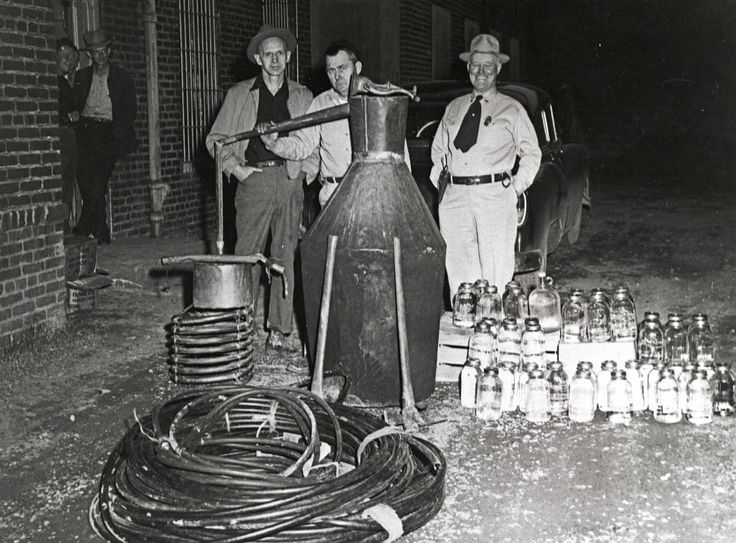
moonshiners

Dead distillers: Weird and wonderful stories of US whiskey and moonshine makers

Dead Distillers by Colin Spoelman, David Haskell and Kings County Distillery published by Abrams is. Click here to view original web page at www.concordregister.com

We’re so used to seeing Jack Daniels’ name emblazoned across and merchandise from t-shirts to guitars, that it’s easy to forget that he was a real man who brewed whiskey in Lynchburg Tennessee. Or that seven generations of Bourbon-makers have been involved in the production of Jim Beam, made in Clermont, Kentucky.

To forget the people behind some of the world’s best-selling drinks, but particularly those that have sunk into obscurity, is to miss out on the rich and oftentimes bizarre history of brewing in the US, as mapped out by New York City-based award-winning bourbon and whiskey-makers Colin Spoelman and David Haskell in their book Dead Distillers: A History of the Upstarts and Outlaws Who Made American Spirits. The pair chart the history with the tombstones of dead distillers as their starting point.

Since Dutch businessmen Cornelis Melyn and Willem Kieft established the first distillery in the US four hundred years ago, hard liquor has been a part of the nation’s culture. As the book addresses, as well as Jim Beam and Jack Daniel, president George Washington was among those who dabbled in distilling. And during his tenure in 1791 the Whiskey Rebellion was a protest against the first ever tax on the drink by the relatively new federal government. Fast forward almost two centuries later and the Nationwide Prohibition introduced in 1920 banned the production, sale, and important of alcohol of 13 years. Now, the US is among nations witnessing a revival of craft spirits.

As the title suggests, whether real or at least slightly romanticised, the work of these distillers conjures up notions of industrious and honest men and women working hard to make a few bucks out of intoxicating products, and in turn carving out their own versions of the American Dream.

Below are some of their favourite stories from the book.

Mark Wazeniak, Moonshiner (1890 – Unknown)

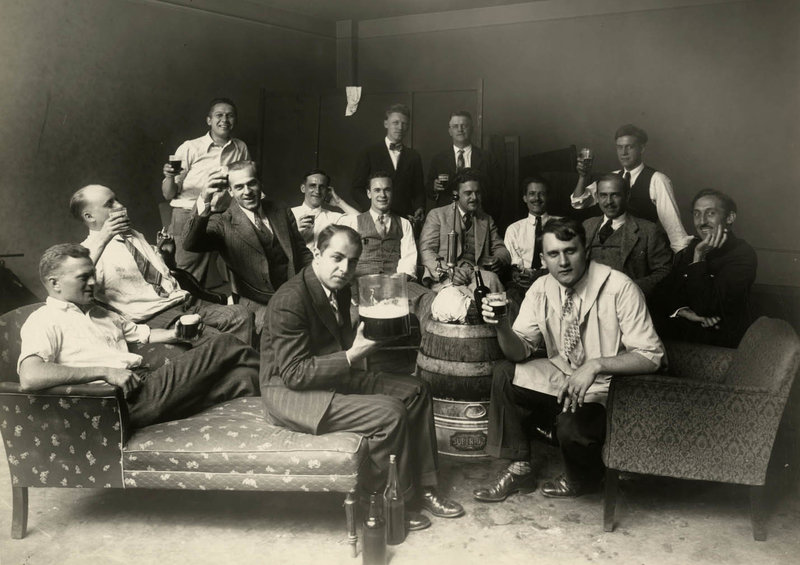
Mary Wazeniak ran a speakeasy in Brookfield, Illinois, near Chicago. One evening, in 1923, George L. Rheaton, of LaGrange, Indiana, bought five or six shots of Mary’s moonshine. He staggered out of the bar, walked about two hundred feet, and fell dead. Chemical analysis during an autopsy indicated that Rheaton died of methanol poisoning. “Moonshine Mary,” as the press dubbed her, was thirty-four years old and a mother of three when she was sentenced to a year to life. This is what we know of Mary. It’s not much. And to read this, you would think that it was Mary who poisoned Rheaton, but it wasn’t.

It was the federal government. By the mid-1920s, Prohibition’s noble experiment was starting to show great wear on the people for whom it was meant to benefit. Still, alcohol was not that hard to find, as industrial alcohol is a necessary ingredient in after shave, antifreeze, felt hats, embalming fluid, and fuel. Recognising this temptation, and as a deterrence, the government routinely altered the chemical composition of the spirit to make it undrinkable. The added chemical was methanol, which in trace quantities is present in all fermented beverages and in most distilled spirits—it’s a simpler alcohol molecule, sometimes called wood alcohol—but in concentrated form is highly toxic. As little as thirty millilitres of methanol can blind a person; sixty millilitres is lethal. The federal government, in its wisdom, decided to add methanol to ethanol (the chemical we drink) so that it couldn’t be consumed safely.

And yet methanol has a slightly lower boiling point than ethanol, and some enterprising moonshiners reasoned that the two could be separated through distillation. This is technically true, but difficult in practice, especially at the scale of a bootlegger using copper pots as small as ten gallons. Inevitably, methanol contaminated the ethanol, and people frequently got sick.

Over the Christmas holiday in 1926, for instance, twenty-three people died from methanol poisoning in New York City. The medical examiner, Charles Norris, spoke out against what he called a “national experiment in extermination.” Government officials at the time—and many historians today—explain away such deaths as inevitable, given the country’s ravenous appetite for spirits. But most of the deaths were avoidable. Imagine today’s government, in an effort to reduce drug use, spraying marijuana crops with poison.

These days, people still fear homemade alcohol as something that might blind or kill the drinker. But if it is made from properly fermented sugars, there’s no reason to expect moonshine to contain anything higher than ten parts per million of methanol. This is five to six times less than most commercial alcohol. You would have to drink north of thirty gallons of moonshine to get a harmful dose of methanol, and would die from the ethanol long before that became a possibility.

John Daly, Fireman. Frank Trennor, Assistant Fireman. Joseph and Mrs Horaka, Shaving-Pushers. ‘Sandy’, Miller. Frank Podratz, Coal-Wheeler. Jacob Kakuska, Engineer. All died 1880

Under the massive headline “BLOWN TO ETERNITY,” the Chicago Tribune described the explosion of a steam cooker at Simon Powell & Sons Distillery in 1880, which was located at South Canalport Avenue and South Morgan Street. The engineer had built a pressure cooker for the mash, which was desired to improve efficiency at the distillery, though at the time of the accident, it had been used only a few times. The distiller on duty had a clog in the line and directed the engineer to increase the steam to blow the clog through. The boiler exploded. “It was blown through the roof, and went almost straight up into the air, some say until it looked no larger than a flour-barrel. The main portion landed on the west side of Morgan Street, about 175 feet west and a little to the north of its original location . . . the jagged edge of the riven iron looked like a mammoth fruit can which had been chopped open with a dull instrument.”

Six died in the explosion, including Sandy (his last name went unrecorded), a Scotsman who was mortally injured by the concussion and scalding, his body “badly mangled and so horribly scalded that the skin and portions of the flesh peeled off to the touch.” When fireman Daly’s wife found her husband’s body, “her grief became uncontrollable, and it was with great difficulty that she was taken from the room to prevent her from throwing herself prostrate upon the disfigured remains.”

The saddest story of all was Joseph Horaka, whose wife was bringing him supper at the time of the explosion. Both were buried in the wreckage. “In the mass of bricks and shavings a young man found a shawl and a piece of a dress. ‘Here’s the woman,’ he shouted, and immediately a crowd gathered about him. A few began digging into the shaving with their hands, and soon a slipper and a dinner-pail were brought out.” But after several hours of digging the bodies could not be found. Their fifteen-year-old daughter came to the scene, “crying as if her heart would break,” whereupon she claimed the shawl and other articles. “She identified them all at once. But even this did not add to her already strong conviction that both her parents were in the ruins.”

Thomas Lincoln, Whiskey Trader (1778-1851)

Born in Virginia, Thomas Lincoln moved west with his father into Kentucky to a remote plot of frontier land at the suggestion of a distant relative, the pioneer Daniel Boone. At age eight, while he and

his two older brothers were planting in a field a good distance from their house, they witnessed their father’s attack and murder by an Indian. His older brother, Mordecai, shot the Indian dead with a rifle moments later. His mother, Bathsheba, moved the family again to Nelson County, Kentucky.

Generally unambitious and incompetent, Lincoln rarely found paying jobs in Kentucky, though he was known as a decent carpenter. He married in 1806 and, after a decade of hard luck, endeavoured to move north to Indiana, where land was reportedly inexpensive and fertile. When the time came, he traded his worldly goods for whiskey barrels he hoped would serve as the currency for a new life. His two young sons attended the casting off of the boat from the Rolling Fork River into the Ohio, but the boat capsized in an eddy, sending several barrels and a set of tools into the river. Some barrels were recovered, as were the tools, and Lincoln found an oxcart to bring them to the new land where he eventually settled.

One of his sons, young Abraham, would never be much of a drinker, perhaps because he witnessed much of the family fortune floating down the river. In 1862, acting in his capacity as sixteenth president of the United States, he passed into law an emergency wartime revenue act, taxing sinful and luxurious goods such as tobacco, playing cards, pianos, yachts, feathers, and distilled spirits, thus creating in the United States the concept of the illicit distiller, or moonshiner. Lincoln’s excise tax, though designed as a stopgap measure to raise funds for the Union, remains to this day, and helped fund expansion of the federal government after the Civil War, until the income tax passed in 1913.

Thomas Lincoln and his son stopped speaking in later years. They disagreed over the virtue of religion and education. The younger Lincoln did not attend his father’s funeral and would not pay for a headstone.

Dead Distillers by Colin Spoelman, David Haskell and Kings County Distillery published by Abrams is.


Good Alco-News: America’s spirits business is booming

Good Alco-News: America’s spirits business is booming

BY . AMERICAN SPECTATOR. FEBRUARY 14, 2017  Click here to view original web page at www.rstreet.org

The U.S. drinks business is booming, despite the finger-wagging by neo-prohibitionists. Last year’s liquor volume sales climbed 2.4 percent to 220 million cases, and revenues were up 4.5 percent to $25.2 billion, according to data released by the Distilled Spirits Council.

Does this means America is on a bender? No. In fact, Americans are not drinking more per capita. Binge drinking is down, as is underage drinking.

The growth of the sales of spirits volumes partly reflects that more Americans are adding spirits to their intake. Some 28 percent of Americans call spirits their first choice for tippling, according to Harris Poll. Robert Simonson’s recent book, A Proper Drink: The Untold Story of How a Band of Bartenders Saved the Civilized Drinking World, well tells how cocktails have gone from low-quality and uncool to top-notch and chic over the past 20 years.

And when Americans drink spirits they increasingly are drinking pricier stuff from the top shelf. High-end and super premium sales are growing for nearly every category, as the table below shows.Good Alco-News: America’s spirits business is booming
SOURCE: Distilled Spirits Council of the United States, “Annual Briefing Support Tables,” February 2017.

Rising sales and revenues also reflect continued export expansion. U.S. spirits exports increased 6.8 percent, despite the dollar being strong relative to many foreign currencies. Canada, the United Kingdom, Australia, Spain, Germany and Japan were the top export markets, each purchasing more than $100 million in hooch.

What will the future bring for drinks sales? Certainly, the neo-prohibitionists pose a threat. They continue blaming alcohol as an evil and advocating higher taxes and more restrictions on access. To date, the domestic market has ignored their macabre tales. Indeed, over the past decade, states and localities have expanded access by permitting liquor tastings at distilleries and paring back Sunday sales restrictions.

Internationally, things are a bit more difficult to predict. Certainly, the world is falling in love with American whiskeys — as well they should. However, our teetotaler President Donald J. Trump’s threats to renegotiate trade deals adds a wild card into the mix. If he can cut America a better deal or partners with Congress to enact policies to weaken the dollar, drinks sales could climb. But if Trump greatly antagonizes foreign leaders or pulls a Brexit-type maneuver, sales could fall — which would hurt American distilleries and anyone with drinks stocks in their portfolios. Time will tell.

Whisky industry trade body joins forces with craft distillers to promote the true spirit of Scotch

Whisky industry trade body joins forces with craft distillers to promote the true spirit of Scotch

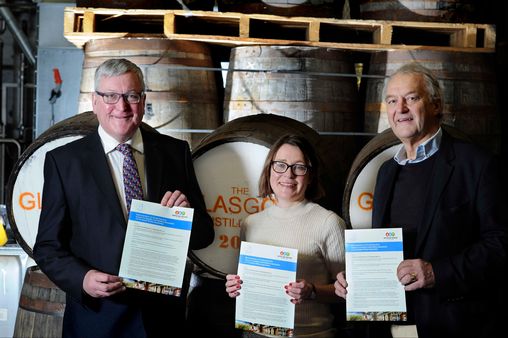
Industry trade body the Scotch Whisky Association has signed a collaboration agreement with the craft spirits body the Scottish Craft Distillers Association.

The trade bodies have signed a Memorandum of Understanding (MoU) to work in partnership “to support the continued success of the entire Scotch whisky industry and its supply chain”.

The Scotch Whisky Association (SWA), the trade body for large whisky distillers, and the Scottish Craft Distillers Association (SCDA), which supports smaller and relatively new craft spirit producers, will support each other but remain as distinct organisations with their own memberships.

The agreement, signed at Glasgow Distillery’s new development at Hillington, recognises Scotch whisky as “a significant Scottish and British cultural asset based on authentic and unvarying local methods of production, with distilleries and brands supporting the communities with which they work, creating jobs and boosting growth”.

The SCDA was launched in 2014 by the Interface Food & Drink’s Craft Distillers Common Interest Group in association with Strathearn Distilleries and the International Centre for Brewing & Distilling to promote products and services, identify export markets and lobby on behalf of its members.

It currently has 18 distiller members listed on its website.

The SCDA is sponsored by Scottish Development International, Scottish Enterprise, Scottish Agricultural Organisation Society (SAOS) and the International Centre for Brewing and Distilling.

The SWA said the MoU is in recognition of a “record number of new distilleries” across Scotland, numbering 40 at various stages of planning and development.

The agreement signing was witnessed Cabinet Secretary for the Rural Economy, Fergus Ewing.

The SWA said the MoU will make it easier for well-established Scotch whisky companies to share expertise in building brands and opening up overseas markets.

The newer companies will in turn offer fresh ideas and approaches to drive wider industry development.

The main commitments outlined in the MoU will see both trade bodies:

  • work together to grow understanding of the rules surrounding Scotch whisky, its production, handling and marketing within the industry and, through the supply chain, recognise shared interest in the public good of the Scotch whisky industry;
  • encourage shared approaches to stakeholder engagement, including raising awareness of best practice on responsible marketing and promotion of Scotch whisky;
  • work together to ensure the Scotch whisky workforce is appropriately skilled;
  • improve industry information;
  • collaborate among existing memberships.Julie Hesketh-Laird, acting chief executive of the SWA, said: We are seeing unprecedented investment in the Scotch whisky industry by companies of all sizes.“This is a clear sign of optimism in the future, and recognition of the global demand for a high-quality product.

    “The SWA has over a century’s wealth of experience and expertise – for example in market access, legal protection, and promoting social responsibility – that we are looking to share more widely with new entrants to the industry.

    “Our collaboration with the SCDA reflects the strong partnership that has developed between new and established distillers.”

    Alan Wolstenholme, chairman of the SCDA, said: “Both long-established Scotch whisky producers and the new wave of smaller distilleries recognise the enormous value and importance of the high regard our national product is held in around the world.

    “This agreement demonstrates both organisations’ determination to work co-operatively together to protect and enhance Scotch whisky’s reputation now and in the future.

    “The SCDA warmly welcomes the genuine support and encouragement it has received, not only from everyone across the industry – and in particular from the SWA – but also from the Scottish Government and its agencies, especially Scottish Enterprise, Scottish Development International and the Scottish Agricultural Organisation Society.”

    Economy Minister Fergus Ewing said the agreement is “exactly the sort of collaboration we want to see in our food and drink sector”.

    He added: “Closer co-operation has the potential to benefit both organisations and help ensure the continued success of the Scotch whisky industry and its supply chain.

    “Craft distilling has blossomed over the past few years and is becoming an increasingly valuable part of our economy, particularly for those who live in our rural and island communities.

    “Today marks the start of a partnership that will support the industry into the future, building on Scotch Whisky’s long-term, global reputation for provenance and high quality products.”

Click here to view original web page at www.dailyrecord.co.uk

Sammy Hagar, Adam Levine band together for a tequila -- with a twist

Sammy Hagar, Adam Levine band together for a tequila — with a twist

Rock musician Sammy Hagar is ready for his tequila encore.

But this time he has a playing partner in Maroon 5 frontman and The Voice star Adam Levine. And the duo are bringing their own twist to the burgeoning spirits category: a tequila blended with mezcal.

Priced at about $55 a bottle, Santo Mezquila is an 80-proof blend of the two spirits, both of which are distilled from agave. Tequila is actually a type of mezcal made from blue agave, while mezcal can be made from other forms of the desert plant.

The two spirits are made differently, with agave for tequila baked and often shredded, for mezcal it’s usually roasted and subsequently pressed, which gives mezcal a flavor distinct from tequila. Mezcal may be a popular hipster order at the bar, but some can find the taste overbearing. “After three or four shots, you feel like you smoked a cigar,” Hagar said.

When Hagar mentioned to Levine his plan to bring a new mezcal to market, the pop star was more interested in tequila. While drinking together in the celebrity destination of Cabo San Lucas, Mexico, they mixed some tequila and mezcal together and found they liked the taste. “When we came up with that name — mezquila — the whole road opened up,” Hagar said. “We know what we’re going to do. It’s the first mezquila. We’ve invented a new product.”

Hagar approached the Mexican distillery that worked with him to make Cabo Wabo Tequila, a brand he founded 1996, and after several experimental blends, they arrived at a taste that pleased them. “It comes on like tequila and you smell a little bit of smoke in it, but is toned down to where you get a sweet finish,” Hagar said. “It’s taking tequila to another level. When you blend the two you get a higher spirit, a brand new taste. ”

Hagar and Levine will take help launch Santo Mezquila in L.A. today. Over the next month or so, it arrives in Las Vegas, California, New York, Texas and Florida.

It’s for good reason that Hagar wanted to get back into the agave booze business. Tequila sales outpaced overall spirits industry growth in 2016, according to the Distilled Spirits Council of the U.S.

Revenue from supplier sales of spirits to wholesalers rose 4.5% to $25.2 billion in 2016, however, tequila sales rose even more, 7.5%. Growth in high-end tequila (brands such as El Jimador and Sauza Hornitos) and super-premium tequila (Patron, Avion) rose 15% and 7%, respectively. Overall, tequila sales to retailers accounted for about $8 billion of the nearly $80 billion spirit industry in 2016.

Many celebrities have joined Hagar in the tequila game, from Justin Timberlake, who co-founded the Sauza 901 brand, to George Clooney, who created Casamigos with entertainment entrepreneur Rande Gerber.

“You can’t make a tequila now, there’s so much competition,” said Hagar, who sold his stake in Cabo Wabo in two transactions, in 2007 and 2009, to the Campari Group for nearly $100 million. Three years ago, he founded Sammy’s Beach Bar Rum.

In the past, Levine had been approached to endorse various alcohol brands, yet, “nothing really spoke to me,” said Levine, who bonded with Hagar in Cabo and on the last season of The Voice when Hagar served as as a mentor for his team. “I believe there’s no one better, aside from the fact we get along famously and instantaneously, to jump on board with than this guy. He kind of paved the way for so many people.”

Hagar built a business life beyond his musical career as a platinum-selling solo artist and more than a decade with Van Halen. He owns or is a partner in eight restaurants and is about to start the second series of his own TV show, Rock & Roll Road Trip with Sammy Hagar on AXS TV on March 5.

This season, his guests will include John Mayer, Melissa Etheridge, Toby Keith, John Mellencamp, Mick Fleetwood, James Hetfield and Billy Gibbons. “This is a different side of entertainment for me,” he said. “I shut up and listen now.”

Click here to view original web page at www.usatoday.com

Craft gin is having a ‘ginaissance’

Craft gin is having a ‘ginaissance’

Globally it’s called the “ginaissance” – the trend for small-batch, locally-made craft gin – and South Africa has embraced the movement, with more than a dozen artisan distilleries springing up in the past year and giving it a unique local spin with ingredients like fynbos, buchu and spekboom.

Craft gin takes your standard G&T with a slice of lemon to the next level, meant to be slowly sipped neat or on the rocks, or with a dash of good quality tonic water and garnished with fruit, herbs and spices to bring out its distinctive flavours.

Whether commercial or craft, gin recipes are usually a closely-guarded secret, but the key element that makes it gin is juniper, along with a mix of traditional botanicals that could include angelica, coriander, ginger, liquorice, lemon or orange.

Craft distillers take it up a notch, with a focus on traditional techniques like double-distilling, and attention to detail in the ingredients – like Wilderer in Paarl that uses only spring water from the Franschhoek mountains, or local craft gin pioneer Inverroche with their hand-harvested fynbos from the coastal dunes and mountains of the Cape Floral Kingdom.

Well-known for their in-house craft beers, Port Elizabeth’s Bridge Street Brewery has tapped into the artisan trend with a new craft gin tasting experience that presents different ways to taste a selection of local gins – each with its own specific garnish.

The brainchild of manager Kosie de Jager, the artisan gin board guides you through the tasting steps – first, the aroma, starting a little further away from the nose, then a gentle swirl and sip of the neat gin.

Next, add the garnishes selected for each gin, give them a swirl and taste again and, finally, top-up with a dash of Fitch & Leedes tonic water and ice and decide which of the G&T options you prefer.

Craft gin is in

The selection will change as Kosie experiments with new gins but the current offering is Inverroche Amber, Woodstock Inception beer-distilled, Musgrave Pink and Triple Three African Botanicals.

The Inverroche Amber is made at Stilbaai and infused with specific coastal fynbos plants that give it its distinctive colour and a mellow, spicy flavour, rounded out with a garnish of orange peel and zest that add some sweetness.

Rooibos and buchu give Triple Three African Botanicals, made at Blaauwklippen Wine Estate, a very different profile – it’s richly fragrant and earthier, and super-smooth.

Kosie’s garnish of thyme brings out the earthy herbiness and a sliver of grapefruit peel gives it some zing and a refreshing sour tang.

Musgrave Pink gin is made at the Hope on Hopkins distillery in Cape Town’s Salt River industrial area, infused with rosehips and rosewater for a delicate pink hue, a gentle rose aroma and floral and herb flavours with a hint of spice. Crushed rose petals and black peppercorns enhance the flavours.

Kosie’s favourite (and mine) of the four is the Woodstock Inception – distilled from a beer base that gives it some sweetness and a caramel note. It’s the punchiest of the four, full-bodied and very smooth, a good one for sipping just on the rocks.

The tasting board costs R110, and any of the gins with their garnish can be ordered as a drink on its own once you’ve found your favourite.

Click here to view original web page at www.heraldlive.co.za

Easy DIY Winter Cocktail Recipes: How to make mulled wine, spiked monk’s coffee & Blue Blazer cocktails at home

Easy DIY Winter Cocktail Recipes: mulled wine, spiked monk’s coffee & Blue Blazer cocktails

There’s nothing better than sipping on warm cocktails while being wrapped cozily inside a blanket with a good book or the company of family and friends during winters. When it’s too cold for a night out at pubs or clubs or you’re too broke to spend a lot of money on cocktails in bars, it’s the home made cocktails that salvage your weekends. Whether a casual house party with just your very close friends or family or a formal get-together with colleagues and acquaintances, your mixology skills can come in handy during winters.

Here are three easy-to-make cocktails that you can prepare when entertaining guests at home during the winters. The Mulled Wine recipe is by Aman Dua, head mixologist at Massive Restaurants Pvt. Ltd. The spiked monk’s coffee is by Irudaya Deepak, F&B Manager at Royal Orchid Hotel, Bengaluru. The Blue Blazer recipe is by world famous mixology expert and author of the world’s first cocktail guide book The Bon Vivant’s Companion or How to Mix Drinks, Jerry Thomas. Thomas is also known as the ‘father of American mixology’. ALSO READ: Top 10 strongest Alcoholic Drinks of the World: From Absinthe to Everclear and beyond!

Ingredients:
1 bottle Shiraz Wine
6-7 nos. Cinnamon sticks
1 small Nutmeg, crushed
8-10 nos Black Peppercorns
8-10 nos Cloves,
5-6 nos Star Anise.Easy DIY Winter Cocktail Recipes: How to make mulled wine, spiked monk’s coffee & Blue Blazer cocktails at home

Spiced Monk’s Coffee Recipe

Ingredients

Old Monk: 30ml
Baileys: 30ml
Double Espresso Shots: 90ml
Cinnamon Powder: ½ tea spoon
Cardamom seeds powder: 1 pinch
Vanilla Extract: 1 bean
Spawn Sugar: for Garnish
Approx. 2 table spoon caramalised sugar

Methods
1. In cocktail shaker, add rum, Baileys, Cinnamon Powder, cardamom seeds powder and shake well.
2. Take a Mug add Espresso, and vanilla extract heat with steam and pour in a serving glass cup.
3. Slowly pour the Rum mix and decorate with Spawn sugar ball and serve. ALSO READ: Best Homemade Hangover Cures to rescue you after a long night of binge-drinking!Easy DIY Winter Cocktail Recipes: How to make mulled wine, spiked monk’s coffee & Blue Blazer cocktails at home

The Blue Blazer Recipe

Ingredients:
Whisky: 90ml
Boiling water: 60ml
1 spoon of sugar

Method:

Pour the mixture into two mugs, shake well by pouring the burning liquid between the two mugs, for around six times, before pouring into a glass. Garnish with a lemon peel.

Do you have recipes to share? Send them in! Email your recipes with photos of the dish you’ve made to team-lifestyle@corp.india.com and we will be happy to carry select recipes right here on India.com.

The 5 French Style Rums You Need

The 5 French Style Rums You Need

You’re perusing the rum options at wherever you are: the liquor store, the french bistro, the steakhouse, the liquor cabinet of your Grandma who still drinks like she’s 5 men in their 20s. You want that sweet fire in your belly, but then you notice something strange. A rum, but with an ‘h’. Well, that’s no typo. You’ve just found a delightful rarity in the world of island distilleries, rhum agricole or “French style rum”.

Popular in many French restaurants, the added ‘h’ isn’t just an aesthetic flair to the drink, but an identifier of a new monster all together. Where regular rum is made from the distillation of plain old fermented molasses, rhum agricole is distilled from fresh pressed, free-running cane sugar juice. Also, the industry is tightly managed across the French territories, as it is run by an official organization called the AOC (Appelation d’Origine Controlle) which mandates when to harvest the cane sugar, the distillation process and maintenance of the growing environments.

What this gives the drink is a departure from the faint vanilla sweetness of its molasses infused brethren and a more grassy note, an added saccharine. Because so many of the French territories, such as Martinique and, well~ Martinique may be the main distributor. Here are the five selections we have decided might be the best to try of this dynamic beverage.

We have a champion of the volcanic isles right here with this award-winning aged mahogany spirit, inviting your heart in with its warm oakiness and velvet texture as it slips you to the islands. It makes you feel a tropical spring-to-summer transition with cocoa bean aromas, mixed fruit nuttiness and this silky punch of a coconut-banana creme brulee flavor. It says goodbye with charred sugar cane, exotic spices and slightest picante as it leaves you with the sensation equivalent of a day spent in a hammock.

SCHRUBB JM

The Rhum JM collection is versatile, classic and, frankly, the stuff of legend. This gem, the “avantgarde liquor d’orange” as the site titles it, though, is a neck-twister. As in, you’ll be dying to twist the cap off the neck of this vintage drink so that you can experience what it’s like to try soft molten gold mixed with cane sugar juice, vanilla bean drops pulsating in each sip, with nutmeg and cinnamon peppering. Because, you know, boldness is the only thing liquor is about. But, then, to drive home its uniqueness, its shining brilliance, Schrubb is infused with a bitter orange zest to capture those aromatic winds and put them in a bottle. Open this bad boy and let those winds blow your sails to Having a Good Time.The 5 French Style Rums You Need

Rhum Agricole Neisson Vintage of the Third Millenium

With a name like this coming up on our list, you know you’re about to receive something spectacular. The name does not disappoint. Neisson distillery opened its doors in 1931 in Martinique, but this product opened its first cap in 1999 to celebrate the new millennium and what better way to celebrate its exclusivity than by producing only 2000 bottles a year. Using only ten barrels that hold less than 650 liters, this liquor is aged over 6 years and slowly cooled to a soft amber perfection. If you are lucky enough to hold this celebration of the millennium, it seduces you with its fragrance of cigar box and charred fruitiness and serenades your taste buds with suggestive, sweet fruity nodes and long -lasting aftertastes that leave that slight peppery singe in your mouth.

Damoiseau Cane Rhum 110 Proof
The 5 French Style Rums You Need

Finally, a selection that hails from somewhere new; new horizons of the visual and flavor to explore: Damoiseau of the island Guadeloupe. Here, they bring to us a contender with a minimal purism that you can enjoy with any cocktail but still enough punch to kick you right out of reality. When we talk about grassy sweetness, a real saccharine and thick hardiness, this is the drink to know how that extra ‘h’ means “well Hello!” Served in a simple, but still elegant clear bottle for a clear liquor, Damoiseau does not need amber colors or flamboyance to give you a royal tropical experience.

St. George California Agricole Rum
The 5 French Style Rums You Need

Click here to view original web page at www.drinkmemag.com

Finally, a selection that hails from somewhere new; new horizons of the visual and flavor to explore: Damoiseau of the island Guadeloupe. Here, they bring to us a contender with a minimal purism that you can enjoy with any cocktail but still enough punch to kick you right out of reality. When we talk about grassy sweetness, a real saccharine and thick hardiness, this is the drink to know how that extra ‘h’ means “well Hello!” Served in a simple, but still elegant clear bottle for a clear liquor, Damoiseau does not need amber colors or flamboyance to give you a royal tropical experience.

St. George California Agricole Rum

France gave us General Lafayette. France gave us the Statue of Liberty. Now, they give us St. George’s California Agricole Rum,an American brand playing off this beauty from the francophone world. This selection, like the former, is a purist, going for that clear, viscuous texture so that we can just focus on that sweet melody of that grassy taste, that pure sugar cane rush, that California tropic in a bottle come to whisk you away, those who missed the special on Carribbean cruises. California’s always here for you and a sign of the growing appreciation for this sultry drink. When you sip a little hum, it gets really clear why Rhum agricole is the next big thing.The 5 French Style Rums You Need

The 5 ‘Entertaining Liquors’ You Need In Your Collection

The 5 ‘Entertaining Liquors’ You Need In Your Collection

 It’s January; and the New Year is well upon us. The Holiday get-togethers have come and gone, and we’ve all got a long lull until we need to dress our homes in a certain theme and invite all those sometimes friends over. What’s next, Valentine’s day? Not exactly akin to ragers. St. Patrick’s Day is somewhere in there too—though that’s maybe too susceptible to spontaneous binge-drinking. Groundhogs day is antiquated and silly, and you’d be laughed out of most super bowl parties for bringing anything not in an aluminum can with “lite” written somewhere on it (because American football is kind of a joke and you know it).

Screw it, then. If 2017 is going great for you already, maybe it’s time to throw an I’m-doing-well party. Got a raise? How about a look-at-my-sweet-new-computer/quad/virtual reality console shindig? If you’re more the modest type, (loosen up a bit, would ya?) then try a random theme party based on some celebrities birthday or something. Listen, it’s not my job to tell you how to throw a party, you’ve been to college (or at least a college party, right? You’re cool, right?). It is, however, my job to tell you what liquors to stock up on impress the Quinten Tarantino movie-themed pants off of your guests (good theme, right?).

Hochstadter’s Vatted Rye Whiskey

Rye makes for a complicated whiskey. Carrying basically 0 sugar content and holstering a medley of intense and stern flavors, it can be a tricky grain to distill with unless you get it just right. Knowing this, Cooper Spirits decided to lean into that challenge and alchemize a bunch of those crazy whiskeys together in a process they’ve called vatting. This process is tricky, as you’d imagine, but Cooper spirits pride themselves on being innovative and creating spirits that have both initiative and integrity. As such, the hard working team behind the Hochstadter scoured the Americas to find the most accommodating and agreeable that whiskeys they could. In the end, a series of single-origin ryes between the ages of 4 and 15 years entered the vat, and one mighty liquor exited, combining the sweet sting of a great rye with the complexity of a smart blend.

Hochstadter uses its unique versatility to bridge the gap between enthusiast’s cabinet piece and bartender’s mid-shelf go-to. Its blood-orange and cherry notes shine particularly brightly in a Manhattan or an Old-Fashioned, while the molasses and tangy nutmeg hang on the palate when sipped with ice. Hochstadter’s (average) age of 8 years gives it a decidedly smoother feel than many of its blended cousins. In fact, Hochstadter has very little in common with its cousins and predecessors. If the rye whiskey family were a smart metaphor, they’d be a farming family in the middle of the Midwest; Hochstadter being the clever younger sister who fled to the city to pursue a career as a novelist. If I were a wittier internet writer, I wouldn’t have had to explain my lackluster metaphors.

It’s unique. It’s sharp. It’s got a bright future. Got it?

Crescendo’s LimoncelloThe 5 ‘Entertaining Liquors’ You Need In Your Collection

Limoncello is an Italian-invented liquor that invokes thoughts of whimsy, sun-soaked days, and sensual nights. It’s a drink of leisure, made for sipping on the beach, or in the hot tub. Truly, no liquor captures the essence of the lax and carefree nature of the Italian lifestyle like limoncello—hence why a limoncello made by a few Portland-based engineers is sure to raise an eyebrow or two.

The Crescendo team sought to recreate the enchanting aesthetic of this fruity Italian liquor by perfectly recreating the limencello process, but with one caveat—they intended to use all natural, GMO-free, organic ingredients. Beyond this, Crescendo vowed never to add anything superfluous to their product, resulting in a liquor that is “free of anything but what nature provides”. This unique quality in a typically oversweet drink gives the limon(as well as lime and orange)cello a tighter, yet simply delicious feel.

If the simpletons you’ve invited into your home don’t seem to appreciate the nuances of fine liquor alone, Crescendo is there for fantastical cocktail backup. The options are as diverse as they are listed on Crescendo’s website. We’re talkin’ lemon drops, martinis, lemonades, teas, shandys, etc… So if all else fails, dust off the old shaker and get behind that wet bar (still) covered in old Christmas decorations (from 2015, you don’t have many parties lately, huh?), and get ready to impress.

Templeton Rye Special ReserveThe 5 ‘Entertaining Liquors’ You Need In Your Collection

There may be a few ryes on this list. It’s sort of a phase that I’m going through; though not without good reason—mind you. In fact, I thought I was more of a scotch guy until coming across a few of these bottles. Don’t get me wrong, the world of scotch is a deep and expansive one filled with complex, peaty flavors, citrus bursts and woody surprises, but ryes carry an unexpected brightness and charisma that I’ve not found in whiskey for a long while. So excuse me while I indulge in a few more of them—while bringing you along for the ride.

The Templeton name was born on the railroad. A small Iowa town by the name had a reputation for stashing bottles of rye whiskey into train cars bound for Chicago and ultimately: Al Capone. Spoken about in hushes and through smirks, Templeton whiskey was said by those who had gotten themselves a bottle to be extravagant—fit for the mob boss himself. Today, the story is different, but the whiskey isn’t. The trains are still there, carrying shipments of grain through the Midwest and beyond. Meanwhile, the Templeton Distillery sits, active as ever, manufacturing its notoriously extravagant spirits.

To celebrate this history, Templeton is (legally) releasing a 4, 6, and 10 year variant on its signature liquor. Locally grown grains make for an authentic rye spice signature that Templeton fans have grown to love, while the extra age in the distilling process gives the whiskey a little extra spice and character, a longer finish, and a smoother mouth feel. If you’re looking to impress next time your might-be-in-the-mafia uncle is over, give him a sip of this. Show him the hand-labeled bottle number on the side, mentioning that there were only a few over 6,000 of these produced. He seems like the type who you’d want to be on your side, knowwhaddahmean?

Death’s Door GinThe 5 ‘Entertaining Liquors’ You Need In Your Collection

Ah yes, gin—the original head-turner. The perpetual eyebrow-raiser, if you will. It isn’t for everybody, sure, but when you’re a gin person, you’re really a gin person. As such, it’s important to have a bit of it around when expecting company. We’ve touched on Death’s Door Gin before, and with good reason. They strive to be a gin of utility, bridging the gap between complexity and accessibility. Boasting flavors of classic juniper alongside sweet and smooth fennel notes and punchy coriander, Death’s Door will impress when sipped by itself, or in an expertly-stirred (James Bond is a tactless oaf) martini.

But, like I said, we’ve been over that a time or two before. What we’re here to highlight this time around is the meticulous science and design that has gone into the creation and unveiling of their new bottle.The 5 ‘Entertaining Liquors’ You Need In Your Collection

Death’s Door seeks to be the new American standard in gin. Lofty a goal as it may seem, they’re well on their way with the new bottle they’ve just released. Thinner glass and flattened sides make for a lighter, more eco-friendly bottle without sacrificing stability. A longer neck makes for easier handling (and sweet flip tricks) by bartenders. Sleeker style means a bit more attention from your guests. Most distilleries would stop at the contents of their bottle; maybe release it in something boring and round. Not Death’s Door. If you’ve never indulged, now’s the time.

Lock Stock and Barrel 16 Year Straight Rye WhiskeyThe 5 ‘Entertaining Liquors’ You Need In Your Collection

If your neighbors/coworkers/friends/family/dungeons and dragons crew aren’t impressed yet, then you’re plum out of luck. You’ve tried to catch their interest with every bottle in your cabinet, from sweet limoncello to bold and stunning gin, and you’ve come up short. You’ve explained the subtle intricacies of rye whiskey. They don’t seem to care.

Well, I guess that’s it. If you were a weird-looking kid, break out an old photo album. If you’ve got twister, maybe that could be fu—wait. I know what to do. You need a whiskey with experience. You need a whiskey that’s been meticulously tasted to ensure that 16 years was just the right amount of time—not too long, not too short. You need a whiskey that’s as smooth, confident and spicy as you wish you were as the host of this failing party. Time to break out the ol’ Lock Stock and Barrel.

As the extravagant grandfather of rye whiskey, the LS&B 16 maintains an unprecedented intense flavor while creating a balance of aromatic and sweet, dried fruit flavor and deep, complex spices. The Lock Stock and Barrel is made of 100% rye grain in copper stills, with hand-picked grains that masters of their craft call “robust”. Cold weather aging over a whopping 16 years brings out flavors not usually seen in any whiskey—think roasted acorns, sour grass, wild cherries, stewed blackberry, dried pear and sassafras. Complicated indeed. If you’re not convinced because maybe you don’t believe the opinion of any ol’ internet writer, (thanks, jerk) then consider that this particular spirit won the prestigious double gold (yeah, that exists) at the San Francisco World Spirits competition, as well as “Best Rye”. Do you get why I’m on a bit of a rye kick lately?

So go forth, bold party hostess, and send those Facebook invites. Let me know how it goes (find my twitter below).

Five lesser-known French wine styles to discover in 2017

Five lesser-known French wine styles to discover in 2017

You may know your Bordeaux from your Burgundy or your Cabernet from your Chardonnay, but there is so much variety in French wine that I bet there are styles you haven’t tried yet. Here are some of the lesser-known gems from this favourite of wine countries. You will find a few examples of them on the high street, but for more choice, go hunting for them at an independent French specialist wine merchant, or better still visit The France Show at London Olympia. Santé!

The Rhone Valley is most famous for its rich, ripe reds of course, but did you know the area also makes delightfully light, frothy sparklers? They are produced near the river Drome to the east of the region. These aromatic, spritzy, easy-drinking sparklers are made mainly from the Muscat grape with typically about 25% Clairette grapes. They are a little sweet, very refreshing and delicious with creamy cakes or fruit salad. Expect a floral aroma of rose petals and a lip-smacking flavour of green grapes and apricots.

Cremant de Limoux

Near the city of Carcassonne in south-west France, some of the best sparklers (outside the Champagne!) are created. Cremant is a term which means a quality sparkler made in the Champagne method (ie aged in its bottle on the yeast sediment – called the lees – for a long period of time) and you may well have come across the fine cremants of Bourgogne, Alsace or Bordeaux, for example. But do try those of Limoux too – made mainly from Chardonnay (one of the Champagne grapes) and Chenin Blanc, they must be aged for at least a year on the lees and are often quite rich, with apple and citrus notes and a long, toasty, dry finish. Good value for a celebration.

Vin Jaune

Currently increasing in popularity, Vin Jaune (‘yellow wine’) is a speciality of the Jura region of eastern France. A deep golden colour, it is made from the Savagnin grape and develops its distinctive nutty style by being aged in oak barrels which are not entirely filled. The wine is partly oxidised though a film of natural yeast eventually grows on the surface, protecting it and adding its own yeasty flavour. The result is a bit like dry fino sherry, and I love it lightly chilled with salty snacks or toasted nuts.Five lesser-known French wine styles to discover in 2017

The lovely and gastronomically rewarding region of Alsace on the eastern border is world-renowned for its white wines but less so for its delicate reds. Yet Alsace produces beautifully fruity, tangy, soft pinot noirs, refreshing and especially delicious when served lightly chilled in hot weather. Try one with fresh salmon for an unusual but successful marriage of fish and red wine, or match one with lighter meat dishes like duck. Like all pinot noir, not the cheapest reds around, but definitely worth a try.

These fortified wines of the deep south of France have grape spirit added to stop the fermentation so they are usually very sweet and very strong. Most are made in the hot, arid, rugged Roussillon region to east of the border with Spain. Banyuls is my favourite subregion for ‘VDNs’, its wines made mainly from grenache noir grapes for a gorgeously rich, sweet and plummy dessert wine, less fiery than port but similar in many ways, and a great match for dark chocolate or chocolate desserts. A serious treat!

Susy Atkins is a well-known wine writer and broadcaster, the award-winning wine columnist for the Sunday Telegraph’s Stella magazine and the wine editor of Delicious magazine. She will be at The France Show every day, hosting tutored wine tastings on stage and at the wine stands. The France Show will be at London’s Olympia from 27 – 29 January 2017. Tickets are available from £12Five lesser-known French wine styles to discover in 2017

Tea Isn't Just for Hot Toddies Anymore

Tea Isn’t Just for Hot Toddies Anymore

I write a lot about fancy cocktails here at Paste. Drinks that require a decent amount of skill (and a pretty stocked bar) to pull off, but when you do, are bound to dazzle and impress even the most curmudgeonly of dinner guests.

While those types of cocktails are great, sometimes you just want, nay need, a drink. You don’t want to drink a glass of straight liquor over ice, but as far as mixing goes, you just want something easy. Enter mixers. All you have to do is measure out the appropriate amount of liquor, add the mixer, and give it a little stir, and you’re done.

This New Year’s I tried out a new mixer: Owl’s Brew. I’ve actually had these on my shelf for a few months waiting to give them a try, but never really had the perfect occasion to. On New Year’s I went to a party at a friend’s house, and threw a few bottles of the mixer in my bag along with a few different liquors.

Owl Tree’s mixers are unique for a number of reasons: First, they’re made from tea. Yes, tea, like you might sip on over ice on your front porch in the summer. There’s some other stuff in there too, but tea is the main base. Another interesting feature: you can mix them with almost any liquor you have around. The standard ratio of two parts tea and one part liquor works with a huge assortment of spirits, and Owl’s Brew has some more complex cocktail recipes on their website as well.

I’d previously only had tea in Hot Toddies, but the prospect of a cold tea-based cocktail certainly was intriguing.

For my New Year’s party atmosphere, this was perfect. My boyfriend and I spent the evening drinking mixed drinks made with Owl’s Original blend “The Classic” and tequila. Another friend used the same mixer with vodka. Across the board everyone really enjoyed it, and each liquor gave it a slightly different flavor customized for the drinker.

Described as “English Breakfast with a tart twist,” it was just that, and was pleasant with every spirit we tried with it. At one point, we also tried it in Champagne, one of the suggestions on the bottle, and were equally impressed.

Owl’s Brew is brewed in Vermont in large kettles, where it is handcrafted in small batches, and then sweetened, packed, and bottled. There are actually a few different versions available beyond The Classic: Salted Caramel Toddy (white and black tea with sea salt and caramel), Mulling Spices (mulling spices with cranberry and apple), Wicked Green (a bright and clean green tea with a lot of heat), White and Vine (white tea with watermelon and tart pomegranate), and Pink & Black (darjeeling tea with a hint of hibiscus).

A few weeks after New Years, my boyfriend and I also tried Coco-Lada, described as a “a blend of black tea, coconut, chai spices, and pineapple. Mixed with some dark rum and served over ice, it was absolutely divine and reminiscent of a complex tropical cocktail one might order at a tiki bar.

Tea cocktails are certainly something I would have never considered when I wasn’t suffering from a cold and begging for a Hot Toddy, but are now definitely on my radar.

You can pick up Owl’s Brew at places like The Fresh Market, BevMo, Total Wine & More, Whole foods, and Williams-Sonoma. You can also order bottles of their stuff (and some nifty triple packs so you can try a few) on the company’s website.

London brewery creates DNA-based beer

London brewery creates DNA-based beer

London-based Meantime Brewery claims it can create the world’s most personalized beer. The unique beverage is made based on your DNA profile and costs $30,100. Clients have to provide a saliva sample that will be analyzed for sensitivity to certain chemicals that have impact on flavor perception. You will then receive about 2,000 personalized pints delivered to your home and that are ready to serve. Meantime Brewery’s Sheeraz Gulshe explains the beer making process and why it’s better than others.

How did you come up with the idea to create this DNA-based beer?

Meantime’s brewmaster Ciaran Giblin submitted a simple saliva sample to personal genetics company 23andMe to obtain a genetic blueprint about what makes him ‘him,’ including an analysis of his perception to bitter tastes. Following a hugely successful test batch of beer that he created to match his preferences perfectly, the craft brewer has announced the launch of “Meantime Bespoke.” The package, now available to the public to purchase, is a one-of-a-kind service offering passionate craft beer fans the opportunity to brew the ultimate in personalized beer — using genetic profiling to individually tailor it to their palate.

What’s the main point of it?

Ciaran’s DNA results showed that he had a preference to bitter flavors. His oral taste receptors (the TAS2R38 gene) showed that he was less likely to detect propylthiouracil (PROP) — a chemical similar to many compounds found in cabbage, raw broccoli, coffee, tonic water, and dark beers — meaning he has a hereditary proclivity for bitter tasting foodstuffs. This informed the creation of a double hopped, and incredibly bitter pale ale for his taste.

How do you technically create the beer?

The first step for Meantime Bespoke is for the participant to take a DNA test, which gives analysis on a person’s sensitivity and tendency to dislike or enjoy certain levels of bitterness. This provides a uniquely personalized framework to brew a modern craft beer; bitterness is an important factor in determining which beer styles a person may or may not enjoy — it provides a good starting point to work from. The brewing team then helps narrow down desired beer style, ingredients and method of brewing in order to create the best beer to match an individual’s taste preference.

Once the results are in, the participant meets Ciaran Giblin and Meantime’s brewing team to have a session to analyze the results and work on the beer they would like to create. Once plans are in place, the participant will be able to brew the beer from start to finish in the state-of-the-art Pilot Brewery and onsite laboratory.

What Meantime’s package include:

• A one-to-one consultation with Meantime’s Brewmaster to take part in the creative process.

• Exclusive access to the state-of-the-art Pilot Brewery and onsite laboratory.

• Hands-on with the physical brewing process.

• A minimum of 12 hectolitres of personalized beer in participant’s choice of bottles or kegs — equivalent to over 2,000 pints.

• Naming their tailor-made beer, working alongside Meantime’s creative team to put their individual touches to the packaging design.

• The opportunity to customize all elements of their beer from start to finish, and work alongside a world-class brewing team to bring their beer to life.

• A study course, “The Knowledge,” to allow Meantime Bespoke customers to gain a deeper understanding of the brewing process.

• Once bottled, the brew will be hand-delivered to them to consume and share with family and friends as they wish.

Why is this personalized beer better than a normal one?

The beer is engineered towards an individual’s taste receptors, therefore its taste is tailored specifically to the participant’s proclivity to specific flavors. Moreover, we offer personalization at every stage of the brewing process, over and above just a DNA test — as participants are provided with near full control (bar some guidance from Meantime’s Brew Master) of a beer’s flavor profile, ABV, mouthfeel and style. All produce is made in one of the UK’s most technologically advanced breweries, at Meantime’s headquarters in Greenwich.

Aside from having control of the taste and type of beer created, participants will design the bottle label alongside a creative team. They also have the option of having a pint glass created that is molded to fit the drinker’s hand.

So, for different people your beer tastes different?

Yes – each person’s ability to taste sweet and bitter flavors is completely unique.

It costs $30,000+. Why is the price is so high?

Because our package incorporates a variety of exclusive elements and access to Meantime’s industry leading brewing team and brewery.

What’s next?

The service has been opened up to the public. Meantime, its’ exciting to work with beer fanatics from across the globe and to help them create their own perfect brew.

-Dmitry Belyaev

Click here to view original web page at www.metro.us

Politicians Make Bootlegging Great Again

Politicians Make Bootlegging Great Again

When Prohibition ended in 1933, my great-grandfather, Giuseppe Marano, thought his money-making glory days were over. Having made a good living selling alcoholic beverages to willing buyers at a time when that business was illegal across the country, he and his cohorts certainly viewed the passage of the 21st Amendment as the end of a very profitable era.

Except that it really wasn’t. Politicians may have formally dumped the national ban on booze, but in many places they’ve imposed enough foolish restrictions to keep bootlegging a going concern.

On the first day of this year, it became a class 4 felony in Illinois—up from a business offense carrying a fine—to import 45 liters or more of liquor into the state without a license. The same minimum one-year prison sentence applies to bringing in more than 108 liters of wine or 118 liters of beer without government paperwork.

The law passed as a nudge-and-wink scheme between politicians who resent the loss of tax revenue when beverages are brought in across the state line, and local liquor distributors who bristle when out of state competitors elbow in on their action.

“Many out-of-state businesses are not compliant with Illinois tax laws, which undercuts Illinois businesses, depriving our state of money that could be going toward improving our schools, roads and social services,” Karin Lijana Matura, executive director of Wine and Spirits Distributors of Illinois, an industry trade group, told WQAD.

The legislation came in response to a thriving illegal cross-border trade as Illinois residents place orders with businesses—many in Indiana—for liquor, wine, and beer unavailable or just extremely pricey through their state’s tightly regulated and protected cartel.

“Alcohol is much more expensive in Illinois than it is in Indiana,” reported a Chicago ABC affiliate in 2015. “And it is even pricier in Cook County, where the tax rate on liquor is more than five times higher than it is in the Hoosier state.” The result is that “a six-bottle case of vodka that costs $167 in Indiana costs $226 in Illinois and is $18 more than that in Cook County.”

Indeed, Illinois taxed distilled spirits at $8.55 per gallon, compared to the $2.68 imposed by Indiana, according to the Tax Foundation. Taxes are also lower in neighboring Missouri and Wisconsin. The Illinois Policy Institute notes that Cook County adds another $2.50 per gallon to the price of a bottle of cheer, and Chicago tags on an extra $2.68 per gallon.

Wine is taxed at $1.39 per gallon, a tad higher than the $0.25 rate in Wisconsin. Beer isn’t leaned on quite so heavily by the tax man, but Illinois still imposes a higher rate than most of its neighbors at $0.23 per gallon, compared to $0.12 in Indiana, and $0.06 in Missouri and Wisconsin.

And that’s assuming you can even find the beverage of your choice to have an opportunity to balk at the price. Chicago “is one of the last contested territories for the nation’s two beer giants…which wage a proxy war through licensed distributors” and squeeze out small competitors, Crain’s Chicago Business pointed out a few years ago. Federal and state law makes it difficult for small players to bypass established distributors.

So opposition to the new Illinois law found fertile ground among consumers with tastes that couldn’t be satisfied locally, “particularly from residents who purchased hard-to-find wine from out-of-state retailers,” according to the Chicago Tribune. “Other states allow out-of-state retailers to obtain a direct shipping license, providing both oversight and valuable tax revenue. We think this is the right approach for Illinois—creating competition, consumer choice, and revenue to help balance our state’s budget,” their petition said. All they wanted was a chance to legally place orders online with businesses that carry their drinks of choice and have the goods shipped to their homes. But they lost, and the tax man and distribution cartel got their pet bill signed into law.

It’s not as if Illinois officials are alone in favoring tax revenues and established local businesses over the value of leaving people free to make their own choices. This year, Michigan adopted a law allowing state retailers to ship wine directly to customers—but barring businesses based outside the state from serving the same market. That’s a direct blow not just to retailers who don’t have local politicians in their pockets, but also to consumers who want to take advantage of the boom in online vendors and wine clubs of recent years.

And the motivation is no mystery.

“We applaud the House for approving this legislation, which will provide the state with additional tools to crack down on illegal wine shipments into our state,” the president of the Michigan Beer and Wine Wholesalers Association crowed.

“It sounds like it’s going to shut down some of these mail order wine clubs, which if those people can’t get their wine through those streams anymore they’ll have to come to places like this,” the general manager of a Traverse City retail operation told 9&10 News.

Unshockingly, Michigan has generally higher taxes—$11.94 per gallon of distilled spirits, $0.51 per gallon of wine, and $0.20 per gallon of beer—than its neighbors. The state also imposes an alcohol regulatory regime that the Mackinac Center for Public Policy calls “problematic, because it is designed to unjustly enrich a few beer and wine wholesalers at the expense of consumers everywhere. Indeed, parts of the state liquor code read as if it were written specifically for the benefit of wholesaler business interests.”

With high prices essentially mandated by law, Michigan has long enjoyed a healthy, if officially unsanctioned, cross-border trade in alcoholic beverages.

“Conservatively, illegal importation of alcohol into Michigan strips the State of at least $14 million each year,” the Michigan Liquor Control Commission estimated in 2007. The Commission fingered Indiana and Wisconsin as major sources of smuggled alcohol—both states, it should be noted, with lower tax rates on all sorts of adult beverages.

Foreshadowing Illinois’s transformation of a business offense into a felony ten years later, the Michigan report recommended increased enforcement and penalties as the response to state residents seeking to avoid repeated muggings by government officials and their cronies. Why correct your own foolish errors when you can lash out at people for responding rationally and predictably to the incentives you’ve created?

Giuseppe Marano had his day. But if he were still around, he would recognize a glorious business opportunity when he saw it in the legal, but heavily taxed and regulated modern booze market.

But it’s not like that market I going unserved. My great-grandfather may be gone, but there are plenty of modern bootleggers profiting from the opportunities that politicians have handed them.

Click here to view original web page at reason.com