Touring the Red Mountain AVA in Yakima Valley
CrushBrew Editorial · Wine · 8 min read
Key Takeaways
Tiny but mighty — At about 4,040 acres, Red Mountain is Washington’s smallest and warmest AVA.
Built for reds — It’s famous for powerful, tannic Cabernet, Merlot, and Syrah.
Shaped by floods — Ice Age Missoula Floods and wind-blown loess built its soils.
Pioneer roots — First vines were planted in 1975; Kiona still farms here today.
A marquee name — Woodinville’s DeLille Cellars built its reputation on Red Mountain fruit.
In This Article
Where is Red Mountain, and how did it begin?
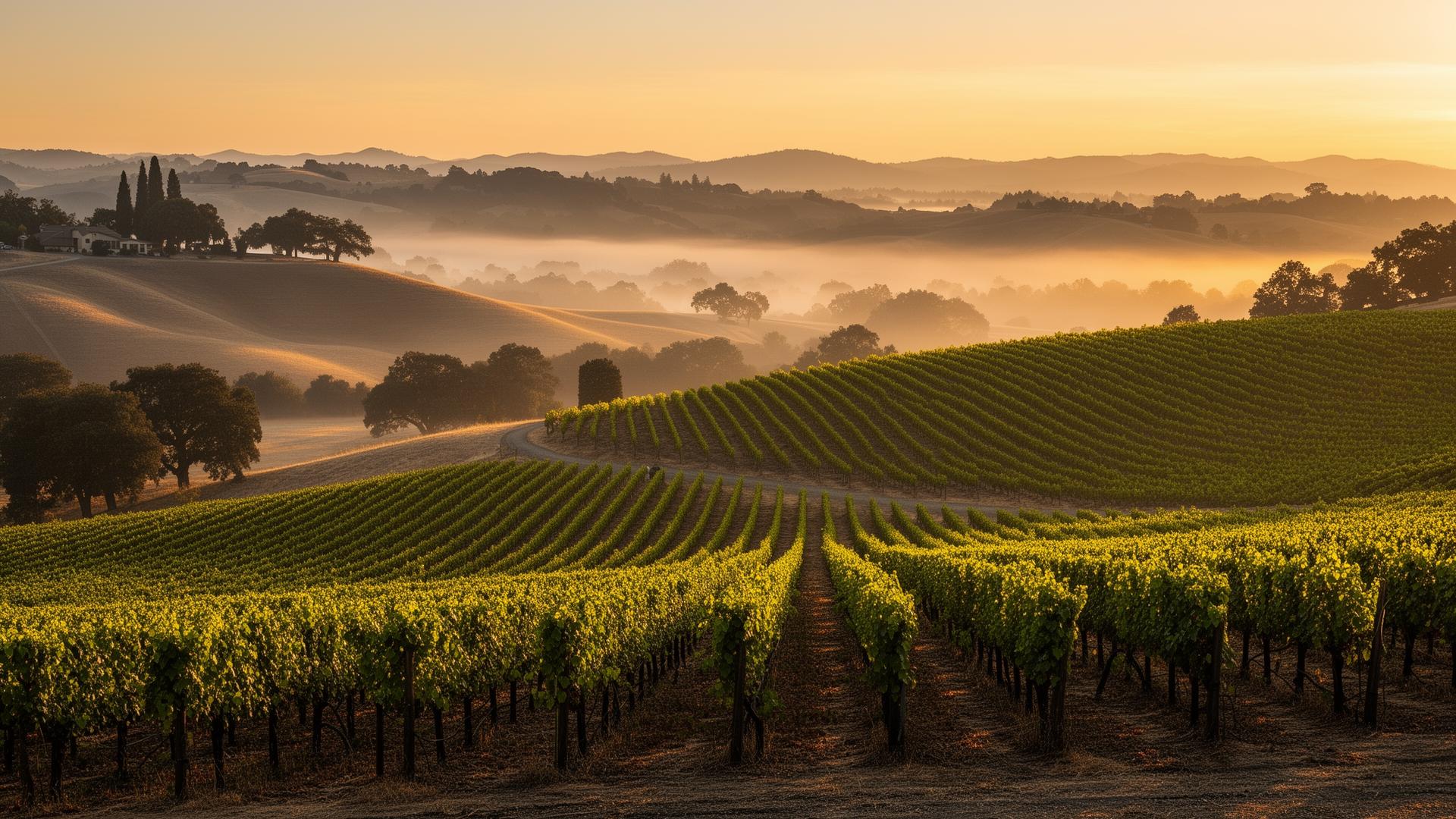
Red Mountain sits at the eastern edge of the Yakima Valley near Benton City, nested inside the larger Columbia Valley. It was officially designated an American Viticultural Area in 2001, and despite the name, it’s neither especially red nor much of a mountain. The reddish hue comes from cheatgrass that turns wine-red in late spring across the surrounding hillsides.
American Viticultural Area (AVA)
An AVA is a federally designated U.S. wine region defined by distinctive geography, climate, and soils, the American equivalent of Europe’s appellation system. Red Mountain became Washington’s fifth AVA in 2001. It is nested inside the Yakima Valley AVA, which sits inside the Columbia Valley, like a set of Russian dolls.
The area was first worked in the early 1970s by a pair of engineers turned winemaking pioneers, John Williams of Kiona Vineyards and Jim Holmes of Kiona and later Ciel du Cheval. They bought the barren hillside in 1972 and planted the first vines in 1975. Kiona is still going strong today, now run by the third generation of the Williams family and celebrating its 50th anniversary.
· ◆ ·
What makes Red Mountain’s terroir so distinctive?
Hemmed in on its western edge by the Yakima River and sitting in the rain shadow of the Cascades, Red Mountain has a desert climate that suits grapes beautifully. Its southwest-facing slopes catch warmer daytime temperatures and more sun than anywhere else in the Columbia Valley, while the cool night air that blows in is critical for preserving acidity.
“The wind is right, the soil is right.”
— JJ Williams, Kiona Vineyards, on why the founders chose the site
The Missoula Floods
The Missoula Floods were a series of cataclysmic glacial outburst floods at the end of the last Ice Age, when an ice dam holding back glacial Lake Missoula repeatedly failed. The floodwaters swept around Red Mountain, creating powerful back-eddies that deposited sediment in irregular layers. Over the millennia since, wind-blown loess settled on top, building the gravelly, well-draining soils that make the area unique.
Thousands of years of geological shifts and floods coalesce in astounding wine. The proof lies in distinguished bottles of Cabernet Sauvignon, Merlot, Syrah, and Sangiovese.
· ◆ ·
What grapes does Red Mountain grow best?
Above all, structured reds. Red Mountain’s calling card is Cabernet Sauvignon, joined by Merlot, Syrah, Cabernet Franc, and other Bordeaux varieties, plus a little Sangiovese. Compared with Cabernet from elsewhere in the state, these wines tend to be more structured and tannic than fruit-driven, with mineral character and the kind of backbone that rewards years in the cellar. The journey from sun-baked slope to glass is a direct one:
The AVA is now planted nearly to its borders, with more than 2,300 of its roughly 4,040 acres under vine, a huge jump from years past after a state irrigation project opened the mountain to new development.
· ◆ ·
Who are the standout Red Mountain producers?
The AVA is home to more than a dozen wineries and over 50 vineyards, many worth seeking out. Kiona remains the family-run pioneer, while Jim Holmes’s neighboring Ciel du Cheval is one of the most treasured vineyards in the state, supplying fruit to dozens of top labels. Higher up the slope, Col Solare, a hilltop Italianate villa owned by Chateau Ste. Michelle and the Antinori family, pours big, bold super-Tuscan-style reds. Hedges Family Estate, whose founder Tom Hedges led the drive for AVA status, farms biodynamically, and Fidélitas is another modern favorite.
But a few luminary names stand out on an international level, and none more than DeLille Cellars. Though its winery and tasting rooms are in Woodinville, near Seattle, DeLille built its reputation on Red Mountain fruit; it planted its own Grand Ciel estate vineyard here in 2000. Founded in 1992, DeLille was the first Washington winery to focus on Bordeaux-style blends, and it was named the 2015 Honorary Vintner by the Auction of Washington Wines, heady praise given the region’s relative youth.
· ◆ ·
What should you pour from DeLille Cellars?
Over the decades, DeLille’s Cabernets have been hailed among the best in the nation. Their Four Flags Cabernet, a blend of fruit from four Red Mountain vineyards, is earthy and structured, with peppercorn, hearty oak, and a savory edge of fennel and anise; an esteem that only grows with age. The 2011 vintage was even named Wine of the Year by The Seattle Times.
Bordeaux Blend
A Bordeaux blend is a red wine built from the grape varieties of France’s Bordeaux region, chiefly Cabernet Sauvignon, Merlot, Cabernet Franc, Petit Verdot, and Malbec. DeLille was the first Washington winery to focus on the style, earning it the nickname the “Lafite Rothschild” of Washington from critic Robert Parker.
The same goes for the higher-end Grand Ciel line, drawn from DeLille’s own estate vineyard, where the Cabernets are bolder and more potent still. French-oak-aged and rugged, they show leather alongside elegant hints of raspberry and blackberry. And for those leaning toward whites, DeLille’s Rhône-style Roussanne is a sprightly, mineral-driven wine with notes of white flowers, all the best of springtime in a glass, and one of the most approachable bottles in the lineup.
DeLille’s Red Mountain Wines
| Wine | Style | What to Expect |
|---|---|---|
| Four Flags | Red Mountain Cabernet | Earthy and structured; peppercorn, oak, fennel, anise; ages well. |
| Grand Ciel | Estate Cabernet (prestige) | DeLille’s boldest; French oak, leather, raspberry, blackberry. |
| D2 | Merlot-Cabernet blend | The accessible, food-friendly wine that first made DeLille’s name. |
| Roussanne | Rhône-style white | Bright minerality and white flowers; the lineup’s most approachable bottle. |
Frequently Asked Questions About Red Mountain
🍷 Red Mountain AVA at a Glance
Key facts about Washington’s smallest, warmest wine region.
| Detail | Information |
|---|---|
| Location | South-central Washington, eastern Yakima Valley (within the Columbia Valley). |
| Established | An AVA since 2001; the state’s smallest and warmest. |
| Size | About 4,040 acres total, with more than 2,300 now planted. |
| Pioneers | John Williams and Jim Holmes, who planted the first vines in 1975 (Kiona). |
| Climate | Desert: hot, sunny days and cool nights; about 5 inches of rain a year. |
| Soil | Shaped by the Missoula Floods and wind-blown loess: gravelly, well-draining. |
| Signature grapes | Cabernet Sauvignon, Merlot, Syrah, and other Bordeaux varieties. |
| Style | Powerful, structured, tannic reds built to age. |
| Notable names | Kiona, Ciel du Cheval, Col Solare, Hedges Family Estate, DeLille (Grand Ciel). |